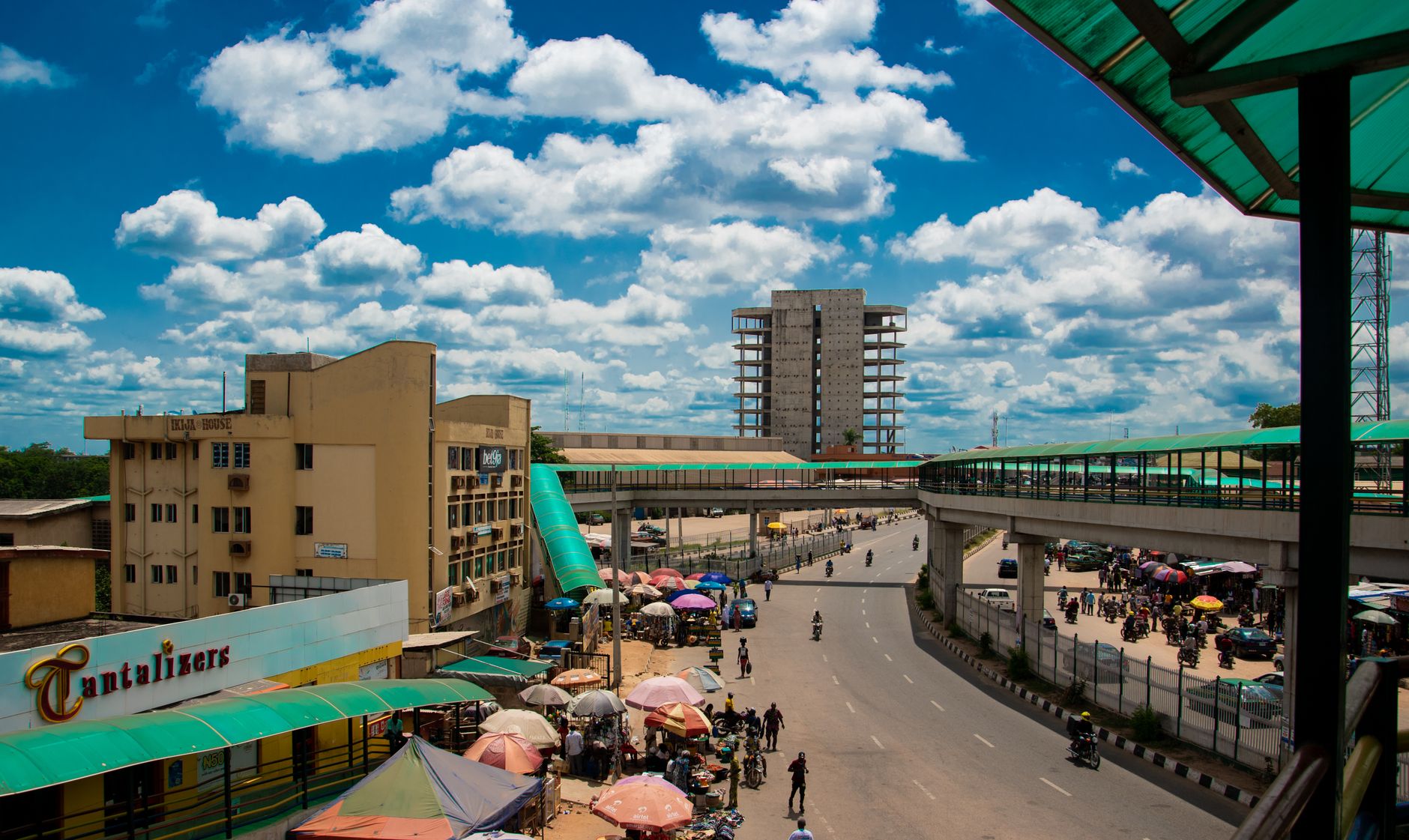
Beyond the headlines: a continent living with permanent crisis management
Africa in 2026 is not defined by a single breaking story, but by a grinding, structural reality: politics and economics have fused into a permanent crisis-management mode. The data that is available for this year paints a continent edging towards recovery, yet trapped in a web of high debt, stubborn inflation and fragile social contracts.[2][5][10]
Sub-Saharan Africa is projected to grow by around 4.1% in 2026, with median inflation rising to 4.8%, according to the World Bank.[5] UN and Economic Commission for Africa material puts continental growth at roughly 4.0% in 2026 and 4.1% in 2027, while another major briefing edges that forecast up to 4.3% for 2026.[2][10] Those numbers look respectable at first glance. But for a region with rapidly growing populations, that kind of growth risks becoming a ceiling—barely enough to maintain living standards, let alone transform them.
The same reports warn plainly that debt, inflation, and weak credit conditions remain heavy constraints.[2][10] That trio is not an abstract concern. It is being felt in national budgets, bond markets and, ultimately, in the price of food, fuel and fertilizer for ordinary Africans.[5]
South Africa: a trillion-rand bet on holding society together
South Africa’s 2026 budget distills this new political economy of crisis management. Finance Minister Enoch Godongwana has allocated R1 trillion over three years to infrastructure, an eye-watering sum that seeks to revive growth, stabilize failing municipalities and signal seriousness to investors.[1]
At the same time, the budget acknowledges the depth of social vulnerability: 26.5 million people now receive social grants, an enormous share of the population dependent on state support to get by.[1] That figure is not only a welfare statistic; it is a political fact. Any government contemplating austerity knows it is sitting on a social timebomb.
Perhaps most revealing was the decision to withdraw a planned R20 billion emergency tax measure after revenues came in stronger than expected.[1] The move underscores how narrow the fiscal tightrope has become. When growth is sluggish and debt pressures are rising, governments are tempted to tax more. But in a society already stretched by unemployment and inequality, the political room for new taxes is evaporating fast.
South Africa’s experience is emblematic: infrastructure spending as stimulus, expansive social protection as a stabiliser, and constant recalibration to avoid tipping a fragile balance.
Senegal: living on borrowed time—and borrowed money
If South Africa illustrates the politics of domestic redistribution, Senegal shows the hard edge of Africa’s external debt crunch. In 2026, Dakar faces a $485 million Eurobond maturity—real money that must be found in a global environment of higher interest rates and wary investors.[1]
To bridge the gap, the government has raised about 510 billion CFA francs through short-term bills on the WAEMU regional market.[1] Short-term borrowing to pay off longer-term debt is rarely a sustainable strategy; it is a sign of pressure. Senegal’s public debt stands at 132% of GDP, and debt service is projected to double to $2.2 billion in 2026.[1]
These numbers are not merely technical. Every franc spent on debt service is a franc not spent on schools, health or climate resilience. In a country often held up as a regional governance success story, the debt trap threatens to erode both economic policy autonomy and public trust.
Senegal’s predicament is replicated across several African states: the continent-wide growth story sits uneasily atop a mountain of liabilities. Without serious restructuring or new financing models, 4% growth risks being swallowed whole by interest payments.
Uganda: electoral certainty in an age of democratic fatigue
While many African economies wrestle with market anxieties, Uganda offers a different kind of certainty: political continuity. The Supreme Court has confirmed Yoweri Museveni’s re-election after the main opposition challenge was withdrawn.[1] Museveni secured 71.65% of the vote—about 7.95 million votes—while his rival Bobi Wine received 24.72%.[1]
On paper, the outcome settles the question of who governs. In reality, it underscores a broader continental pattern: long-tenured leaders, constrained opposition, and institutions seen by part of the electorate as arbiters of stability rather than engines of change.
For investors, such continuity can appear reassuring. For citizens, the erosion of competitive politics can sap legitimacy, especially when economic pressures mount. Museveni’s Uganda is a reminder that Africa’s growth debates are inseparable from its democratic ones: how wealth is generated and distributed depends on who has the power to decide—and for how long.
The cost-of-living squeeze: fuel, food and fertilizer
Across the continent, households feel the recovery not in GDP tables, but in the price of essentials. The World Bank notes that rising fuel, food and fertilizer prices, combined with tighter financing conditions, are pushing median inflation higher.[5]
This cost-of-living squeeze feeds directly into politics. Protests over food prices, fuel shortages or electricity tariffs may look local, but they are symptoms of a global shock transmitted through weak fiscal buffers and limited policy tools. When governments already devote large shares of revenue to debt service, they have less capacity to cushion citizens from imported inflation.
The result is a volatile mix: material hardship, rising anger, and governments reliant on security forces and subsidies to keep the lid on discontent—often at the expense of long-term investment.
From survival to strategy: what kind of growth does Africa need?
The emerging picture of Africa in 2026 is not one of collapse. It is one of survival, purchased at a high price. South Africa’s trillion-rand infrastructure push, Senegal’s frantic refinancing, Uganda’s entrenched leadership, and continent-wide 4% growth projections all point to a basic truth: Africa is keeping its head above water, but rarely swimming in the direction of structural transformation.[1][2][5][10]
For the continent, the central question is no longer whether growth will return—it is what kind of growth, and on whose terms. A recovery built on expensive debt, weak credit access, and an overburdened social state is inherently fragile. It keeps politics locked into managing emergencies rather than designing futures.
Editorially, the challenge for Africa’s leaders and partners alike is clear: move beyond the comfort of modest growth targets and tackle the harder task of freeing the continent from its debt and inflation straightjacket. Anything less will leave 4% growth as Africa’s new normal—adequate for headlines, but inadequate for history.