By Archange | Archange Shadows — archange-shadows.com Week of 11–17 May 2026
The Story of the Week: Trump Lands in Beijing
For the first time since 2017, a sitting US president set foot on Chinese soil. Donald Trump's two-day summit with Xi Jinping at the Great Hall of the People — held on 14–15 May — was the most anticipated diplomatic event of the year in Asia. The result: a fragile trade truce extended, a second meeting scheduled for autumn, and no major breakthroughs on any of the hard issues.
China came into this meeting far more confident than in 2017, when it feared even a small rise in US tariffs. In the intervening years, Xi has been able to push back and neutralize much of Trump's actions. The optics were choreographed for Chinese domestic consumption: driverless electric vehicles, humanoid robots, and digital billboards promoting Chinese large language models lined Beijing's showcase districts.
Xi wasted no time setting the tone. The Chinese president warned Trump that missteps on Taiwan could push the two countries into "conflict" — a stark opening salvo as the two leaders sat down for talks. Taiwan, Iran, artificial intelligence, tariffs, and rare earths were all on the agenda.
The visit went a long way toward strengthening a fragile trade truce with Beijing and stabilizing the bilateral relationship. While the summit was delayed by more than a month due to the Iran war, Trump's two-day visit wrapped up with plans for another meeting this fall.
But behind the managed imagery, analysts were blunt about what was missing. The Trump-Xi summit ended with no major breakthroughs, little progress on Taiwan and war in Iran. And in one of the more surreal postscripts of the week, Trump appeared to endorse Xi's unheard remark that the United States might be a declining nation — attributing it to the Biden years.
For the rest of Asia, the summit was watched with intense anxiety. Seoul, Tokyo, Canberra, and Taipei all fear the same thing: a US-China deal struck over their heads.
Top Stories This Week
1. Xi Draws a Red Line on Taiwan at the Summit
Taiwan was watching for any changes in how the United States describes the cross-strait relationship — particularly worried that Beijing would successfully persuade Trump to express "support" for peaceful unification, or to state that the United States "opposes" rather than "does not support" Taiwan independence. No such language appears to have been adopted, but the ambiguity itself is destabilizing. Taipei remains deeply unsettled by the possibility that great-power politics could unfold at its expense.
2. South Korea Returns to Growth on Chip Exports
South Korea returned to growth in Q1 2026, driven by semiconductor exports. The result offers relief after a bruising period of political turbulence and global trade uncertainty. Seoul's chipmakers — Samsung and SK Hynix foremost among them — continue to benefit from the global AI hardware buildout, supplying memory and logic chips to US and Taiwanese data center projects. However, South Korea faces a structural dilemma: its economy is deeply integrated with China through trade, yet its security depends on the US alliance. The Beijing summit has made that tension sharper, not easier.
3. Australia and Fiji Sign the Vuvale Union — A Blueprint for the Pacific
On 8 May 2026, Fiji and Australia finalized the Vuvale Union, an historic treaty-level agreement between the two nations, the culmination of a three-day visit by Australian Foreign Affairs Minister Penny Wong to Suva. The treaty strengthens Fiji's capabilities in interdiction, policing, and combating transnational crime, while expanding cooperation across economy, security, and people-to-people ties.
The agreement is yet another signal of Australia's significant push over the past few years to shore up security relationships across the Pacific, largely in response to China's growing ambitions to gain influence and presence in this critical arena. In recent years, Australia conducted a whirlwind of diplomacy, signing bespoke agreements with Papua New Guinea in 2025, Nauru in 2024, and Tuvalu in 2023, all with specific security components obliquely limiting China's reach.
The Vuvale Union is being described by Suva as a "blueprint" for the broader Pacific region — and a direct answer to Beijing's courtship of Pacific Island nations.
4. Australia and PNG Deliver Disaster Relief After Tropical Cyclone Maila
Australia and Papua New Guinea worked together to deliver critical humanitarian assistance to communities across PNG following Tropical Cyclone Maila, which brought destructive winds and severe weather, causing widespread damage and disrupting essential services. The ADF delivered more than 45 tonnes of critical humanitarian assistance — provided by Australia, New Zealand, the United Kingdom and the United States — including food, tarpaulins, blankets, shelters, hygiene kits, and solar lights to support displaced communities.
The operation reinforces Australia's self-appointed role as the Pacific's first responder — a role that Beijing has sought to contest through its own disaster diplomacy in recent years.
5. Japan Expands Its Arms Export Policy — A Historic Shift
Japan changed its policy to allow Japanese companies to sell arms to 17 countries — a major shift from the nation's pacifist postwar stance, coming at a time of heightened security concerns in the region. The move reflects Tokyo's broader strategic recalibration under PM Takaichi: Japan is no longer content to be a consumer of security; it wants to be a supplier and a co-architect of Indo-Pacific deterrence. For neighbors with long memories of Japanese militarism, the shift is watched carefully. For Washington and its regional partners, it is welcome.
6. China, Japan and South Korea on Alert for Market Turbulence
China, Japan, South Korea and ASEAN went on alert for "disorderly" market movements as currency volatility, oil price uncertainty from the Iran war, and trade policy uncertainty combined to create a cocktail of financial risk across the region. Japan intervened in currency markets as the yen crossed ¥160 per dollar. South Korean bond yields rose. The region's financial authorities are coordinating quietly, aware that a disorderly unwind in any of these markets could cascade rapidly.
7. Vietnam's Critical Minerals Strategy — Playing Both Sides
Vietnam is emerging as one of the most strategically agile players in Southeast Asia. Under PM Le Minh Hung, Hanoi is deploying its vast rare earth and critical mineral reserves as a tool of strategic autonomy — engaging Japan, the US, and the EU on supply chain partnerships while carefully avoiding full alignment with any single power. Japan's PM Takaichi visited this week, cementing a minerals and security partnership. The Diplomat notes that Vietnam's approach "applies the doctrine of strategic autonomy to a new sector" — a model other Southeast Asian nations are watching closely.
8. Philippines' Dela Rosa Faces ICC Charges at The Hague
Ronald "Bato" dela Rosa — a senator, former national police chief and ally of imprisoned former president Rodrigo Duterte — faces crimes against humanity charges at the International Criminal Court in The Hague. The case, linked to the bloody anti-drug campaign that killed thousands during the Duterte years, marks a significant moment for accountability in Southeast Asia. Manila's current government has distanced itself from Duterte but faces domestic political pressure as the proceedings unfold internationally.
9. Australia–Fiji Treaty: The Transnational Crime Dimension
Beyond the headline security framing, the Vuvale Union has a significant law enforcement component. Ministers acknowledged the impact of transnational organised crime on Australia, New Zealand and throughout the Pacific neighbourhood, and agreed that combatting transnational organised crime — including drug trafficking to and through the Pacific — is a shared challenge and an urgent priority. A Transnational Crime Summit is scheduled in Fiji in May 2026, coordinating a regional response that Pacific Island nations have long demanded.
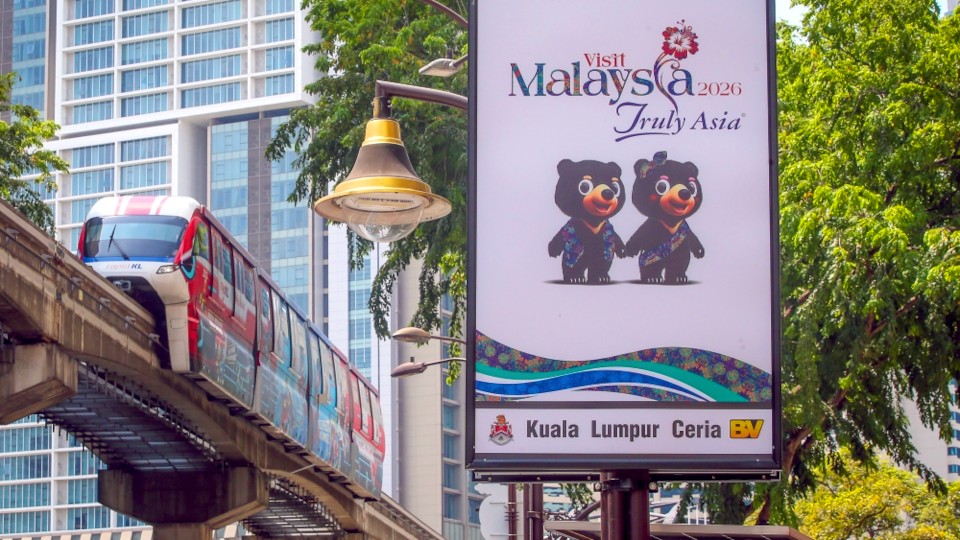
10. Malaysia Sets New Tourism Record — 10 Million Arrivals in Q1
Malaysia welcomed over ten million tourists in the first quarter of 2026, overtaking Thailand, Vietnam, South Korea, Singapore, China, India and more, setting a new record for arrivals in Southeast Asia. The achievement reshapes the region's tourism hierarchy. Government investment in infrastructure, a push into luxury and medical tourism, and a strategic diversification away from dependence on Chinese visitors have all contributed. Malaysia's 2026 target stands at 47 million visitors for the full year — an ambitious figure, but the trajectory supports it.
In Brief
Myanmar — The nominal transition toward civilian rule in Myanmar has been deemed insufficient by key members of ASEAN. The junta retains effective control, and the humanitarian crisis continues with little international traction.
India — New Delhi is watching the Trump-Xi summit from a position of strategic discomfort. India's effort to maintain non-alignment while deepening ties with Washington on technology and defense is being tested. As the BRICS Foreign Ministers meeting approaches ahead of the September 2026 India summit, Modi must navigate carefully between blocs.
Air New Zealand — Air New Zealand is grappling with projected financial losses exceeding NZ$340 million, grounded aircraft due to Pratt & Whitney engine inspection requirements, and high fuel costs. Qantas has moved aggressively to capture market share across the Tasman, adding nearly 810,000 seats for the 2026 fiscal year.
Southeast Asia Drone Threat — Countries across ASEAN are accelerating investment in counter-drone capabilities. The lesson from Ukraine has been absorbed: modern conflict involves swarm drone attacks, and coastal and island nations in Southeast Asia face this threat acutely. The Diplomat warns that what's really needed is a multilayered regional defense network — which does not yet exist.
North Korea — Pyongyang has framed AUKUS as a dangerous threat to regional stability. Analysts note that the submarine partnership — bringing nuclear-powered boats to Australia — represents a qualitative shift in deterrence capability that Pyongyang and Beijing both view with alarm.
The Regional Picture
The week of the Trump-Xi summit crystallized something that has been building for years: the Indo-Pacific is bifurcating. On one side, a US-led network of bilateral and minilateral security arrangements — AUKUS, the Quad, bilateral alliances with Japan, South Korea, and the Philippines, and now deeper Pacific Island partnerships through Australia's treaty diplomacy. On the other, China's expanding economic and security footprint across Southeast Asia, the Pacific, and beyond.
Most countries in the region — Vietnam, Indonesia, Malaysia, India — refuse to choose openly. They hedge, trade with China, and quietly deepen security ties with Washington. It is a sustainable posture in peacetime. Whether it holds under pressure remains the central question.
What the Trump-Xi summit made clear is that the two superpowers are also, in their own way, hedging: engaging on trade and economics while entrenching their positions on Taiwan, technology, and military posture. There is no grand bargain on the horizon. There is managed competition, punctuated by summits that produce reassurance but not resolution.
For the rest of Asia and Oceania, that is the environment they must navigate — indefinitely.
Archange Shadows — Political Analysis & Global Affairs London, United Kingdom