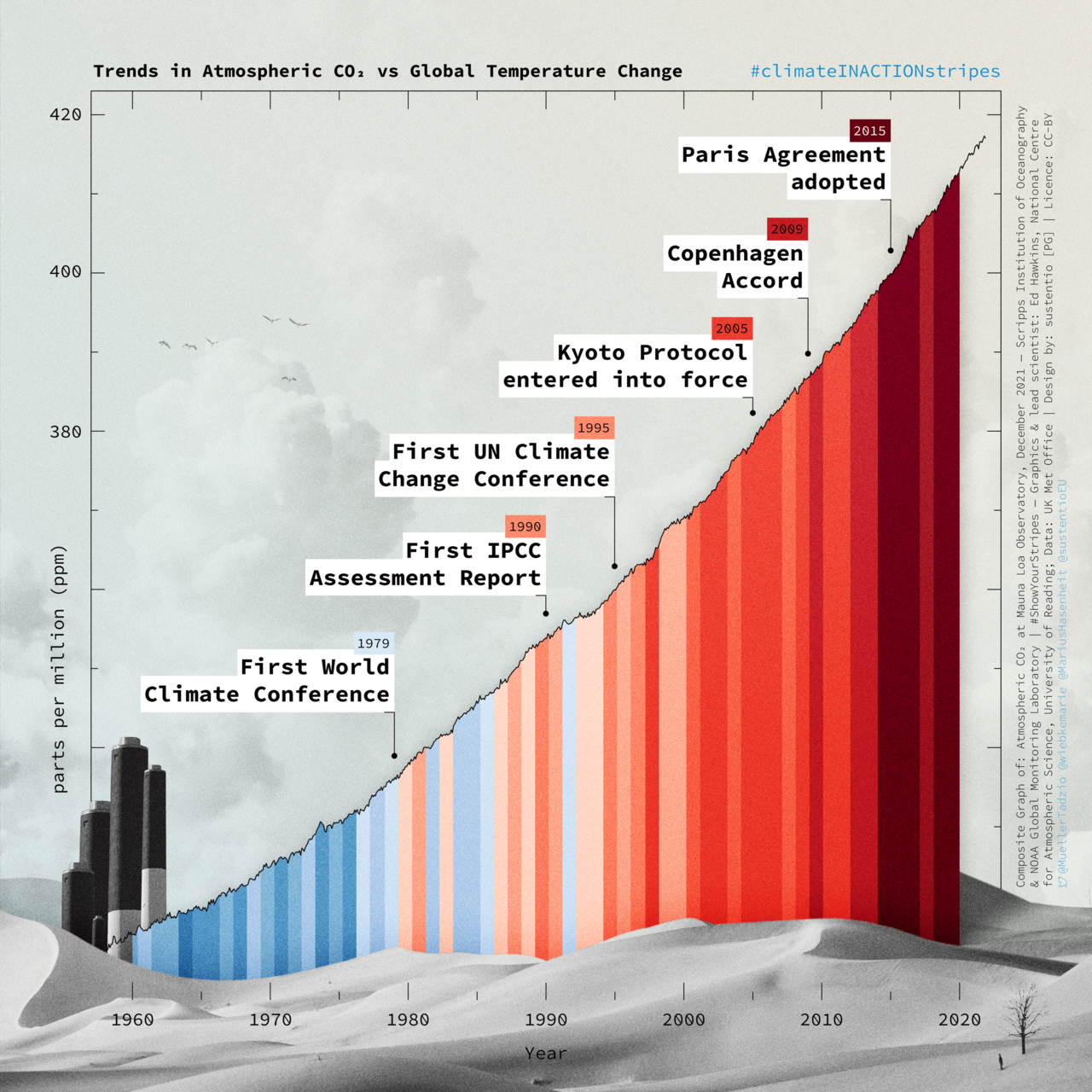
Commentary. The climate debate has reached an exhausting stage: governments announce more ambitious plans, businesses advertise cleaner futures, and emissions continue to outrun the promises meant to reduce them. Our view is straightforward: the world does not primarily suffer from a shortage of targets. It suffers from a shortage of consequences when targets are missed.
The latest assessments make that gap difficult to ignore. A UN climate review found that new national climate plans are broader and better prepared than earlier versions, but still leave the world “substantially off track” for limiting warming to 1.5 degrees Celsius. The plans reviewed represent most parties to the Paris Agreement, yet their combined effect would produce only a modest decline in emissions by 2035. The UNFCCC findings, reported by Argus Media, should be read as a warning against confusing improved paperwork with improved outcomes.
That warning is reinforced by the UN Environment Programme’s 2026 emissions-gap assessment. Under current policies, global warming could reach 2.8 degrees Celsius by 2100, with risks continuing to rise afterward. Even if countries implement their existing conditional and unconditional pledges, a large emissions gap remains between those plans and a pathway that limits the severity of a temporary 1.5-degree overshoot. The report’s central conclusions are summarized here.
The case for tougher rules
For this newsroom, the implication is not that diplomacy has failed. It is that diplomacy must become more operational. Voluntary pledges helped establish a common direction, encouraged investment and made climate performance more visible. But a promise without a timetable, financing, measurement and an enforcement mechanism is closer to public relations than public policy.
Governments should therefore attach clear consequences to missed milestones: mandatory progress reporting, independent verification, transparent sectoral budgets and automatic policy reviews when emissions exceed agreed limits. Public money should favor projects that demonstrate measurable reductions rather than projects that merely carry a green label. Carbon pricing, clean-energy standards and the rapid removal of fossil-fuel subsidies should be judged by results, not by political branding.
There is a practical precedent for linking environmental standards to trade. The European Union’s Carbon Border Adjustment Mechanism is designed to place a carbon cost on certain imports and reduce the competitive advantage of production in jurisdictions with weaker climate rules. Boston University’s 2026 review describes the mechanism and its wider policy context. Such measures can prevent ambitious countries from simply exporting emissions, although they must be paired with support for poorer economies rather than used as disguised protectionism.
The strongest objections deserve answers
Critics are right to warn that aggressive climate regulation can raise energy costs, weaken industrial competitiveness and punish households that have few alternatives. Workers and communities built around coal, oil and gas cannot be treated as accounting problems. Nor can developing countries be asked to abandon affordable growth after wealthy nations became rich through decades of high emissions.
Those objections do not justify inaction; they define the conditions for credible action. Climate policy should include direct household support, retraining and regional investment, alongside technology-sharing and climate finance for lower-income countries. A transition that ignores distribution will lose democratic legitimacy. A transition that ignores physics will eventually impose far greater costs through disasters, disrupted food systems, damaged infrastructure and forced migration.
The United States’ retreat from some climate controls illustrates the danger of political reversals. Boston University’s assessment notes the rollback of power-plant carbon controls and stresses the continuing need for international cooperation. Businesses planning factories and grids need rules that survive election cycles; citizens need confidence that sacrifice will be shared fairly rather than shifted downward.
What should come next
At the next major climate negotiations, leaders should spend less time celebrating the ambition of pledges and more time publishing delivery schedules. Every commitment should answer four questions: who pays, who measures, what happens if progress stalls, and how affected workers and households are protected.
We do not argue for pretending that a perfect transition is available. We argue for replacing unverifiable optimism with accountable progress. The climate crisis is not solved by better language, but neither is it solved by abandoning cooperation. The honest position is harder: preserve diplomacy, strengthen rules, fund fairness and make failure visible. Governments have made enough promises for one lifetime. Now they must make those promises enforceable.