The new shape of an old danger
Disinformation in 2026 is no longer a fringe problem limited to obvious hoaxes or crude propaganda. It is now a structural force that shapes politics, markets, public health, and democratic trust, with the World Economic Forum placing mis- and disinformation among the top short-term global risks in its 2026 assessment.[1]
That warning matters because the risk is not isolated. The WEF says mis- and disinformation is one of the few threats severe over both the two-year and ten-year horizons, and that it acts as a catalyst that worsens other crises, from economic downturns to climate-related shocks.[1] In other words, falsehood is no longer just content. It is infrastructure.
AI has changed the speed of deception
The decisive shift in 2026 is the role of artificial intelligence. According to the WEF, advanced AI and synthetic media now enable large-scale cognitive manipulation, making deceptive content scalable, personalized, and harder to detect.[1] Deepfakes have become nearly indistinguishable from reality, and the report says the current information environment has become a destabilizing systemic force that can erode social cohesion and disrupt democracies.[1]
This is not merely about better fake images or more convincing audio clips. It is about the collapse of confidence in ordinary evidence. When people cannot tell whether a voice, a face, or a post is genuine, the public square becomes a place where almost anything can be denied, fabricated, or spun into doubt.[1]
The practical effect is corrosive. Disinformation thrives not only by persuading people of a false claim, but by teaching them that truth itself is inaccessible.
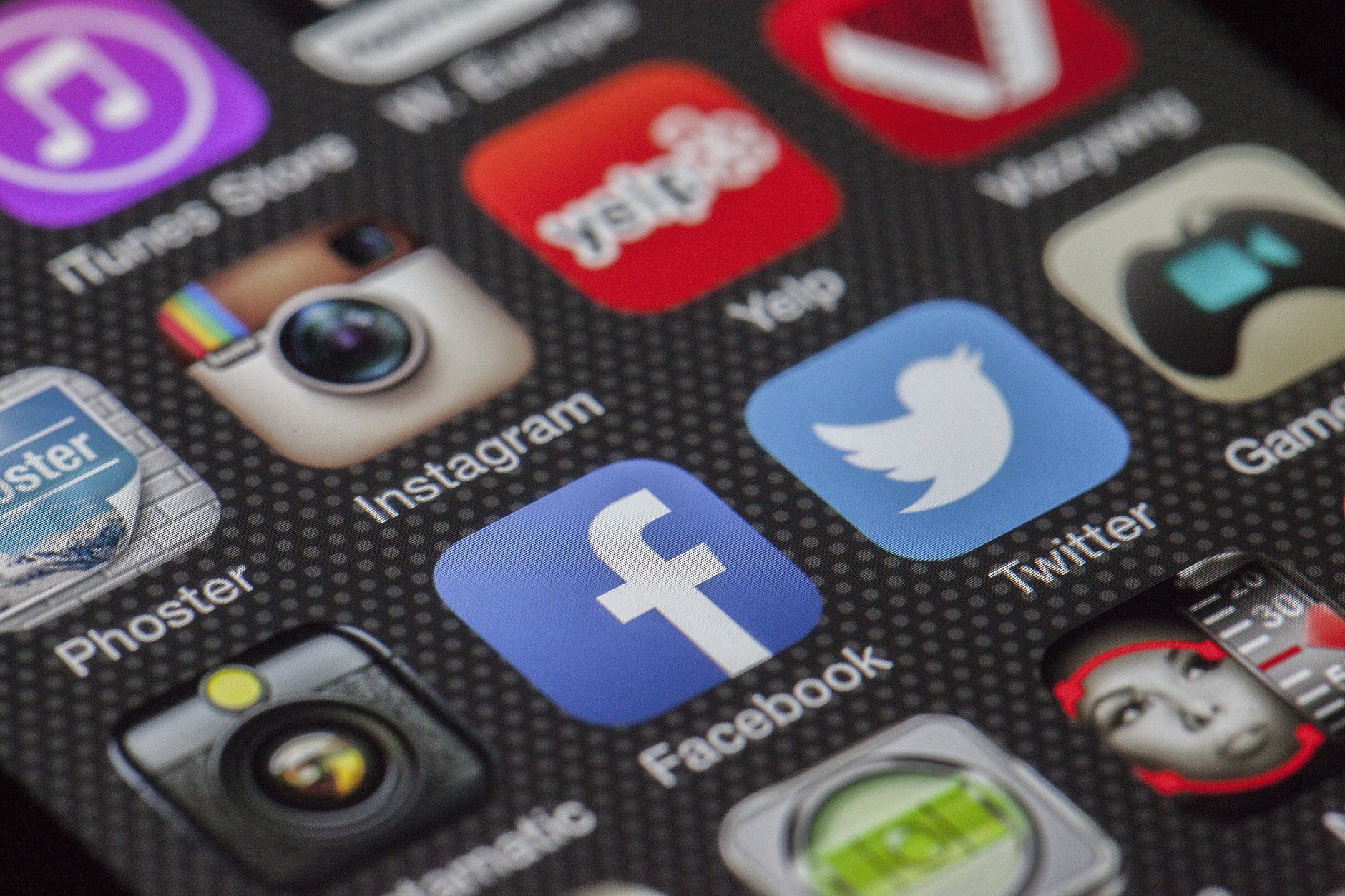
Social media has become the front line
The Reuters Institute’s 2026 Digital News Report shows how deeply social platforms have overtaken traditional news access. Across 48 markets, 54% of respondents now use social media and video platforms to access online news, compared with 51% who use news organisations’ own websites and apps.[3] For the first time globally, social media and video networks are the single most widely used route to online news.[3]
That shift is consequential because the same report finds rising anxiety about fake news. Concern about fake news online rose by 4 percentage points to 62% globally, with jumps of more than 5 points in 11 markets.[3] Trust in news on social media stands at just 22%, while trust in news from AI chatbots is even lower at 20%.[3]
The message is stark: the dominant distribution system for news is also the environment in which credibility is least secure.[3]
Regulation is trying to catch up
Europe is moving to impose clearer rules on synthetic media. The WEF’s 2026 analysis highlights the EU AI Act’s Article 50, which requires labelling of AI-generated and deepfake content, as well as disclosure when users are interacting with AI rather than a human.[1] Those obligations are described as enforceable from August 2026, with potential fines of up to 6% of global revenue for non-compliance.[1]
This is a significant milestone because it acknowledges a simple truth: audiences cannot protect themselves if the origin of content is concealed. Labelling is not a cure for disinformation, but it is a necessary condition for accountability in an environment where synthetic material can be produced at scale.[1]
The European Commission has made a similar point in broader terms, describing foreign information manipulation and interference as a serious threat to democratic institutions, public debate, and voting behavior.[7] It also stresses the need for monitoring, fact-checking, media literacy, and platform responsibility.[7]
The problem is not only technology
The deeper crisis is social. Disinformation succeeds because it exploits existing divisions, not because it invents them from nothing. The Reuters Institute report shows that worries about misinformation are highest in Nigeria and Kenya, followed by the UK, Australia, and Portugal, and that concern increased across every Western European market.[3] In Norway, the rise was 7 points; in the Netherlands, 8; in Belgium, 9.[3]
Those figures suggest a public that is not becoming more gullible so much as more exhausted. As information systems become noisier, citizens are left with less confidence in institutions, fewer shared facts, and more incentive to retreat into group identity.
Research cited in the 2026 academic literature reinforces that point. A study of U.S. users found that both mainstream and dark social media use were associated with more fake news sharing and stronger conspiracy beliefs among Alt-Right participants, compared with non-Alt-Right groups.[5] That is a reminder that disinformation is not merely distributed through platforms; it is socially reinforced within communities already primed to believe it.[5]
What 2026 is really telling us
The year 2026 is proving that disinformation is not a side effect of digital life. It is one of its defining features. AI has made falsehood cheaper to produce, social media has made it easier to spread, and declining trust has made it harder to resist.[1][3]
The response cannot be limited to better detection tools, though those matter. It also requires verification, deliberation, and accountability, the three pillars the WEF says have eroded under online technology.[1] That means stronger platform rules, clearer labelling, better media literacy, and a renewed public culture that rewards evidence over outrage.
If democracies are to survive the age of synthetic persuasion, they must treat truth not as a luxury of stable times, but as a civic security need.