A widening political emergency
Disinformation is no longer best understood as an obscure internet problem confined to fringe websites. Recent reporting shows it has become a broad political and institutional threat—one that reaches elections, newsrooms, social-media companies and even the artificial-intelligence systems increasingly used to interpret the world.
The public is registering the danger. The Reuters Institute’s 2026 Digital News Report found that concern about fake news has risen to 62 per cent globally, an increase of four percentage points. In 11 markets, concern rose by more than five points.[1] This is not merely a change in public mood. It reflects a deteriorating information environment in which citizens are finding it harder to distinguish journalism from fabrication, and evidence from performance.
The industrialisation of falsehood
The continuing activity of the Russia-linked Storm-1516 network illustrates how disinformation has been industrialised. Bloomberg reports that the number of narratives attributed to the operation more than doubled in the first quarter of 2026 compared with the same period last year. By late March and early April, its output was appearing almost daily.[2]
The operation has produced hundreds of fabricated stories since 2023, many designed to undermine support for Ukraine or damage confidence in elections abroad. Its methods combine fake news accounts, manipulated video, fabricated documents and artificial-intelligence tools. The content is then distributed across TikTok, Telegram, Facebook, Instagram and X, allowing a single false narrative to move rapidly between audiences and platforms.
The significance lies not only in the sophistication of individual deepfakes. It is the scale, persistence and adaptability of the campaign that matters. Disinformation actors do not need every audience member to believe a lie. They need only to make reliable information appear uncertain, partisan or impossible to verify.
When platforms become accelerants
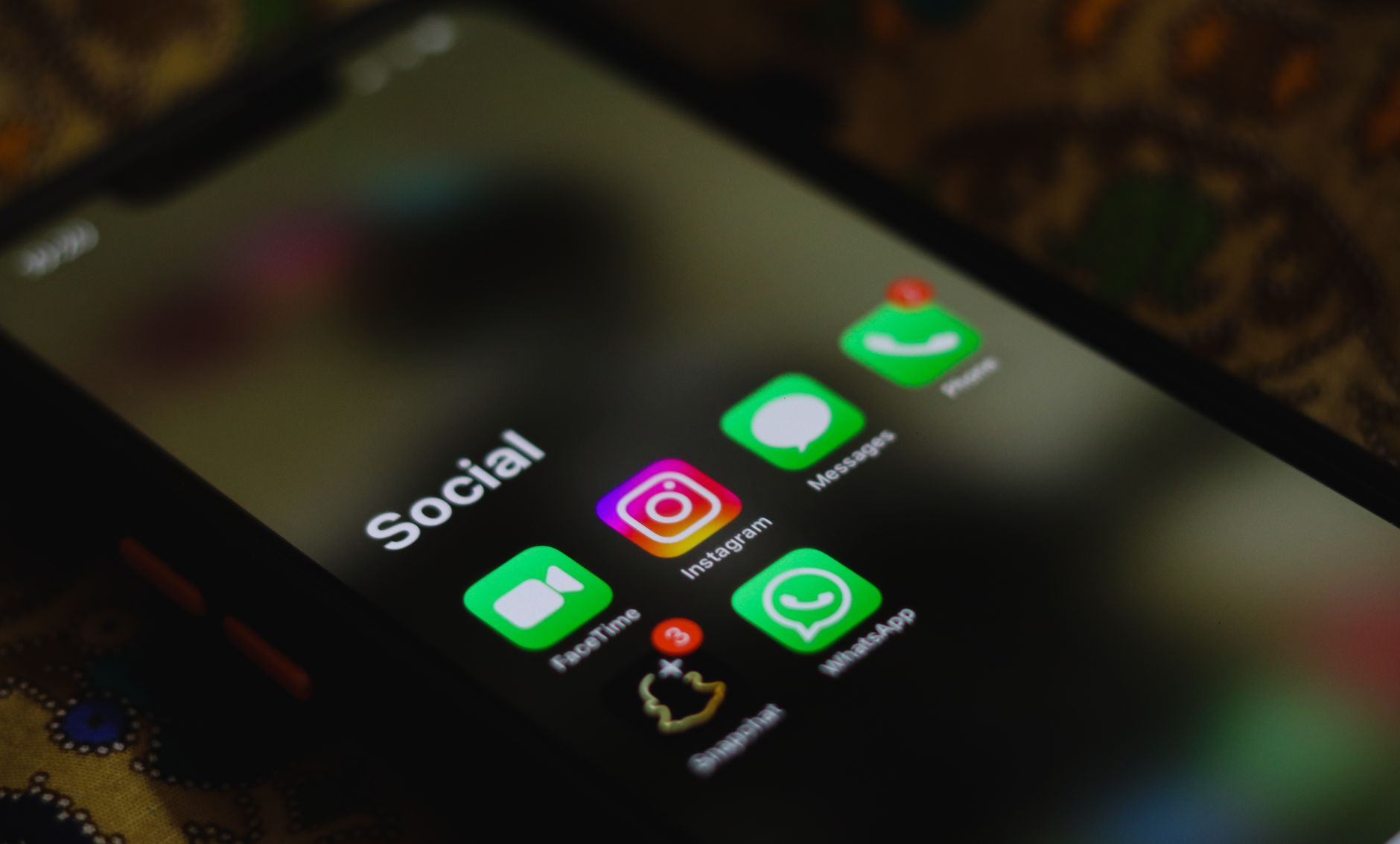
Social-media platforms remain the principal distribution channels for coordinated deception. Their systems reward speed, novelty and emotional intensity—precisely the qualities that make false content travel.
Evidence from Bangladesh demonstrates how quickly election disinformation can accumulate. On the day before the country’s 2026 election, fact-checkers recorded 49 unique instances between midnight and 7 p.m. Rumour Scanner identified 33, Dismislab 12 and FactWatch BD four.[3] The figures capture only material that was identified and checked during a limited period. They do not represent the total volume of misleading posts circulating online.
The problem is therefore not simply that false claims exist. It is that they can arrive faster than journalists, election officials and fact-checkers can respond. By the time a claim is disproved, it may already have influenced a voter, shaped a conversation or been copied into another network.
Poisoning machines as well as minds
The next stage of the crisis concerns artificial intelligence itself. Researchers cited by The Guardian warn that coordinated actors are now attempting to “poison” the information environment from which AI systems draw. Their tactics include spreading false narratives on Telegram and flooding the wider internet with fabricated stories, creating an apparent record that automated systems may later treat as evidence.[4]
This is a profound shift. Earlier disinformation campaigns sought to persuade people directly. The emerging strategy also seeks to contaminate the informational infrastructure on which search engines, chatbots and automated summaries depend.
A study cited in the same reporting found that more than a quarter of news-related posts on X were misinformation, and that one-third of those posts were anti-immigration or Islamophobic.[4] Such findings underline the danger of treating online falsehood as politically neutral. Disinformation often exploits existing fears, targets minorities and turns social division into a mechanism for amplification.
Integrity must become a platform responsibility
The response cannot rest solely on individual users becoming better at spotting fakes. Media literacy matters, but it cannot compensate for systems that distribute deceptive material at extraordinary speed or permit coordinated inauthentic accounts to operate across borders.
EU DisinfoLab reporting describes a campaign exposed by France’s Viginum involving the Israeli firm BlackCore and coordinated inauthentic accounts targeting political subjects in Scotland, France, New York, Angola and Togo.[5] The geography is a reminder that influence operations are international even when their claims are locally tailored.
Platforms must therefore be judged not only by the content they remove, but by whether their systems detect coordination, disclose political influence operations and preserve trustworthy access to verified information. Democratic societies cannot prevent every lie. They can, however, refuse to build an information economy in which lies are systematically rewarded.