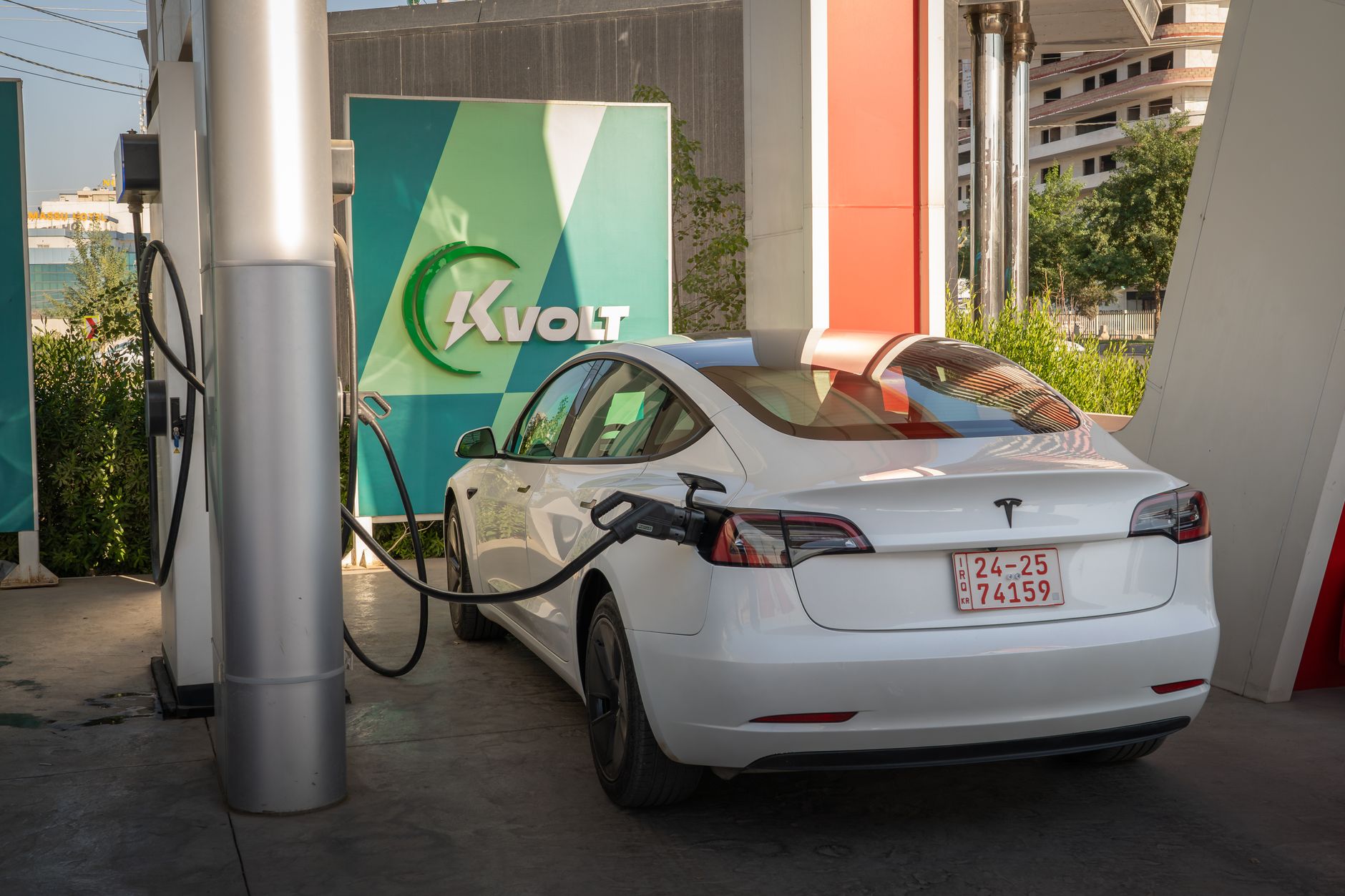
The Automaker That Turned “Car” Into “Code” Hits 10 Million
Tesla’s announcement in late July that its 10 millionth electric vehicle had rolled off the Fremont line is more than a corporate milestone; it is a moment of reckoning for the entire automobile industry.[1] The company claims it is the first pure battery‑electric vehicle manufacturer to reach that figure, underlining how far electric cars have moved from niche experiment to mass‑market reality.[1]
A decade ago, traditional automakers dismissed Tesla as a curiosity—a Silicon Valley upstart playing at cars. Today, every major manufacturer is racing to electrify its fleet, while Tesla stands as the reference point for battery‑electric volume production. The fact that 10 million EVs have already made it onto the road from a single brand is a reminder that the automobile is no longer just an object of metal and rubber; it is increasingly a software platform shaped by data, chips, and code.
Yet milestones invite scrutiny. Ten million cars also mean ten million test cases: for reliability, safety, charging infrastructure, and the sustainability claims that underpin the EV revolution. Tesla’s evolution from rebel to incumbent puts it at the centre of a fundamental question: can the company still behave like a disruptor when it has become one of the pillars of the new automotive order?
Strong Deliveries, Growing Expectations
Tesla’s first‑half figures for 2026 suggest the company is not easing off the accelerator. It delivered over 830,000 vehicles globally in the first six months of the year, with Q2 deliveries above 480,000, which it describes as a new second‑quarter record.[1] In traditional auto terms, this would be impressive. In Tesla terms, it is also a bar that the company has set for itself—numbers that investors now expect as routine rather than exceptional.
Volume matters in the automobile business because it underwrites everything else: investment in new platforms, bargaining power with suppliers, the spread of charging networks, and the ability to drive down per‑unit costs. For Tesla, scale has always been part of the story. The promise was that once enough cars rolled out, the economics of EVs would permanently tilt against internal combustion engines.
But scale cuts both ways. Once you are delivering nearly half a million vehicles a quarter, the narrative of being a nimble innovator collides with the practical reality of being a global manufacturer. Recalls, regulatory probes, and software updates no longer affect a few thousand early adopters; they ripple through a global fleet. The automobile, in this guise, is less a symbol of individual freedom and more a node in a vast, interconnected system.
China Incentives and the Global EV Price War
If volume is the foundation of Tesla’s story, pricing is increasingly its battleground—especially in China, the world’s largest EV market. This month, Tesla rolled out major purchase incentives there: a 5‑year 0‑interest financing offer for orders placed by August 31, covering Model 3, Model Y, and Model Y L.[1] Down payments start at 79,900 yuan, with Model 3 monthly payments from about 2,460 yuan.[1]
Such terms are not the tactics of a carefree market leader. They are the moves of a company fully engaged in the EV price war, facing intense competition from Chinese manufacturers who have grown remarkably sophisticated in both software and hardware. The automobile, in this context, is being reimagined as a financial product as much as a technological one—structured monthly payments, promotional interest rates, and a constant recalibration of affordability versus aspiration.
Tesla’s incentives in China underscore a broader shift. Cars have always been financed, but the competitive edge now lies in making EVs feel less like luxury experiments and more like accessible defaults. If Tesla can keep its vehicles aspirational while making the numbers work for middle‑class buyers, it preserves its brand aura. If it can’t, it risks becoming just another participant in a margin‑squeezed commodity market.
The Roadster Return: Nostalgia Meets Next‑Gen Tech
Against this backdrop of scale and price competition, Tesla appears keen to revive the emotional side of motoring. Reuters reports that the company may unveil a redesigned Roadster as early as August, nearly a decade after the next‑generation version was first revealed.[8] The Roadster has always been Tesla’s halo car, the vehicle meant to prove that an electric automobile could be not merely efficient but exhilarating.
If the new Roadster arrives, it will do so in a radically different landscape from its predecessor. In 2008, an electric sports car was a provocation. In 2026, performance EVs are now offered by both legacy brands and newcomers. For Tesla, the Roadster is less about opening a new frontier and more about reasserting its identity: a reminder that, underneath spreadsheets and delivery charts, the company still wants to define what a thrilling car feels like in an electric age.
The timing is telling. As Tesla marks its 10‑million‑vehicle milestone, a new Roadster would be a symbolic bridge between the company that once shocked the auto world and the one now tasked with sustaining that shock. The automobile has always thrived on romance—speed, design, the promise of escape. Tesla’s challenge is to keep that romance alive in a world that increasingly talks about cars in terms of battery chemistries and interest‑free financing.
Spending Big on the Future—and Leaving Some Models Behind
Tesla’s ambitions extend well beyond the vehicles currently on the road. The company has raised its 2026 spending plan to more than $25 billion, targeting AI, robotics, and chips.[5] That figure hints at a future in which the automobile is not just electric but semi‑autonomous, potentially integrated into robotaxi networks and AI‑driven logistics. The car, in this vision, becomes an intelligent machine within a broader ecosystem of automated mobility.
At the same time, Tesla is making hard choices about what belongs in its line‑up. Elon Musk has said the company will discontinue production of the Model X and Model S, the high‑end vehicles that helped establish Tesla’s brand in its earlier years.[2] This move is not merely a portfolio reshuffle; it signals a shift in where Tesla believes the centre of gravity lies: mass‑market crossovers and sedans rather than low‑volume flagships.
Tesla is also reported to be working on an all‑new smaller, cheaper electric SUV, based on information from four people familiar with the matter.[3] Taken together, these decisions trace a clear trajectory. The future Tesla automobile is expected to be more affordable, more software‑defined, and more deeply integrated with AI systems, even if that means saying goodbye to some of the models that first carried the brand’s prestige.
The Automobile, Rewritten in Silicon
The last 48 hours of Tesla news—Roadster rumours, Chinese incentives, the 10‑million‑EV milestone, strong delivery numbers, and plans for cheaper SUVs—capture a company standing at a crossroads. On one side is the traditional automobile: a product of engineering, aesthetics, and aspiration. On the other is the emerging Tesla vision: cars as connected devices, financial instruments, and AI‑enabled platforms.
What is at stake is not just Tesla’s quarterly performance but the definition of the automobile itself. If Tesla’s next decade lives up to its spending plans and product pipeline, the car may become even less like the mechanical icon of the 20th century and more like an intelligent extension of the digital world. Whether that future preserves the joy and freedom that originally made people fall in love with cars is the question the industry—and its drivers—will be asking long after the 10‑millionth Tesla has left the factory.