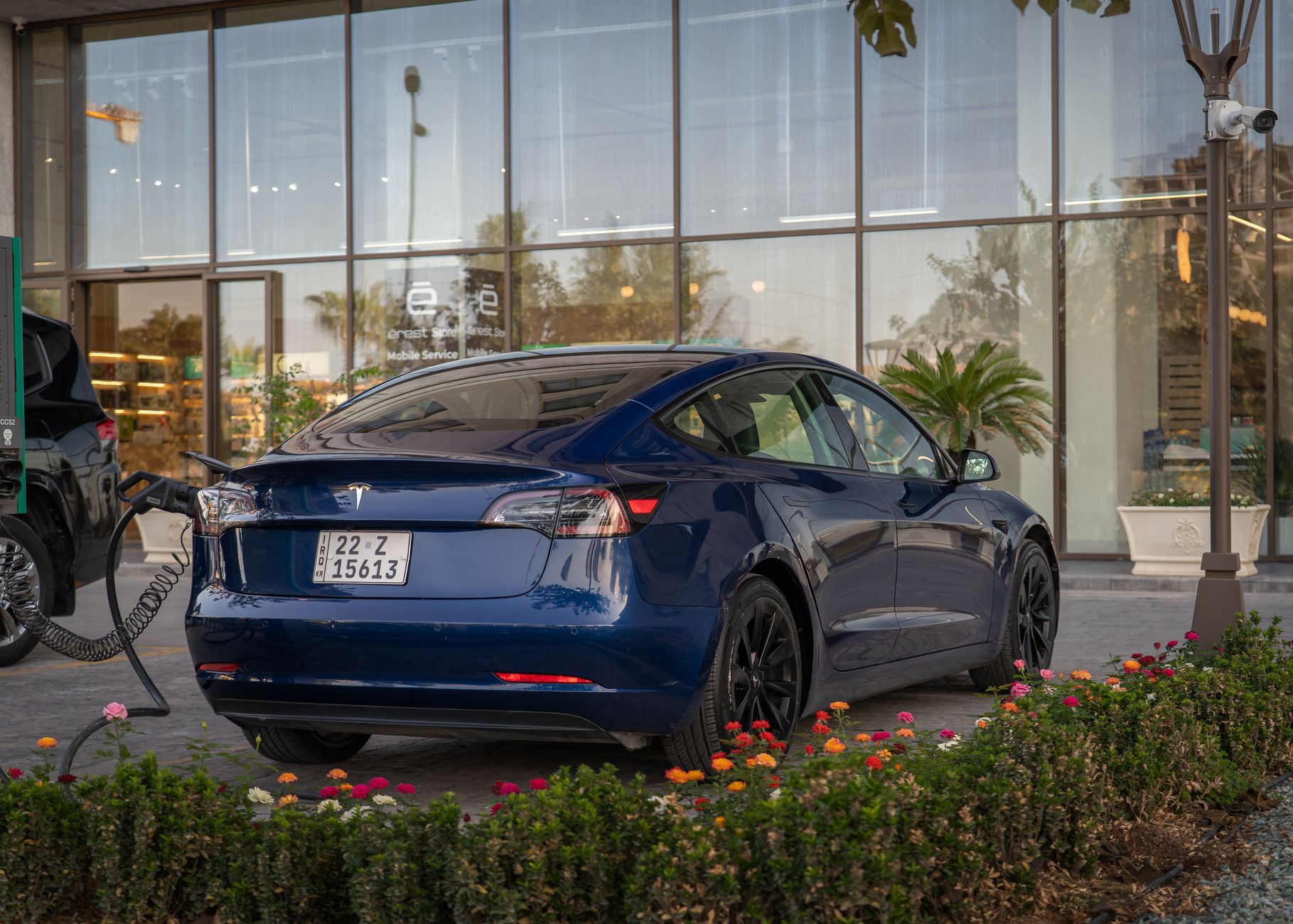
2026: The year Tesla’s story stops being hypothetical
For more than a decade, the automobile industry has treated Tesla less as a carmaker and more as a rolling prophecy. In 2026, that mythology meets a harder test. The headlines are still dramatic — a next‑generation Roadster reveal planned for August, a Cybercab robotaxi pencilled in for 2026‑plus, refreshed Model Y and long‑range Model 3 Highland — but the subtext is more prosaic: execution risk, battery uncertainty, and a delayed march toward the truly affordable EV.[3][1]
What emerges is a 2026 Tesla that looks less like an all‑conquering disruptor and more like a car company wrestling, in public, with scale, cost, and credibility.
Cybercab and the next‑gen platform: the cheap EV that keeps moving
Tesla’s next‑generation vehicle platform — the one meant to underpin a $25,000‑class car and a driverless Cybercab — is now firmly a “not before 2026” story.[3] Elon Musk unveiled the Cybercab in October 2024, promising a steering‑wheel‑free, robotaxi‑style EV with production targeted for 2026.[3] Recent reporting has quietly reset expectations: production will not begin before 2026 at the earliest, pushing true volume relevance further out.[3]
More worrying is what is happening under the skin. In December 2025, a key supplier in Tesla’s 4680 battery program wrote down its investment from $2.9 billion to roughly $7,400, a staggering collapse that led Electrek to describe the next‑gen platform as in “serious trouble.”[3] The phrase is not just colourful: if the cornerstone battery and cost structure for Tesla’s affordable EVs are in question, then the entire Cybercab and low‑cost platform narrative shifts from “imminent” to “fragile.”
For 2026, that means the mass‑market breakthrough many consumers and investors expected is again deferred. The Cybercab now functions more as a promise on the horizon than a product you can reasonably plan around.
Roadster 2026: a halo car for an anxious brand
At the other end of the spectrum sits the next‑generation Roadster, Tesla’s unapologetic halo car. On the company’s Q1 2026 earnings call, Tesla confirmed the Roadster remains in design development, with a public reveal planned for August 2026.[1] Industry reporting frames it as a late‑2026 launch, with engineering still clearly ongoing rather than wrapped up.[1][2]
On paper, a Roadster reveal is exactly the kind of spectacle Tesla has historically weaponised: a high‑performance electric showpiece to reinforce the brand’s technological mystique. But in 2026, the optics are different. A six‑figure, hypercar‑style EV risks looking like a distraction from the more urgent task of delivering reliable, affordable electric mobility at scale.
Yet there is a strategic logic. In a crowded EV market, a halo car can anchor brand desirability, draw attention to Tesla’s broader lineup, and reassure the faithful that innovation has not stalled — even if the truly transformative products, like the next‑gen compact EV, are sliding further into the future.[1]
Model Y 2026: the car that quietly does the real work
While the Cybercab and Roadster dominate headlines, the 2026 Model Y is the vehicle that will carry Tesla through this transition. For the 2026 model year, Tesla’s best‑selling midsize SUV receives a styling refresh — new front and rear fascias and updated illumination — but its real strength lies in numbers, not aesthetics.[6]
Car and Driver lists the starting price at about $39,840, with trim‑related listings rising slightly above $41,000.[4][6] In a market where EV prices have yo‑yoed and consumer subsidies are under political pressure, that price band keeps the Model Y within reach of upper‑mainstream buyers.
The range figures are more impressive than revolutionary, but they underscore Tesla’s continued efficiency lead:
- Base RWD: 321 miles on 18‑inch wheels, 303 miles on 19‑inch.[4] - Premium RWD: up to 357 miles on 19‑inch wheels, 344 miles on 20‑inch.[4] - AWD: 327 miles on 19‑inch wheels, 303 miles on 20‑inch.[4][7]
Fast‑charging remains competitive rather than class‑leading. Tesla says the Premium RWD can add 182 miles in about 15 minutes, while the AWD can add 169 miles in 15 minutes, both at up to 250 kW on a Supercharger.[4][7]
On efficiency, however, Tesla still plays in its own league. EPA combined ratings for the 2026 Model Y come in at 138 MPGe for the base car, 125 MPGe for Premium RWD, 117 MPGe for AWD, and 104 MPGe for the Performance AWD.[4] In an industry now racing to match Tesla’s range, those MPGe numbers remain a quiet moat.
In other words, while the world debates robotaxis and hypercars, the refreshed 2026 Model Y is the workhorse that makes Tesla look like a serious automobile manufacturer rather than a perpetual prototype factory.
Entry‑level EV: 2026 as the benchmark, not the launch
If there is a single product that encapsulates Tesla’s strategic dilemma, it is the entry‑level EV positioned below the Model 3. Recent industry reporting suggests this project is back on the table, conceived as a compact crossover around 4.28 metres long — roughly the size of Kia’s EV3, which is itself scheduled to hit the U.S. market in late 2026.[1]
The catch is timing. The proposed Tesla compact would sit on the delayed next‑gen platform, possibly offer a fully autonomous version, and would first be manufactured in China, with earliest readiness in the second half of 2027 and potential U.S. and European production in 2028.[1][5]
So 2026 becomes less the launch year and more the yardstick. Tesla is benchmarking this car against the 2026 wave of compact EV rivals, even as its own entry will miss that window by at least a year. In mass‑market terms, Tesla is poised to fight tomorrow’s affordability war with today’s platforms.
Model 3 Highland 2026: the long‑range counterargument
Tesla’s answer to those timing concerns, at least partially, lies in the 2026 Model 3 “Highland” Long Range RWD. A recent technical review points to a new LG battery pack of around 82 kWh gross / 79 kWh usable, up from roughly 79 kWh / 75 kWh usable in earlier versions.[3]
On the WLTP cycle, this LR RWD Highland is claimed to deliver up to 750 km in mixed driving and up to 948 km in city conditions.[3] Real‑world figures will be lower, but the message is clear: Tesla is doubling down on long‑range, high‑efficiency sedans while its affordable crossover strategy lags.
The reviewer cites efficiency around 12.6 kWh/100 km, a top speed limited to 200 km/h, and DC fast charging up to 250 kW.[3] Those are not headline‑grabbing novelties, but they are the kind of incremental, engineering‑first gains that keep the Model 3 relevant in a maturing EV market.
A car company in transition, not a tech messiah
Taken together, Tesla’s 2026 automobile story is less about sudden reinvention and more about managed drift. The company is propping up its narrative with spectacular promises — an August Roadster reveal, a driverless Cybercab — while the real business rests on refreshed, finely optimised versions of the Model Y and Model 3.
The next‑gen platform delays and 4680 battery turmoil suggest that the hardest part of the EV revolution is no longer invention but industrialisation at cost.[3] In that sense, 2026 may be remembered not as the year Tesla changed the automobile, but as the year the automobile changed Tesla — forcing it to behave, at last, like a carmaker bound by the same economic gravity as everyone else.