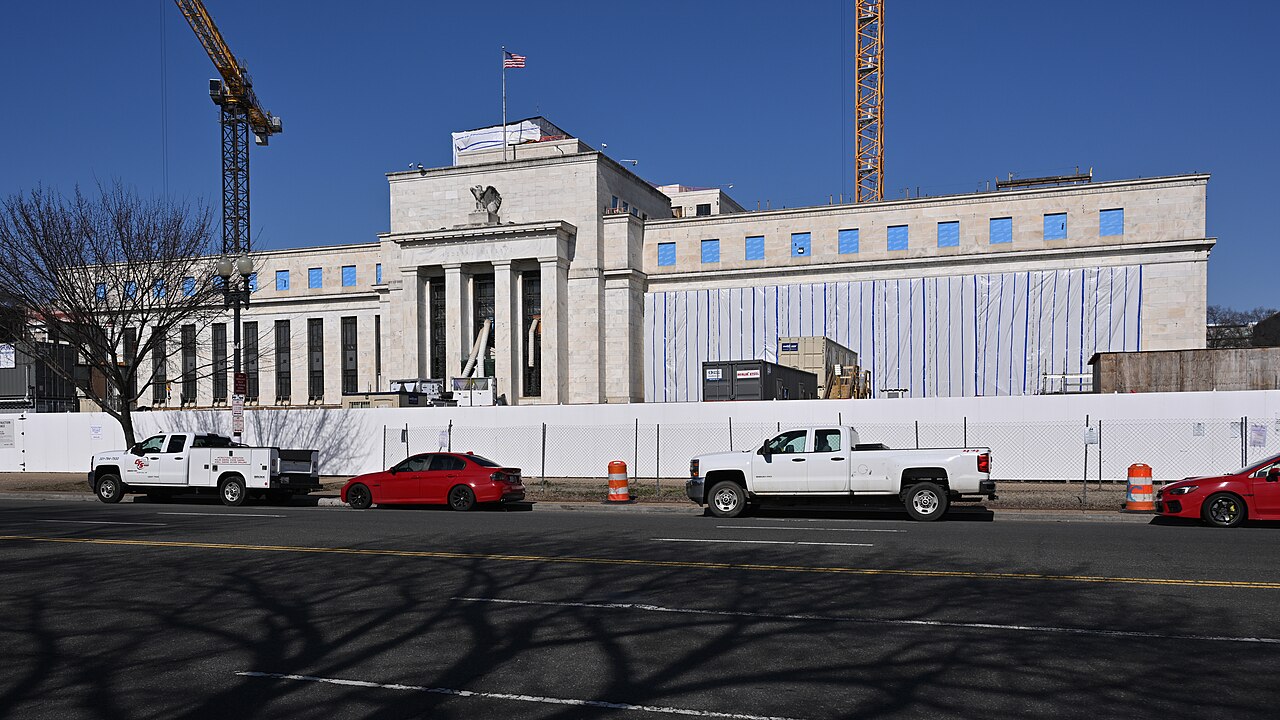
Commentary. The Federal Reserve is approaching a familiar danger: inflation is proving more persistent than policymakers hoped, while the political pressure surrounding interest rates is intensifying. Our view is straightforward: the Fed should keep its independence, acknowledge the cost of further tightening, and act decisively enough to prevent temporary price pressure from becoming a permanent expectation.
Recent comments from Kansas City Fed President Jeff Schmid captured the problem. Inflation, he said, is “uncomfortably above” the central bank’s 2% target and moving in the wrong direction.[1] A Reuters poll found that most economists expected another quarter-point increase in December, with many viewing it as the final move of the current cycle.[2] Other officials, including Governor Christopher Waller, have left open the possibility of a larger increase if price data worsen.[3]
That uncertainty is not a failure. Monetary policy works with delays, and central bankers cannot know in real time whether a burst of inflation reflects temporary shocks, stronger demand, supply constraints or a more dangerous shift in expectations. The Fed’s dual mandate requires attention to employment as well as prices. Raising rates too aggressively could weaken hiring, burden households with debt and expose vulnerabilities in banks and commercial property.
Those arguments deserve more than a ceremonial acknowledgment. High borrowing costs are not an abstract instrument: they raise mortgage payments, make business investment harder and fall most heavily on people without substantial savings. A central bank that responds mechanically to every unfavorable monthly reading risks turning a difficult adjustment into a needless recession.
But restraint has limits. If inflation remains materially above target while policymakers hesitate, households and companies may begin to assume that elevated prices are the new normal. Workers will seek larger wage increases, businesses will protect margins with further price rises and bond markets will demand higher compensation for inflation risk. The result would be a more painful correction later.
Independence is the essential safeguard
The political environment makes that risk sharper. Reuters has reported that recent election results could alter the political backdrop for inflation and monetary policy.[4] That is precisely why the Fed must avoid tailoring decisions to the preferences of elected officials, financial markets or either party’s economic narrative. Its credibility depends on applying the same standard when inflation is unpopular and when rate increases are unpopular.
Independence does not mean insulation from accountability. The Fed should explain which indicators would justify another increase, what evidence would support a pause and how it weighs employment against price stability. Clearer communication would reduce the temptation for politicians and investors to treat every speech as a coded promise.
Critics will reasonably object that rate increases cannot repair supply chains, expand energy production or resolve geopolitical shocks. They are right. Monetary policy is a blunt tool, and using it to suppress demand cannot create homes, workers or fuel. Fiscal authorities should address those bottlenecks instead of expecting the central bank to compensate for years of political delay.
Yet the limits of monetary policy are not an argument for abandoning it. The Fed cannot manufacture supply, but it can prevent a supply problem from becoming a broad inflationary spiral. The appropriate response is neither an automatic half-point increase nor an unconditional pause. It is a data-dependent path that keeps policy restrictive until there is convincing evidence that inflation is returning sustainably toward 2%.
That standard may disappoint both sides. Borrowers will want relief immediately; inflation hawks will demand a dramatic signal. The responsible course is less theatrical: preserve independence, move gradually where possible, move faster if the evidence requires it, and explain the trade-offs plainly.
The Fed should not promise painless disinflation because none exists. It should promise something more credible: that short-term political discomfort will not determine the long-term value of the currency.