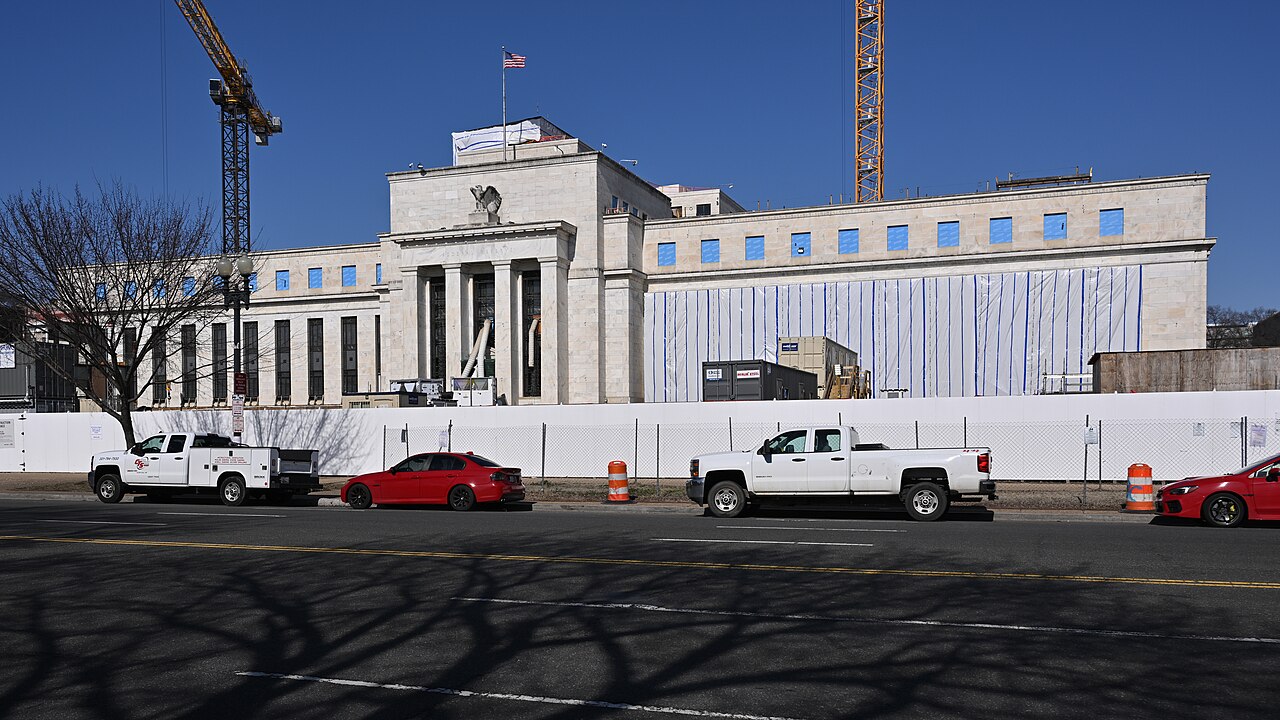
The US Federal Reserve is approaching a difficult policy decision: inflation remains too high for comfort, yet the economy is still expanding strongly enough to make an immediate rate increase risky. Policymakers are widely expected to leave the federal funds rate at 3.75% to 4% at the October 27–28 meeting, while keeping open the possibility of another increase in December. A Reuters poll found that 94 of 100 economists expected an October pause, with most anticipating a later hike.[Reuters]
The central tension is that the usual trade-off between inflation and growth has become less predictable. The US economy grew at a 2.2% annualized pace in the second quarter, and economists surveyed by Reuters expected growth to accelerate to 3.2% in the third quarter. Business investment linked to artificial intelligence has become an important source of demand, while consumer spending has remained sufficiently solid to support expansion.[Reuters]
Why the pause may not last
Federal officials increasingly argue that the economy can withstand higher borrowing costs. Boston Fed President Susan Collins said another rate increase could be needed before the end of 2026 to ensure inflation returns to the central bank’s 2% target. San Francisco Fed President Mary Daly likewise said further increases were probably necessary, although not urgently at the October meeting.[Reuters] [Reuters]
The argument for waiting is not that inflation has been defeated. Rather, officials want more evidence about whether recent price pressures are temporary or becoming embedded in wages, services and expectations. A pause would allow the Fed to assess incoming data without prematurely tightening financial conditions, particularly if employment begins to weaken.
The opposing view is that waiting could allow demand to strengthen further. Christopher Waller, a Fed governor, has pointed to continued growth, low unemployment and an unresolved energy shock as reasons additional hikes may be required. Minutes from the September meeting showed policymakers divided: some focused on the temporary effects of energy prices, while a more hawkish group saw signs of broader, demand-driven inflation.[Reuters] [Reuters]
AI is both growth engine and inflation risk
Artificial intelligence complicates the Fed’s assessment because it is simultaneously a potential productivity revolution and a powerful investment boom. Spending on data centers, chips, electricity and related infrastructure is supporting output and corporate demand. But if that spending lifts prices for equipment, construction, power and scarce technical labor, it can make inflation harder to tame.
The International Monetary Fund has warned that the boom carries risks beyond interest-rate policy. Its latest outlook projected global growth of 3.1% in 2026, helped by AI infrastructure investment despite higher oil prices. But the IMF estimated that a sharp reversal in AI spending could reduce global GDP by 1.1% by 2028 and US output by 1.8%, if investors lose confidence in the technology’s productivity or profitability.[Reuters]
That creates an unusual policy hazard. Raising rates may cool speculative investment and demand, but it could also weaken productive investment before its benefits appear. Holding rates too low, meanwhile, could amplify an asset bubble and leave central banks responding more aggressively later.
The shock is spreading across central banks
The Fed is not confronting these pressures alone. The Bank of Japan is expected to hold its policy rate after raising it to 1.25%, a 31-year high, while considering another increase as soon as December. Robust exports of AI-related goods are offsetting weak domestic consumption, illustrating how the technology boom is influencing monetary policy well beyond the United States.[Reuters]
Energy prices add a second, more traditional complication. The IMF has described the global economy as being pulled between a negative supply shock from conflict in the Middle East and a positive demand shock from AI. Higher fuel and heating costs directly raise household expenses while also increasing business costs, leaving central banks with fewer painless options.[Reuters]
What comes next
The most likely near-term path is a Fed pause followed by a December decision shaped by inflation, employment and energy data. A hike would signal that policymakers view persistent price growth as the greater danger; another delay would suggest growing concern that monetary restraint is beginning to threaten the labor market.
For households and companies, either outcome means borrowing costs are likely to remain restrictive. For governments, the wider message is more demanding: monetary policy cannot offset energy shortages, geopolitical instability, excessive debt and an uncertain technology boom simultaneously. The next phase will depend not only on what central banks do, but on whether AI investment produces genuine productivity gains before inflation and financial risk force it to slow.