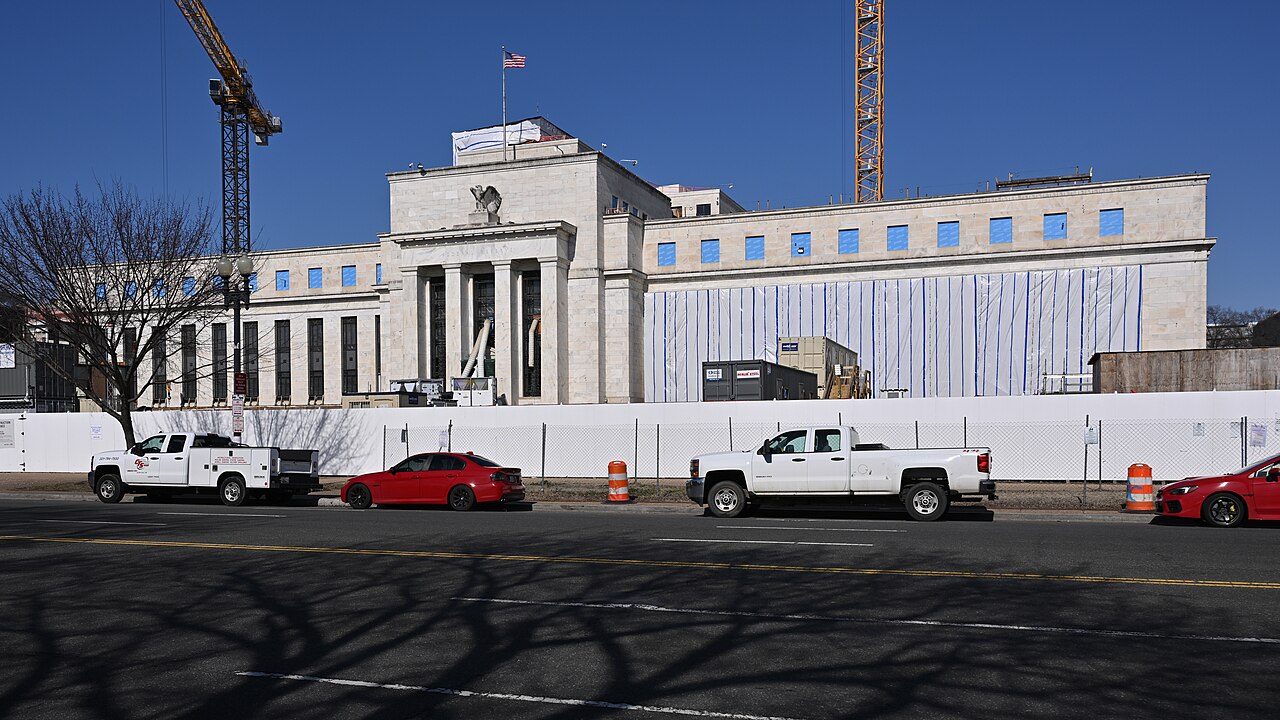
Commentary. The Federal Reserve is approaching another consequential decision with too many forces pulling in opposite directions: renewed inflation, an energy shock linked to the war in the Middle East, and an investment boom driven by artificial intelligence. Our view is straightforward: the Fed should not rush into another rate increase merely to demonstrate resolve. It should wait for evidence that inflation is becoming broad, persistent and rooted in domestic demand.
The choice is not easy. Reuters reported that Fed officials remain divided over whether inflation warrants further action, with some policymakers arguing that more rapid rate increases may be necessary. The central bank’s October 27–28 meeting is therefore likely to produce an unusually vigorous debate[Reuters].
There is a legitimate case for tightening. September inflation figures were hot enough to unsettle financial markets, and expectations of another increase briefly rose to roughly even odds, Reuters reported. Higher energy costs can spread beyond petrol and heating: transport, food production and household goods all become more expensive when fuel prices rise[Reuters]. If businesses and workers begin to expect permanently higher prices, waiting could force the Fed into much harsher action later.
AI adds a newer complication. Strong technology investment is supporting demand and helping cushion the global economy, but it may also be contributing to inflationary pressure. At the International Monetary Fund meetings in Bangkok, policymakers warned that the AI boom, combined with elevated energy prices and a weak yen, could require further monetary tightening in some economies[Reuters via Yahoo Finance]. The United States cannot assume that a technology boom is automatically disinflationary simply because it raises productivity over the long term.
The danger of treating every shock alike
Yet a rate hike cannot produce more oil, reopen shipping routes or end a war. It can only weaken demand. That may eventually lower inflation, but it also raises borrowing costs for households, small businesses and heavily indebted governments. The IMF and World Bank meetings highlighted the scale of that vulnerability: public debt is at its highest level since the Second World War and is expected to exceed 100% of global output before 2030[Reuters].
That does not mean the Fed should ignore energy-driven inflation. It means officials must distinguish a temporary supply shock from a self-sustaining demand problem. Raising rates in response to the first can suppress employment and investment without addressing the source of the price increase. The public would rightly question why a restaurant, manufacturer or renter should bear the cost of a geopolitical crisis that monetary policy cannot resolve.
Markets have already absorbed conflicting signals. Two senior Fed policymakers argued that officials should gather more data before deciding on another increase, and investors largely abandoned expectations of an October hike, while still assigning significant weight to a move in December[Reuters]. Such uncertainty is not itself a reason to act. Nor is it a reason to avoid action forever. It is a reason to communicate a clear threshold.
Patience is not passivity
The Fed should hold rates steady at the next meeting while stating plainly what would change its course: evidence that core inflation is broadening, wage growth is accelerating beyond productivity, or inflation expectations are becoming unanchored. That approach would preserve credibility without pretending that every price increase can be solved by making credit more expensive.
Critics will call this hesitation. They will argue that central banks lose credibility when they wait for certainty, because monetary policy works with long and unpredictable lags. They are right that delay can be costly. But credibility is not measured by the number of rate hikes. It is measured by whether decisions are coherent, explainable and tied to the mandate.
There is also a broader lesson. Regulators are increasingly concerned that AI could create financial-stability risks, including cyberattacks and autonomous systems that disrupt banks or markets[Reuters]. Monetary policy cannot substitute for supervision in that area. The Fed and other authorities should strengthen financial safeguards while keeping interest-rate policy focused on inflation and employment.
Our position is therefore deliberately cautious, not complacent: pause, explain and prepare to move if the data demand it. In a moment shaped by war, energy disruption, debt and technological upheaval, the most responsible central bank is not the one that looks toughest. It is the one that knows which problem its tools can actually solve.