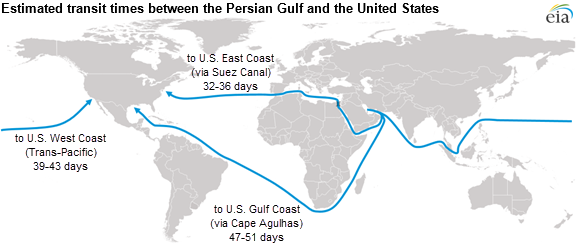
The widening Iran–United States conflict is no longer confined to the battlefield. It is becoming a test of how quickly a regional war can transmit through oil markets, shipping routes, sanctions networks and household budgets worldwide.
Brent crude rose to about $103 a barrel on Oct. 1, according to reporting compiled by The Daily Star. That level reflects more than immediate supply losses: it also prices in the risk that attacks, retaliation or diplomatic failure could disrupt traffic through the Gulf, one of the world’s most important energy corridors.
Why the economic risk is larger than the battlefield
Iran is a major oil producer, but the broader vulnerability lies in infrastructure and logistics. Any prolonged confrontation could affect tankers, refineries, insurance premiums and access to regional ports. Even countries that do not buy Iranian crude directly can face higher transport and financing costs.
China is already reacting defensively. Reuters reported that Chinese refiners suspended some October oil-product exports while Beijing sought to preserve domestic stocks, tightening fuel availability in international markets. That decision illustrates how governments may prioritize national buffers over the open-market flows that normally soften regional shocks.
The consequences are likely to be uneven. Import-dependent economies in Asia and Europe face an immediate squeeze on fuel, chemicals and transport. Oil exporters may receive a windfall, but higher prices can also accelerate inflation in their own economies and increase pressure for subsidies. Consumers everywhere encounter the shock indirectly through food distribution, airfares, heating and manufactured goods.
Diplomacy remains possible, but credibility is weak
US President Donald Trump has said he will decide soon whether to resume large-scale attacks or pursue a settlement, while Tehran says it has received a US response to its proposal for ending the war, according to The Independent. Iranian officials are continuing a diplomatic push but privately view success as unlikely, the report said.
That uncertainty is itself economically damaging. Markets can tolerate bad news more easily than unpredictable news. Businesses postpone investment, traders pay more for insurance and governments prepare emergency measures when they cannot estimate whether the conflict will last days or months.
Washington’s sanctions campaign adds another layer. The US Treasury has targeted people and companies accused of facilitating Iran’s military supply chain. Supporters argue that sanctions raise the cost of escalation without immediately expanding the war. Critics counter that broad financial restrictions can encourage evasion networks, fragment trade and make eventual negotiations harder.
The inflation dilemma
Central banks now face a familiar but difficult choice: respond to an energy-driven price surge or look through it as a temporary shock. Raising interest rates could prevent higher fuel costs from spreading into wages and services, but it would also weaken demand and increase borrowing costs. Holding rates steady may protect employment, yet risks allowing inflation expectations to become entrenched.
The pressure is already visible beyond energy. Japan is expected to see prices rise for more than 3,000 food and beverage items in October, with packaging costs and a weaker yen contributing to the increases, according to The Daily Star. A conflict in the Middle East therefore becomes a domestic political issue far from the region, especially where households have already exhausted savings buffers.
What comes next
The next phase will depend on three variables: whether US and Iranian negotiators can establish a credible ceasefire, whether shipping remains safe, and whether China and other major buyers continue building inventories. A limited agreement could quickly reduce the risk premium in oil prices. A failed diplomatic track, especially alongside attacks on energy infrastructure, could produce a longer and more severe shock.
Europe, Asia and the United States will also face pressure to balance sanctions with market stability. Governments may release strategic reserves, subsidize fuel or tighten export controls. Such steps can cushion consumers temporarily, but they also risk distorting markets and shifting costs into public budgets.
The deeper lesson is strategic. The conflict exposes how dependent the global economy remains on a small number of vulnerable transport corridors and how closely security policy is tied to inflation policy. Even if fighting stops soon, companies and governments are likely to treat energy diversification, stockpiling and alternative shipping routes as national-security priorities rather than merely commercial decisions.
“The continuation of international conflicts is, unfortunately, highly likely,” Russian President Vladimir Putin said on Oct. 1, framing current crises as part of a broader shift in global power, according to Reuters.
That assessment is politically self-serving, but the economic evidence points to a related reality: in an increasingly fragmented world, regional wars are becoming global price shocks.