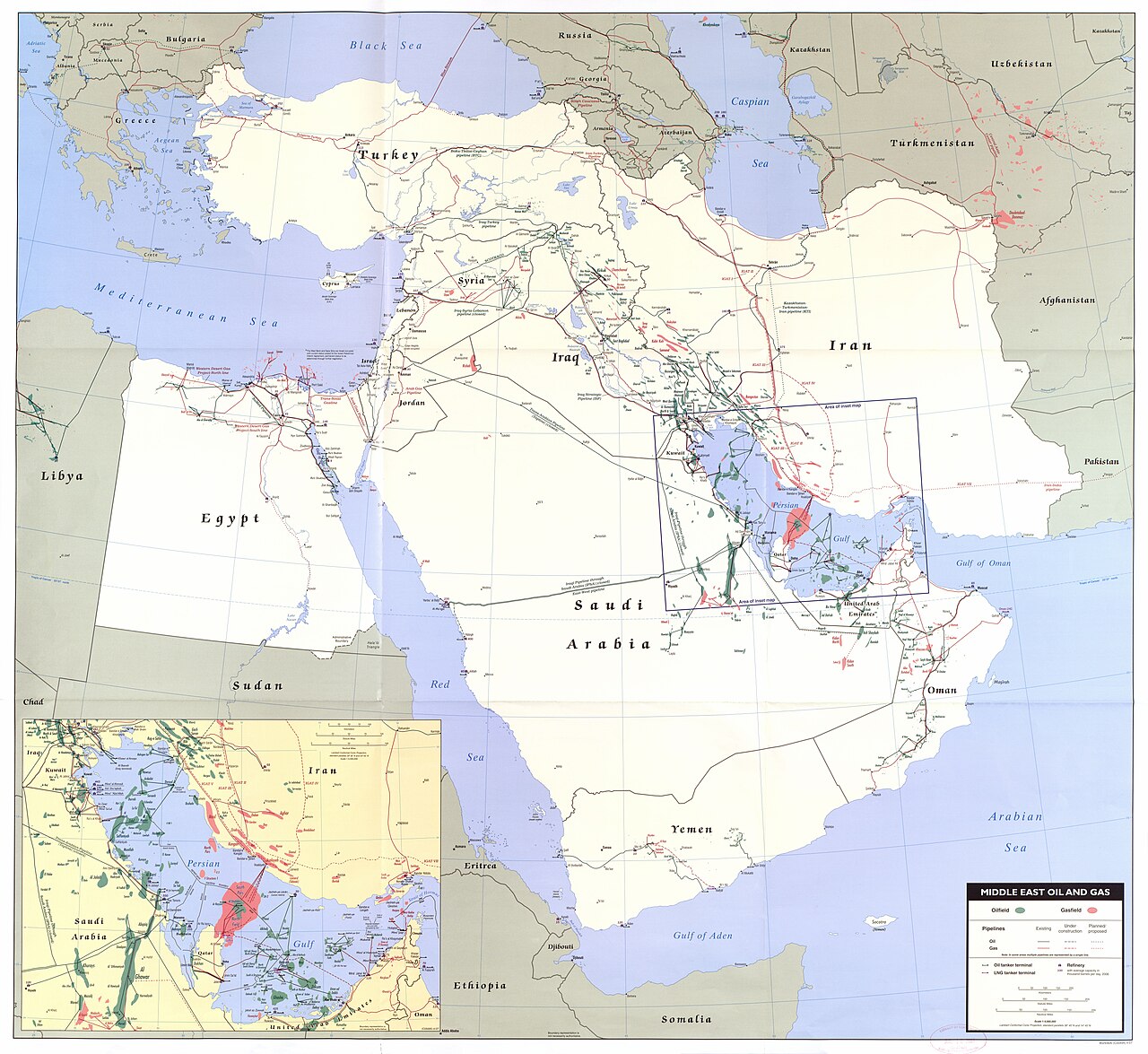
The economic consequences of the United States-Israeli war with Iran are moving well beyond the price of crude. As Washington sends the USS Theodore Roosevelt Carrier Strike Group and a Marine expeditionary unit to the region, adding roughly 10,000 sailors and Marines by late November, energy traders and governments are preparing for a conflict that could disrupt fuel supplies for months.[1]
The immediate pressure is concentrated in refined fuels. Reports of rising diesel prices, China’s pause in October fuel exports and calls from the Trump administration for European governments to release emergency stocks point to a vulnerable part of the global energy system: the ability to turn crude into usable transport fuel.[2] A disruption to oil production can be cushioned by inventories and alternative suppliers; a shortage of diesel, used by freight, agriculture and industry, passes more quickly into consumer prices.
Why the shock matters
Oil markets reacted sharply as the military buildup increased fears about regional stability and the security of shipping routes. The G7 has announced plans to release as much as 100 million barrels from strategic reserves, an effort designed to reassure markets and reduce the premium attached to geopolitical risk.[2]
Reserve releases can buy time, but they do not resolve the underlying problem. Their effectiveness depends on how quickly barrels reach refiners, whether shipping remains open and whether traders believe the disruption is temporary. If the conflict damages infrastructure or constrains tanker traffic for an extended period, governments could face a choice between rationing scarce fuel and tolerating higher prices.
“Supply chains that transform crude into fuel are still under siege,” the Wall Street Journal reported, linking elevated fuel costs to broader financial-market stress.[3]
The pressure arrives as the US economy is already losing momentum. American employers added only 29,000 jobs in September, while unemployment rose from 4.1% to 4.2%; earlier monthly job gains were revised down by a combined 60,000.[4] Higher diesel and gasoline prices could therefore produce an especially difficult combination: weaker household purchasing power alongside renewed inflation.
The political dilemma
For President Donald Trump, the conflict creates competing incentives. A forceful military response may be presented as proof that the United States can eliminate a nuclear threat; Trump has said the Iranian threat was “obliterated” ahead of schedule.[1] But voters experience foreign policy through fuel bills, food prices and employment. The reported slowdown in hiring, combined with higher energy costs, gives opposition parties an opening before consequential midterm elections.[2]
Europe faces a different version of the same problem. European Union officials held an emergency call after Washington pressed them to release diesel reserves, while governments are also managing the consequences of Russia’s war in Ukraine.[2] Emergency stocks can moderate prices, but using them repeatedly would expose how limited the buffer is and could leave countries less prepared for a later disruption.
What comes next
Three forces will determine whether the shock becomes a temporary spike or a wider economic crisis: the duration of fighting, the security of shipping and the response of major consumers. A short conflict could allow reserve releases and rerouted cargoes to stabilize markets. A prolonged confrontation would raise insurance costs, strain refiners and make inflation harder for central banks to ignore.
- Energy: Governments are likely to prioritize diesel supplies for transport, farming and critical infrastructure.
- Monetary policy: Central banks may face pressure to delay rate cuts if fuel costs feed into core inflation, even as weaker employment argues for easier policy.
- Geopolitics: The US deployment could deter attacks, but it also increases the risk that a local exchange expands into a direct regional confrontation.
- Markets: Investors may continue shifting toward energy producers and safe-haven assets while penalizing transport, manufacturing and heavily indebted economies.
The central uncertainty is whether military success can be translated into political control of the economic consequences. Strategic reserves can soften an initial blow, and new US energy investments—including proposed natural-gas, nuclear and Alaska LNG projects—could strengthen supply over time.[5] They cannot, however, quickly replace lost refining capacity or remove the risk premium created by war.
For the world economy, the conflict is therefore less a test of whether oil exists than of whether fuel can move safely, affordably and predictably. That distinction will shape inflation, elections and diplomatic calculations long after the first battlefield headlines fade.
Sources
Fox News; Al Jazeera; NPR; The Wall Street Journal; Anadolu Agency.