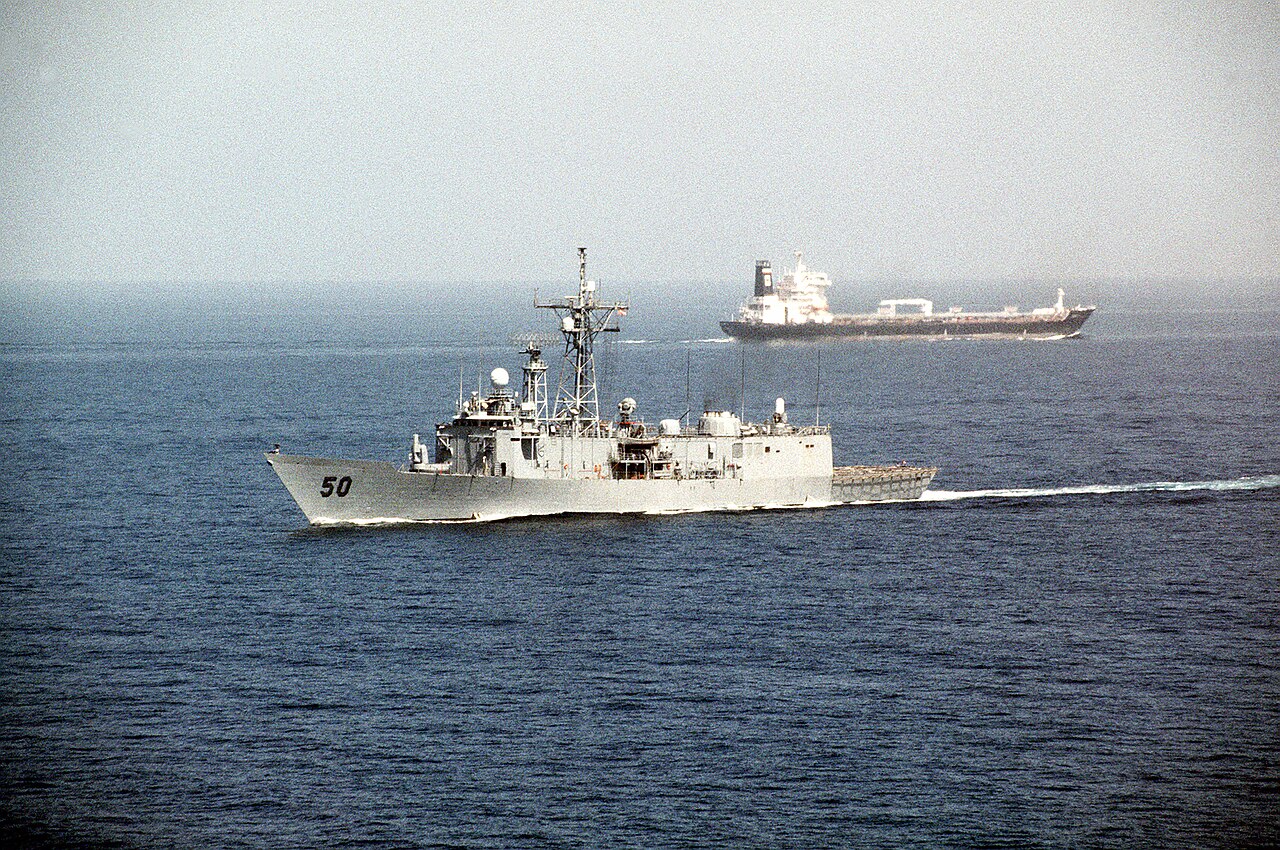
The conflict between the United States and Iran has entered a more dangerous, less clearly defined phase. The intense fighting that followed joint American-Israeli strikes in February has eased, but the war has not ended: Washington is enforcing a naval blockade around Iranian ports, Tehran claims control over the Strait of Hormuz, and strikes and counterstrikes continue.[1]
The central question is no longer only whether either side can impose military costs. It is whether pressure can produce a negotiated settlement without widening the conflict across shipping, energy markets and regional alliances.
From strikes to coercion
The June memorandum of understanding between Washington and Tehran created a diplomatic channel, but talks remain stalled.[1] That gap between negotiation and military pressure is now defining the conflict. The United States appears to be trying to constrain Iran’s ability to finance and supply its war effort while avoiding a return to the most intense phase of combat.
Washington’s latest move, Task Force Iron Gate, extends the blockade’s logic to overland trade routes, including those connected to the Caspian Sea. U.S. officials say the task force will target military technology and illicit revenue streams entering or leaving Iran, although it remains unclear whether the operation will involve direct military action.[2] Iran has dismissed the initiative as “word play,” a response that reflects both defiance and an attempt to limit the political significance of the announcement.[2]
The United States has also offered up to $20 million for information about Iran’s nuclear facilities, equipment or personnel.[2] Such measures may improve intelligence collection, but they also increase the risk that covert activity will be interpreted as preparation for another attack.
Why the Strait matters
The confrontation has an outsized economic dimension because the Strait of Hormuz is a chokepoint for global energy trade. Claims by both Washington and Tehran over control of shipping create uncertainty even when commercial traffic continues. Tanker attacks off Qatar and repeated threats against vessels have made insurance, routing and freight decisions part of the conflict’s daily consequences.[1]
The economic shock is already interacting with broader financial vulnerabilities. A recent market analysis reported that the Iran war has revived inflation worldwide through higher energy costs, while trade uncertainty and heavy public debt are pushing borrowing costs to multidecade highs.[5] The same analysis said the global economy is still expected to grow by about 3% this year, helped by exceptionally large artificial-intelligence investment, but warned that the combination of expensive capital, geopolitical risk and elevated asset prices leaves markets exposed.[5]
This creates competing incentives. Energy-importing governments want de-escalation to protect consumers and industry. Oil producers may gain from price volatility, but they also face risks to infrastructure and shipping. Iran can use disruption to demonstrate leverage, yet prolonged restrictions may further damage an economy already under pressure.
Regional escalation and outside powers
The conflict is not confined to the U.S.-Iran relationship. Fighting between Saudi-backed Yemeni forces and Iran-backed Houthi rebels has intensified, with Houthi attacks reportedly targeting Saudi military assets, oil infrastructure and transport facilities.[1] That broadens the number of actors able to create new fronts or derail negotiations.
Russia is also seeking strategic advantage. President Vladimir Putin met Iran’s security chief in Moscow to discuss closer ties, including a possible pipeline allowing Iran to import Russian gas.[2] Such cooperation would not necessarily amount to a formal alliance, but it could help both governments resist American pressure and develop alternative routes for energy and trade.
For Washington, the challenge is balancing deterrence with control. A blockade can signal resolve, but it can also create pressure on allies, commercial shipping and global prices. For Tehran, continued resistance may preserve bargaining power, while a miscalculation at sea could invite a much broader military response.
What comes next
The most plausible near-term outcome is neither a decisive victory nor an immediate peace agreement, but a prolonged contest of calibrated pressure. Talks could resume if both sides conclude that the economic and military costs are exceeding the benefits of escalation. The planned effort to disrupt overland routes, however, suggests that Washington is preparing for a longer campaign rather than relying solely on diplomacy.[2]
The next test will be whether the blockade remains limited and predictable. If shipping attacks increase, or if the United States expands interdiction operations beyond clearly defined targets, regional governments may be forced to choose between supporting Washington and protecting their own trade. If Iran’s partners open additional fronts, the diplomatic space could shrink further.
The conflict’s significance therefore extends beyond Iran’s nuclear program or the immediate exchange of strikes. It is testing whether economic coercion can compel concessions in an era of fragmented alliances, vulnerable supply chains and high financial interdependence. The answer will shape not only the Persian Gulf, but the credibility of U.S. power and the resilience of the global economy.