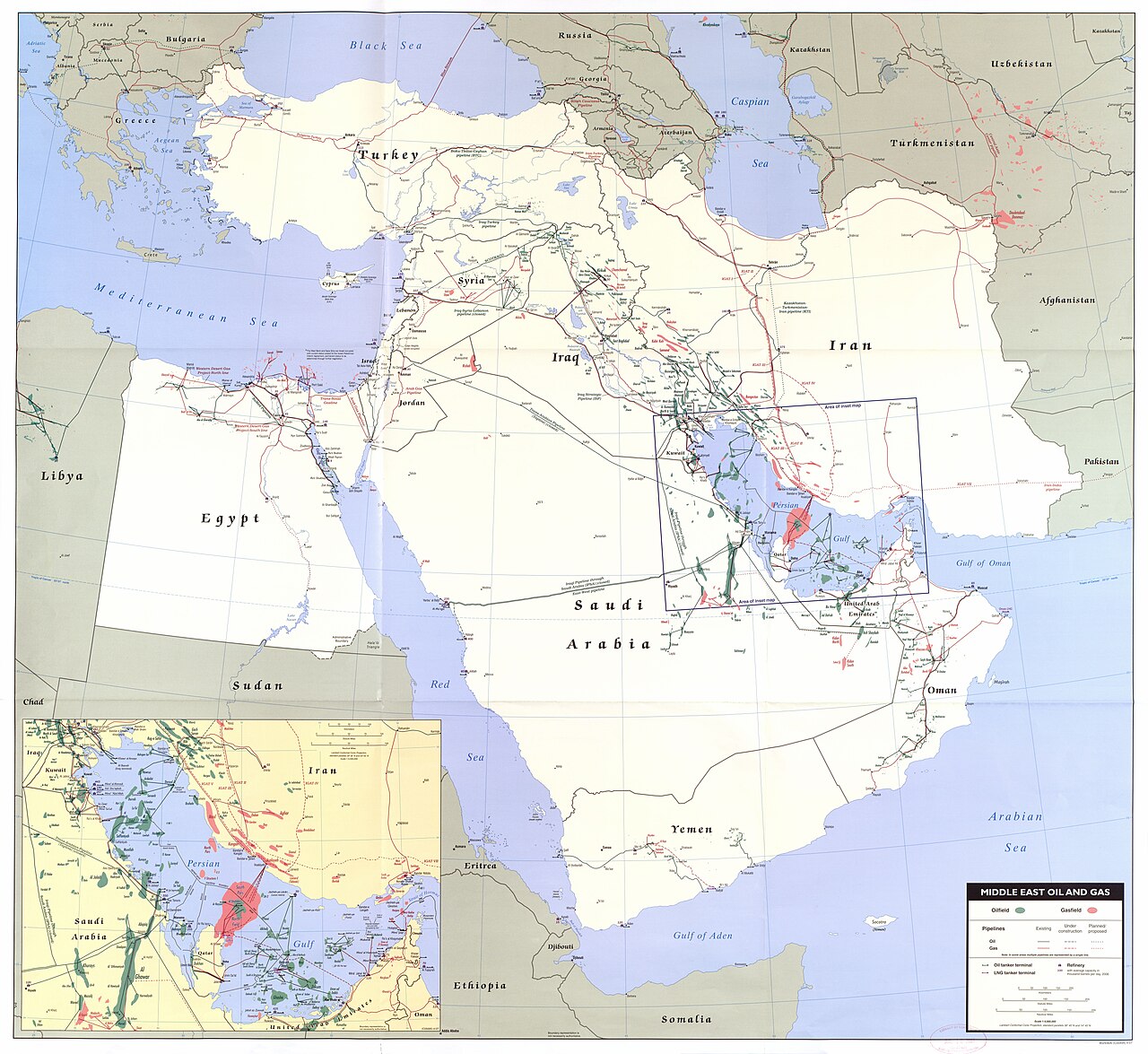
The Middle East conflict is no longer confined to battlefields and diplomatic statements. Its widening geography—from Iran and Israel to Yemen, Lebanon, Syria and the Gulf—has begun to reshape the risks facing the global economy, even as strong technology investment masks some of the damage.
The central question is not whether the conflict will affect growth. It already has. The question is whether energy and shipping disruptions remain temporary, or become a prolonged inflationary shock that forces governments and central banks to choose between supporting demand and restraining prices.
Why the economy has not cracked
Recent economic data presents a picture of resilience. HSBC says the global composite purchasing managers’ index has reached a 40-month high, while consumer demand and trade have held up. It raised its estimate for average global growth in 2026 from 2.5% to 2.7%, citing stronger-than-expected performance in Europe and Asia as well as shipments linked to artificial intelligence investment.
An economic report from New Zealand’s Ministry of Foreign Affairs and Trade, summarizing the OECD’s September outlook, puts global growth at 2.9% this year and 3% in 2027. The report says oil inventories, supplies from producers outside the Gulf and government support have so far cushioned the conflict’s economic effects.
That resilience is real, but it is uneven. China’s official manufacturing PMI rose to 50.1 in September, returning to expansion after two months of contraction, while weak consumption and investment continued to weigh on its recovery. In the United States, revised data put second-quarter annualized growth at 2.2%, with consumer spending growing 3.8%.
These figures show why an immediate global recession is not the baseline scenario. They do not show that the underlying risks have disappeared. They show that businesses and governments still have buffers.
The vulnerability runs through energy and trade
The conflict’s economic leverage comes from its position near major energy and shipping routes. Renewed fighting involving Yemen’s Houthi movement has already raised concerns about freight, insurance and delivery times. Saudi Arabia said three people were injured in attacks on two airports, while Saudi-backed Yemeni forces launched operations against the Houthis near a critical trade route.
Even without a sustained interruption of oil production, markets can react to the possibility of one. Tankers may face higher insurance costs, companies may reroute cargo, and manufacturers may build precautionary inventories. Those costs pass through supply chains before they appear in headline inflation data.
The OECD’s relatively positive outlook assumes that energy prices ease in line with futures markets and that the conflict does not cause lasting disruption. That assumption is the hinge of the forecast. If it fails, growth could weaken while inflation rises—a particularly difficult combination for central banks.
“Continued Middle East instability could sustain pressure on energy, freight and insurance costs,” the New Zealand foreign ministry report said, warning that higher inflation could further constrain governments and central banks.
AI is a cushion, not a shield
Artificial intelligence has become an important counterforce. Investment in data centers, semiconductors and related infrastructure is supporting production and trade across Asia and helping offset weakness elsewhere. HSBC describes AI-related shipments as a significant support for global trade, while the OECD outlook also identifies AI activity as a reason growth may strengthen in 2027.
But the benefits are concentrated. Technology exporters and capital-intensive firms gain more than households facing higher food, fuel and transport costs. A technology-led expansion can therefore coexist with public frustration over living standards. It also leaves the global economy exposed to a valuation correction or a slowdown in corporate AI spending.
The contrast is especially important for policymakers. Strong investment may prevent a broad downturn, but it cannot fully neutralize a supply shock. Central banks can influence demand; they cannot quickly restore a disrupted shipping lane or replace lost oil supplies.
What comes next
The next phase will depend on three variables: the geographic spread of fighting, the security of Gulf energy infrastructure and the durability of shipping disruptions. A diplomatic de-escalation could release pressure quickly, allowing inventories and alternative suppliers to stabilize markets. A direct US-Iran confrontation would carry much larger risks.
Washington has imposed additional sanctions on Iran’s rail and automotive sectors and is weighing its next military move. Iran has threatened American bases and vessels if the United States launches a ground invasion, while insisting that the Strait of Hormuz will remain closed until its conditions are met. These positions narrow the space for compromise and increase the chance that an incident at sea or in the air could produce a wider escalation.
Governments will likely respond with targeted subsidies, strategic-stockpile releases and measures to protect shipping. Such policies can buy time, but they are expensive amid elevated public debt. If inflation remains high, central banks may delay rate cuts or reverse course, increasing borrowing costs for households and businesses.
The most plausible near-term outcome is therefore neither collapse nor normality: resilient but slower growth, unevenly distributed, with inflation risk returning whenever the conflict threatens energy or transport. The global economy has absorbed the first shocks. Its ability to absorb the next ones will depend less on AI’s momentum than on whether the region’s escalation can be contained.
Sources
- HSBC, “Resilient but uneven global growth,” October 8, 2026
- New Zealand Ministry of Foreign Affairs and Trade, Weekly Global Economic Report, October 7, 2026
- Associated Press, “Saudi Arabia says 2 airports were hit in renewed fighting,” October 6, 2026
- World Economic Forum, “The Iran conflict turns hybrid,” October 8, 2026