Morocco’s rise and Canada’s crash: co‑hosts learn the harsh logic of knockout football
The Round of 16 has opened by underlining the World Cup’s oldest truth: the tournament respects history, but it is driven by momentum. Co‑host Canada, the first nation to qualify for the last 16, are already out; Morocco, meanwhile, have quietly become the most consistent African knockout force the men’s game has ever seen.[1][3][6]
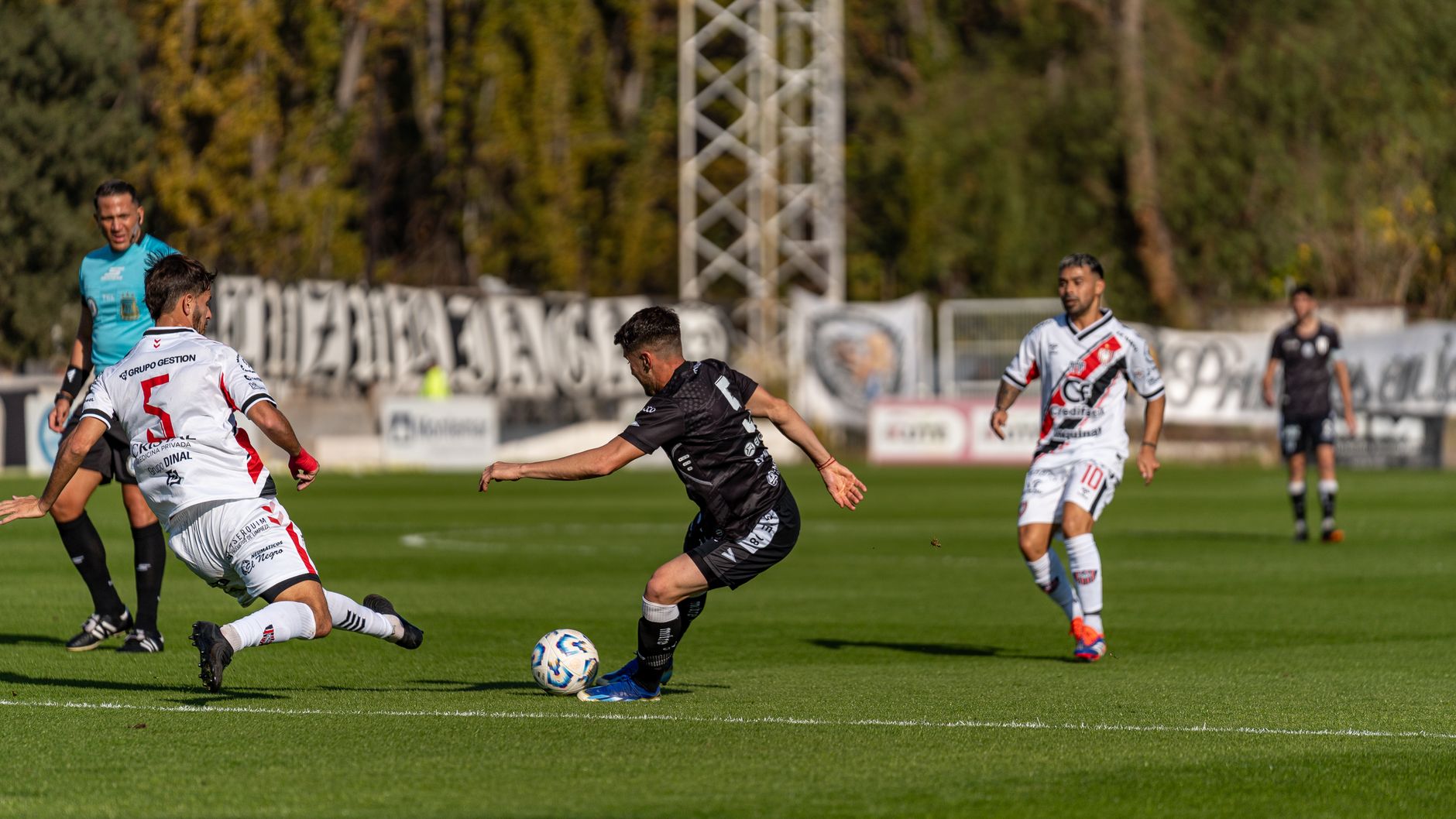
In Houston, Morocco’s 3–0 win over Canada was more than a routine progression; it was a statement.[2][6] Azzedine Ounahi struck twice, with Soufiane Rahimi adding a stoppage-time third to flatten a Canadian side that never found emotional or tactical control in a match that turned increasingly ill‑tempered.[2][3][6] Canada, under Jesse Marsch, committed 15 fouls and collected a raft of bookings, flirting with knockout‑stage records for indiscipline and betraying how quickly a home World Cup can tilt from dream to ordeal.[3][6]
The historical weight of Morocco’s achievement is striking. They have now advanced from four World Cup knockout matches across 2022 and 2026, a total that matches all other African nations combined, and have become the first African nation to reach the quarter‑finals in two separate World Cups.[3] That is no longer a Cinderella run; it is the foundation of a new continental hierarchy, in which Morocco are no longer outsiders but a benchmark.
Individual narratives reinforce that shift. Brahim Díaz, with two assists against Canada, stands on four for the tournament, the most by any African player in World Cup history.[3] Ounahi’s brace, Díaz’s creativity and Rahimi’s late finish constitute a core that looks sustainable, not episodic: Morocco are defending well, creating from midfield and finishing clinically.
Even the officiating carried a sense of history. England’s Michael Oliver took charge of his sixth World Cup match, tying Arthur Ellis and Howard Webb for the all‑time record among English referees.[3] In a tournament where officiating is under constant scrutiny, a familiar, calm presence navigating a fractious encounter felt significant.
For Canada, the symbolism is harsher. Co‑hosts rarely exit this early. Yet their elimination crystallises a reality for newly ambitious football nations: qualification and infrastructure can be planned over years; knockout poise cannot.
France’s controlled fury and Mbappé’s golden race
If Morocco’s win was expansive, France’s 1–0 victory over Paraguay in Philadelphia was about control under fire.[2][3] In a game described as “fiery” and “chippy”, Kylian Mbappé settled the contest with a 70th‑minute penalty, a cool finish in a match where emotion and disciplinary chaos often dominated the rhythm.[3][4][7][13]
The contest produced more cards than goals in the first half, ultimately tying the record for most yellow cards in the first half of a World Cup knockout match, with eight bookings by full time.[3] Yet France emerged with what knockout football prizes most: survival without structural damage.
The implications stretch beyond the scoreline. Mbappé’s seventh goal of the tournament moves him back into the Golden Boot lead on a tiebreaker, level with Lionel Messi but ahead courtesy of two assists.[4][5] In a tournament that still belongs, aesthetically and commercially, to its attacking superstars, this statistical edge matters — not just to legacy debates, but to France’s sense of inevitability.
Now comes the narrative fixture the bracket has delivered: France vs Morocco in Boston on July 9.[3][4][7][9] It is a reprise of their 2022 semi‑final meeting, but this time Morocco arrive not as a one‑off surprise, but as a team with documented knockout pedigree and a fresh scalp of a co‑host. The quarter‑final is framed not just as Europe vs Africa, but as established power vs emerging consistency.
England vs Mexico: storms over Mexico City, pressure over London
Elsewhere, the Round of 16 is preparing to test another traditional heavyweight. England’s clash with co‑host Mexico in Mexico City carries the tactical intrigue of a major knockout tie and the logistical drama of a game threatened — but not moved — by weather.[1][2][6][7][9]
The match is set for 6pm local time, 00:00 GMT, despite severe storm forecasts over Mexico City that prompted serious discussion of moving the game forward by six hours.[2][6] Ultimately, FIFA and local officials chose to keep the late kick‑off, acknowledging the storms could still affect the match.[6] That decision folds the elements themselves into the storyline: altitude, humidity, home crowd and potential disruption form a composite challenge for an England side that has often been accused of emotional volatility in high‑pressure environments.
England arrive here off a nervy 2–1 comeback win over DR Congo in the Round of 32, a match described as a “nervy escape” rather than a show of dominance.[2] Harry Kane’s five goals place him just behind Messi and Mbappé in the scoring charts, yet the sense persists that England are searching for rhythm as much as results.[5]
Manager Thomas Tuchel has leaned into the psychological dimension, publicly urging his players to “avoid stress in Mexico”, a line that reads as both tactical instruction and cultural commentary.[2][15] In a stadium reminiscent of the Azteca’s cauldron, against co‑hosts desperate not to follow Canada out of their own World Cup, England’s ability to manage tempo, atmosphere and expectation will be as decisive as Kane’s finishing.
Brazil vs Norway: Haaland, Vinícius and the modern power struggle
At the other end of the knockout tree, Brazil vs Norway in East Rutherford offers a different kind of stress test: less about conditions, more about pure footballing power.[2][4][7][8][9]
Norway reached the last 16 by beating Ivory Coast 2–1, with Erling Haaland scoring his fifth goal of the tournament.[2] Brazil were forced into late drama, requiring a 95th‑minute winner from Gabriel Martinelli in a 2–1 win over Japan.[2] Both arrive with questions, but also with weapons.
The narrative has inevitably coalesced around Haaland vs Brazil’s forward line, a clash between the tournament’s most direct elite No.9 and a Brazilian attack that includes Vinícius Júnior, sitting on four goals according to pre‑Round of 16 rankings.[2][5][15] Brazil have publicly denied any specific “anti‑Haaland plan”, insisting they will play their own game.[15] That denial adds tactical intrigue: is it genuine philosophy, or pre‑match misdirection in an era where every pressing trigger and defensive rotation is analysed in forensic detail?
In East Rutherford, the fixture is also a litmus test for how globalised the World Cup has become. Norway, historically peripheral to the latter stages of major tournaments, now arrive with one of football’s defining individual talents; Brazil, once the undisputed stylistic superpower, are adapting to a landscape in which they are one major contender among several, not the default favourite.
The bracket tightens: narrative gravity in the last 16
Beyond these headline ties, the Round of 16 picture is tightening. The field has shrunk from 48 nations to 16, and now to 14 after Morocco and France’s wins, with Morocco and France confirmed as the first quarter‑finalists.[1][4][5][7][13]
Upcoming fixtures — Portugal vs Spain in Dallas, Argentina vs Egypt in Atlanta, plus Brazil vs Norway and Mexico vs England — will complete the quarter‑final lineup.[1][2][5][7][9] Recent results carry their own warning: Argentina survived 3–2 after extra time against Cape Verde, needing an own goal in the 111th minute, while Egypt advanced past Australia on penalties.[1][3][5] Giants are advancing, but without invincibility.
Taken together, this Round of 16 has become less about simple progression and more about the stories football likes best: an African team rewriting continental history; a superstar duel in the Golden Boot race; a co‑host in crisis; and a generation of heavyweights forced to prove, again, that reputation is only as strong as the next 90 minutes.