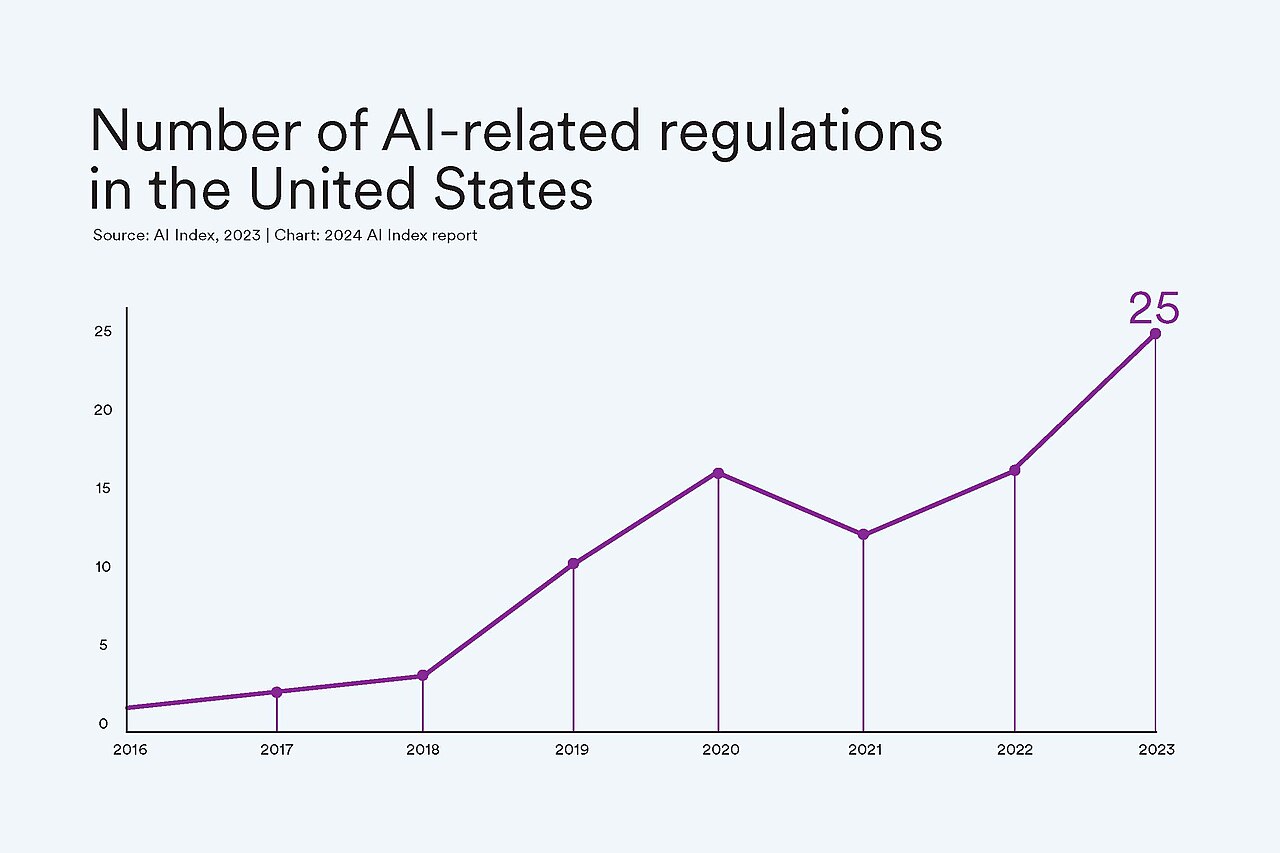
Artificial intelligence has moved from a futuristic promise to an everyday political problem, and the argument over how to govern it is no longer academic. The strongest case now is not for leaving AI to police itself, nor for imposing sweeping bans that would choke off useful tools, but for a narrow, enforceable framework that targets real harms while preserving competition and innovation.
The urgency is clear in the editorial pages and opinion columns now converging on the same basic conclusion: AI needs a leash. Recent commentary has argued that the technology does not need moral instruction so much as hard boundaries, reflecting growing anxiety about misinformation, automated decision-making, labor disruption, and the use of powerful models in military or surveillance settingsWashington Post Opinions. That concern is not exaggerated. Systems that can generate convincing text, images, code, and analysis at scale are already being used in ways that affect hiring, education, journalism, security, and consumer fraud.
Still, the case for regulation is stronger when it is specific. Broad panic invites bad law. A vague “AI crackdown” can easily become a collection of symbolic restrictions that sound tough but do little to address the real risks. The better approach is to require transparency for high-stakes uses, independent testing before deployment, clear liability when automated systems cause harm, and meaningful audit rights for regulators and affected users. Those measures would not stop innovation; they would make it safer and more trustworthy.
There is also a legitimate counterargument that heavy-handed rules could entrench the largest companies. Smaller firms and open-source developers often lack the legal and compliance budgets of the dominant platforms, so poorly designed regulation could leave the market even more concentrated than it already is. That concern deserves weight. If every meaningful model must pass through a costly and slow approval system, the winners will be the incumbents with armies of lawyers, not the startups with better ideas.
That is why proportionality matters. Rules should scale with risk. A chatbot used for customer service should not face the same obligations as a model making decisions about loans, hiring, medical triage, or critical infrastructure. Likewise, research tools and low-risk creative applications should remain relatively open, while higher-risk systems should face documentation, evaluation, and audit requirements. This is the difference between governance and suffocation.
One reason the debate has sharpened now is that the public is no longer being asked to imagine AI harm in the abstract. Editorial commentary across the political spectrum has increasingly tied AI to concrete anxieties: weak guardrails around election content, job displacement, and the possibility that systems deployed too quickly will amplify errors at scaleWashington Post OpinionsThe Guardian Comment is Free. Even advocates of acceleration have started warning that the pace of progress is outrunning the ability of institutions to absorb it. That is not an argument against AI itself; it is an argument for governance that catches up faster than it usually does.
“The choice is not between innovation and safety. The choice is between rules that shape the market and a backlash that shapes it for us.”
There is a second counterargument worth taking seriously: regulation can be captured by politics. Governments are often slow, risk-averse, and prone to writing rules that look precise but are outdated almost as soon as they are published. If lawmakers define AI too narrowly, companies will route around the definitions; if they define it too broadly, they will sweep in ordinary software and bury useful tools under paperwork. This is why any durable framework should be principle-based, updated regularly, and enforced by agencies with technical expertise rather than slogans.
The best version of AI policy would include four commitments. First, disclosure when users are interacting with a synthetic system in contexts where identity matters. Second, independent evaluation for models used in safety-critical settings. Third, a legal duty to document training data, known limitations, and incident response procedures. Fourth, real penalties when companies misrepresent what their systems can do or fail to mitigate foreseeable harms. Those are not radical ideas; they are the minimum expectations for powerful products that can affect millions of people.
The stakes are larger than one industry. AI is becoming infrastructure. Once that happens, the question is not whether the technology exists, but who gets to set the rules for how it behaves. If that authority is left to the largest firms alone, the public will get opacity. If it is handed to politicians through panic, the public may get theater. The right answer is disciplined regulation: skeptical of hype, alert to harm, and confident enough to demand proof before deployment.
In the end, the strongest argument for guardrails is simple: the public should not have to choose between helplessness and overreaction. AI will remain useful only if people trust it. Trust will not come from marketing campaigns or abstract assurances. It will come from rules that are clear, enforceable, and specific to the risks at hand.
Sources: Washington Post Opinions; Washington Post Global Opinions; The Guardian Comment is Free; IEEE Technology and Society, September 2026