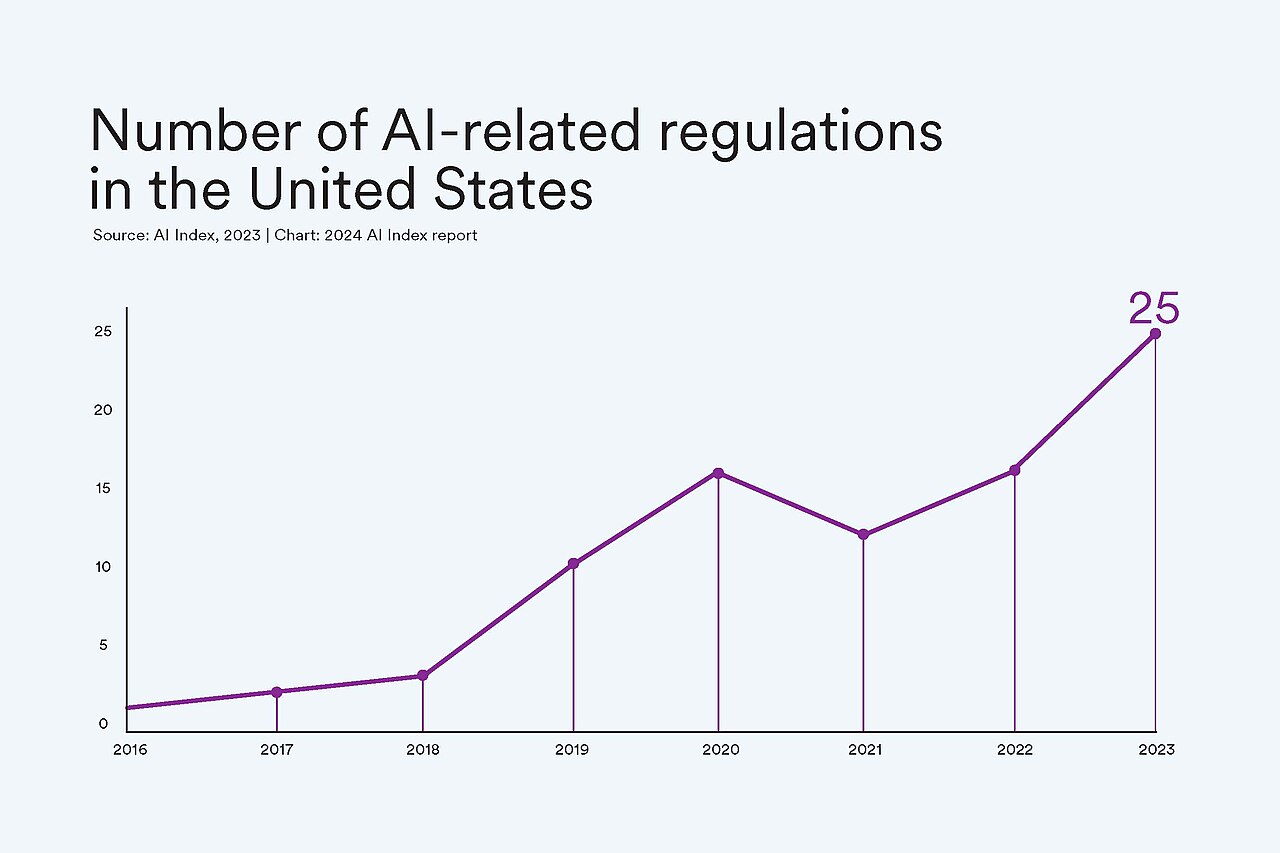
Artificial intelligence no longer lives in the realm of speculation; it is now a policy fight, a business model, and a public risk at the same time. The strongest argument for tighter oversight is simple: when a technology can shape information, hiring, finance, security, and public trust at scale, waiting for harm to become obvious is a failure of government, not a virtue of restraint[1][2].
That case has only sharpened in recent weeks. Opinion pages across the political spectrum are treating AI as a live governance problem, not a distant thought experiment, and the broader debate is now explicitly about whether the industry should be leashed before the harms harden into routine practice[1][3].
The argument for regulation
The pro-regulation case begins with asymmetry. AI companies move quickly, test products on millions of people, and internalize the upside of speed while society absorbs the downside when systems misfire. Josh Hawley’s recent warning that AI firms should not get a free pass to “break things” captures a view now common even among skeptics of heavy-handed state control: innovation without accountability is not progress, it is deferred cleanup[3].
There is also the question of public legitimacy. A technology that influences search, recommendations, persuasion, and office work can reshape institutions long before lawmakers understand the mechanics. That is why recent commentary in the technology-and-society space frames AI as a governance issue as much as a technical one, and why calls for a “leash” are gaining traction beyond the usual regulatory circles[2][1].
Supporters of tighter rules are right on one crucial point: a market that rewards deployment speed will rarely self-police when a product’s risks are diffuse, delayed, or hard to assign to one actor. If lawmakers wait for a major labor shock, a wave of deepfake fraud, or a high-profile failure in healthcare or public administration, the debate will arrive only after the damage has already been priced into everyday life.
The argument against overreach
The counterargument is serious and should not be caricatured. Overregulation can lock in incumbents, punish smaller developers, and hand the future to the firms most able to absorb compliance costs. A rushed federal framework could become so rigid that it freezes beneficial uses before they are understood. AI does not move on a single timetable, and laws written for today’s models may be obsolete by the time they are enforced.
There is also a democratic concern in the other direction. The public wants protection, but it does not want a system in which a small number of regulators effectively decide which models can be built, trained, or released. In that sense, a narrow safety regime with clear rules is preferable to open-ended discretion. The goal should not be to declare AI suspect by default; it should be to make sure the most powerful systems are tested, disclosed, and audited before they become infrastructure.
The latest polling and opinion climate suggest a broader public mood of caution rather than panic. Americans may be split on how much government should do, but there is growing evidence that confidence in institutions remains fragile and that people want competence more than ideological certainty[4]. That matters because AI policy will succeed only if it looks practical, not theatrical.
The better course
The right answer is neither techno-utopianism nor blanket restraint. A useful policy agenda would focus on three things: mandatory testing for high-risk systems, transparent documentation of training and deployment practices, and liability rules that make harmful outcomes cost more than reckless launches. This is not anti-innovation. It is the condition that allows innovation to survive public scrutiny.
There is a deeper reason to prefer that path. Public confidence in the economy has improved only slightly and remains below where it stood a year ago, which means policymakers are operating in a climate of caution, not exuberance[4]. In that environment, the most persuasive AI policy will be the one that proves markets can still grow while rules keep pace with risk.
AI does not need a conscience. It needs guardrails, clear accountability, and lawmakers willing to admit that speed alone is not a strategy. The mistake would be to regulate as if every model is dangerous. The bigger mistake would be to assume that because danger is not evenly distributed, it is not real. The public is already living with the consequences of systems it did not choose and barely understands. The burden now belongs to policymakers and industry alike to make that future safer before it becomes normal.
Sources: Washington Post opinion: “AI doesn’t need a conscience. It needs a leash.”; IEEE Technology and Society, Current Issue; Washington Post guest opinions on AI regulation; Ipsos, September 2026 consumer sentiment