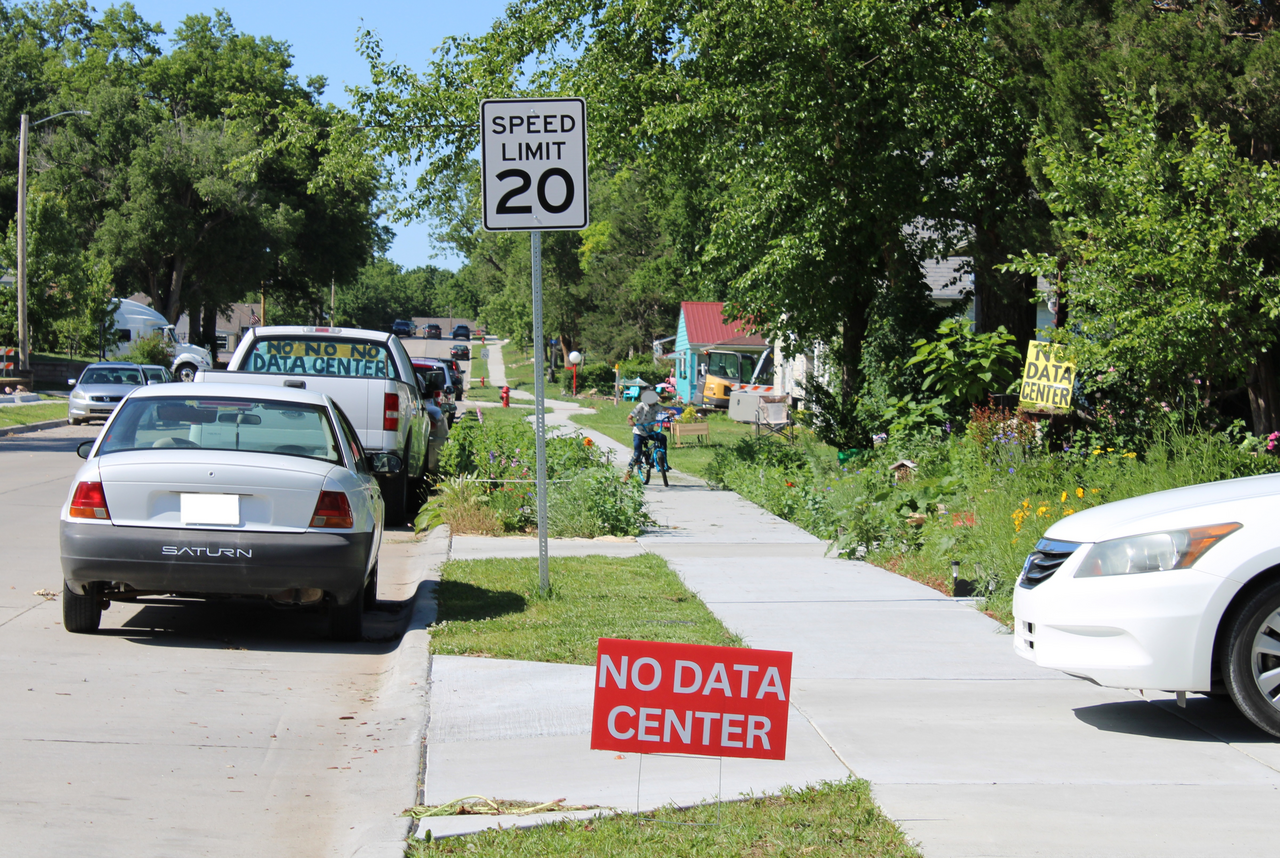
Commentary. The argument over artificial intelligence is usually framed as a contest between innovation and regulation. That is too narrow. The immediate question is more concrete: who pays when the infrastructure behind AI arrives in a community, and who gets to see the terms?
Recent U.S. legislative activity points to an answer that should concern anyone who receives an electricity bill. Congress has focused increasingly on data centers’ demands on power grids, alongside chatbot safety, automated pricing and broader AI oversight. The House has passed the bipartisan Ratepayer Protection Act, which would require certain data-center operators to bear infrastructure costs rather than shifting them to households and other customers. Inside Global Tech reports that the measure is part of a wider third-quarter push to address the physical costs of AI.
Our view is straightforward: communities should welcome investment only when they can verify its price, negotiate its conditions and refuse a bad deal. A glossy promise of jobs or technological leadership is not a substitute for a transparent accounting of new substations, transmission lines, water use, tax incentives and pressure on an already strained grid.
The case for moving quickly
The opposing argument deserves more than a caricature. Data centers can bring construction work, permanent technical employment and a stronger tax base. They may also attract research, improve digital services and help countries compete in a sector that is developing at extraordinary speed. Delaying every project until lawmakers solve every uncertainty could push investment elsewhere without making the underlying demand disappear.
There is also a legitimate public interest in building enough computing capacity for scientific research, medicine, education and business. Grid upgrades made for large facilities can, if planned properly, improve reliability for an entire region. A blanket hostility to data centers would mistake poor governance for an inevitable feature of AI.
But speed is not the same as progress. When a private project receives public infrastructure at below-cost rates, the subsidy should be explicit, limited and justified—not buried in utility tariffs. The basic principle is familiar from other industries: the party creating an extraordinary burden should pay a fair share of managing it.
Transparency must come before trust
The Ratepayer Protection Act is only one proposal, and legislation can be weakened by exemptions, vague definitions or poor enforcement. Still, its direction is right. Regulators should require public disclosure of projected electricity demand, connection costs, water consumption, tax breaks and commitments to local employment. Utilities should publish who pays for upgrades and whether the costs are recoverable if a project is delayed, downsized or abandoned.
That transparency would also help communities distinguish genuine investment from speculative announcements. It would give supporters evidence to defend projects and opponents evidence to challenge them. Secrecy serves neither side except the most powerful negotiator.
The same logic applies to AI safety. Lawmakers are considering measures ranging from parental controls for chatbots to mandatory shutdown capabilities for powerful systems, according to the same legislative review. Critics will rightly warn against rules that are technically impossible, easy to evade or so broad that they entrench the largest companies. Those objections should improve legislation, not end the conversation.
A fair bargain is pro-innovation
The best policy is neither “ban AI” nor “trust the market.” It is a bargain: permit experimentation, but attach enforceable responsibilities to scale. Companies should be free to build when they can demonstrate that the public costs are covered, the risks are monitored and affected residents have meaningful recourse.
That approach may slow some projects. It may also prevent expensive mistakes. Innovation that depends on undisclosed subsidies and socialized risks is not efficient; it is merely well-connected.
AI will shape economies and public institutions whether communities feel prepared or not. They should not be asked to choose between progress and protection. The democratic choice is to demand both—and to insist that the bill for the future not arrive without an itemized statement.