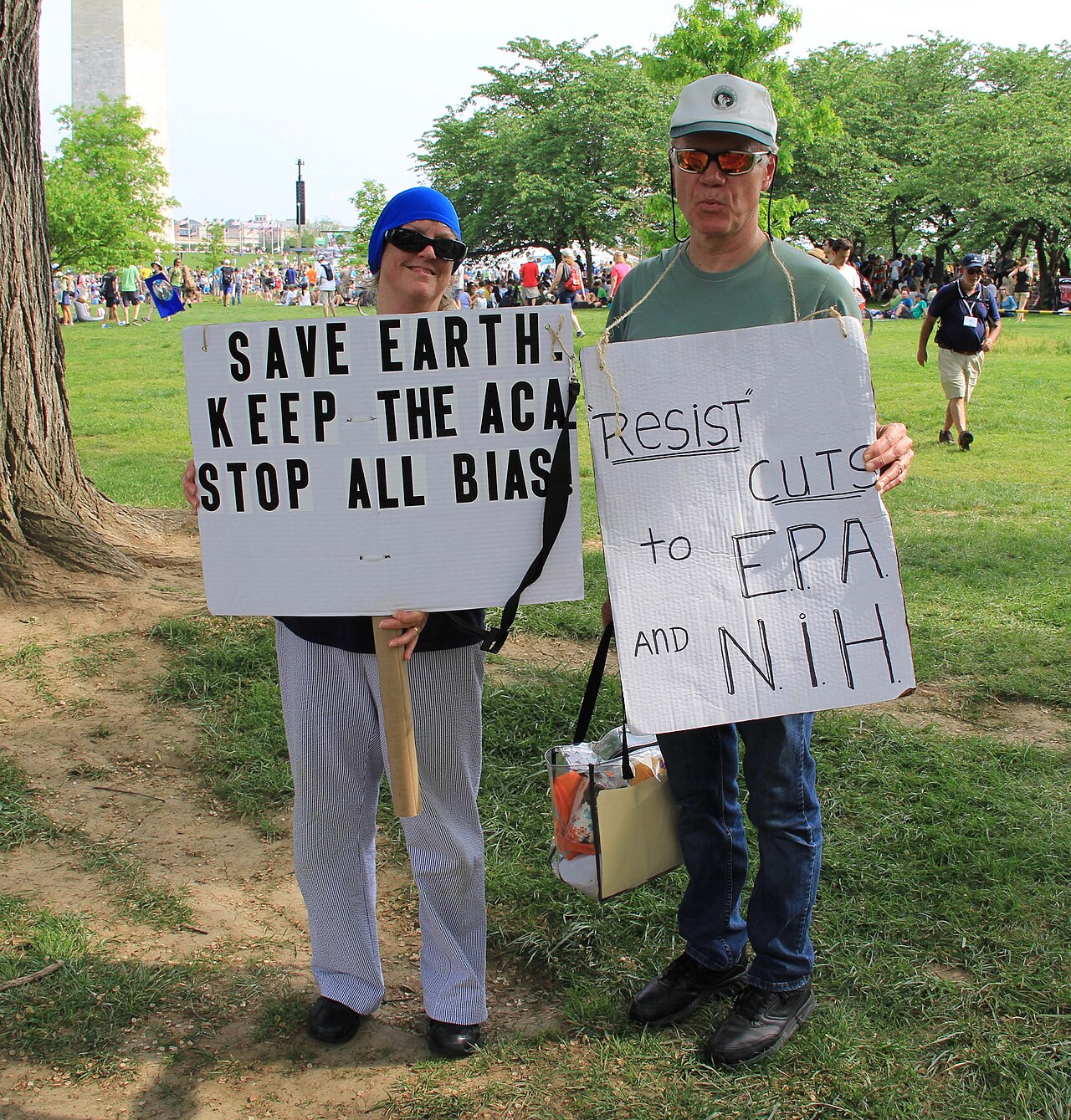
Commentary. The Trump administration’s move to revoke the legal foundation for federal greenhouse-gas regulation is being presented as a correction to overreach. In our view, it is better understood as a retreat from evidence—and from the government’s responsibility to protect the public while the energy system changes.
The Environmental Protection Agency’s so-called Endangerment Finding, issued in 2009, concluded that greenhouse gases threaten public health and welfare. That finding gave the agency authority under the Clean Air Act to regulate emissions from vehicles, power plants and other industrial sources. The administration is now seeking to overturn it, a decision that has already prompted legal challenges and could reshape US climate policy for years.
The case for repeal is not frivolous. Opponents argue that the Clean Air Act was not designed to manage a global economic transformation, and that unelected regulators should not make choices with consequences for electricity prices, manufacturing and transport. They also point to the limits of US action: emissions are global, and unilateral restrictions cannot by themselves determine the trajectory of climate change.
Those arguments deserve an answer, not dismissal. Climate policy can impose real costs, and poorly designed rules can hit lower-income households hardest. A government that mandates cleaner cars or power generation without expanding affordable alternatives risks turning environmental policy into a burden carried by people with the fewest choices. States, businesses and voters are entitled to debate the pace and design of the transition.
But disagreement over policy is not the same as disagreement over physical risk. The EPA’s proposed reversal would not make greenhouse gases less harmful; it would remove a central legal mechanism for responding to them. A recent analysis reported that the agency’s move was accompanied by a government climate assessment whose interpretation was disputed by the scientist associated with foundational evidence that human activity is warming the planet. ScienceDaily
The practical consequences are also larger than a single regulatory rule. Legal uncertainty discourages long-term investment, invites years of litigation and encourages each administration to reverse course. Businesses planning factories, grids and vehicle fleets need durable signals. So do workers and communities deciding whether new industries will replace older ones.
Federal retreat will not end the climate debate. States are already challenging the administration’s approach, while disputes over water and energy continue to expose the consequences of a warming climate. Arizona, for example, has joined a lawsuit over proposed Colorado River water cuts, arguing that the federal plan could unfairly damage Lower Basin states. The Washington Post
Nor will repeal necessarily produce cheaper energy. A reported proposal for the United States to buy diesel from Russia has drawn criticism from both Republicans and Democrats, while the oil industry itself has questioned whether the deal could happen. Politico Energy prices depend on global markets, infrastructure and geopolitical shocks—not simply on whether climate rules exist.
A better argument for climate policy
Our position is not that every regulation is wise or that climate concerns override every economic objection. It is that the answer to costly climate policy should be better policy: transparent impact assessments, targeted help for vulnerable households, serious investment in transmission and storage, and predictable standards that allow firms time to adapt.
That approach would also address the strongest criticism of environmental regulation. Democratic accountability matters. Congress should clarify the EPA’s mandate, set measurable goals and debate how costs are distributed. But legislative responsibility is not served by pretending that the underlying hazard disappears when an agency finding is revoked.
The United States can argue about the route without abandoning the destination of a safer, more resilient energy system. Repealing the Endangerment Finding would make that route more chaotic, not more accountable. In a debate already crowded with slogans, the minimum duty is to keep evidence—and the people affected by policy—at the center.