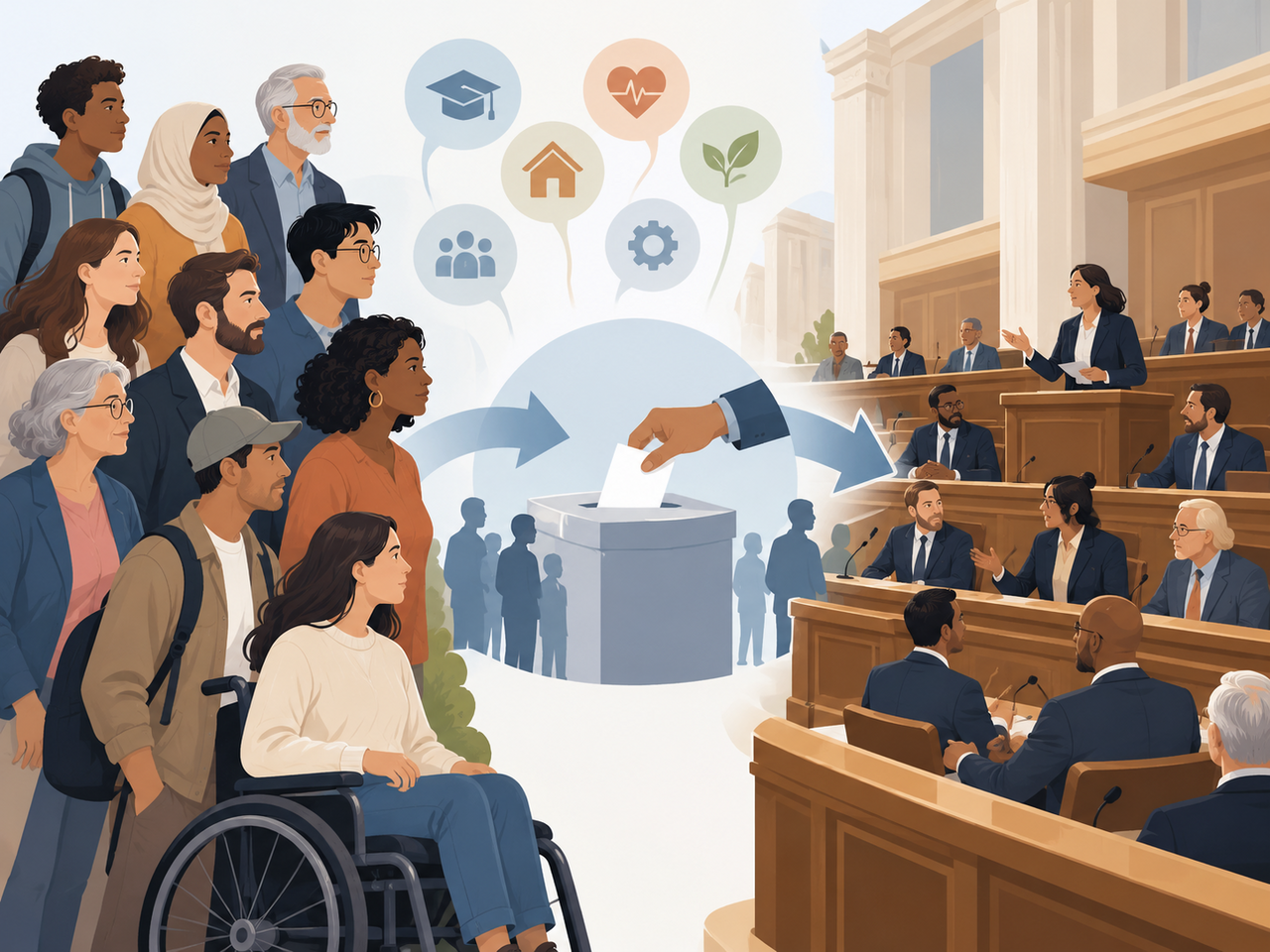
Commentary. Artificial intelligence has moved from a technology-policy debate into a test of democratic self-government. The European Parliament’s latest resolution, adopted by 405 votes to 133 with 60 abstentions, calls for systematic scrutiny of AI’s effects on public administration, elections and fundamental rights. It also proposes an AI observatory to help lawmakers evaluate the technology’s institutional consequences. The European Parliament’s resolution is not a technical footnote; it is a warning that democratic institutions are already struggling to govern systems that can shape public opinion and public services.
Our view is straightforward: governments should regulate high-risk uses of AI, require meaningful transparency and make companies answerable for foreseeable harms. They should not attempt to freeze every new model or treat innovation itself as a public menace.
The case for oversight
The strongest argument for rules is not that AI is uniquely dangerous. It is that its effects can be unusually difficult to detect, contest or reverse. A person denied a benefit, misclassified by a public agency or targeted by political manipulation may not know an automated system was involved, much less how to challenge the result.
European lawmakers specifically linked AI to institutional balance, electoral law and citizens’ ability to form opinions freely. The broader European legal framework likewise says AI must not undermine judicial independence, access to justice, public debate or the separation of powers. The EU summary of the framework makes the principle clear: democratic rights cannot become optional features of an automated society.
In the United States, the political pressure is moving in the same direction. Reuters reported that Democrats preparing to take control of Congress in January are considering bills on independent testing of advanced systems, consumer protection from data-center electricity costs and clearer liability rules for AI companies. Reuters’ report also described planned hearings and investigations.
Those proposals deserve serious consideration because they focus on accountability rather than slogans. Independent testing could expose dangerous failures before deployment. Liability rules could give victims a route to compensation. Energy and infrastructure safeguards could prevent private computing projects from shifting costs onto households and communities.
The case against overreach
There are legitimate objections. Heavy-handed regulation can protect established technology companies by making compliance too expensive for smaller competitors. Vague definitions of “high risk” can turn into bureaucratic discretion. Restrictions imposed before policymakers understand a technology may slow medical research, accessibility tools, scientific discovery and productivity gains.
Industry and free-market conservatives also argue that the United States cannot afford to handicap itself while competing with China. That concern is not imaginary. A regulatory regime that delays beneficial deployment while rival states move ahead could weaken economic growth and national security.
Nor should every online falsehood be treated as an AI emergency. Political speech has always included propaganda, exaggeration and deception. Governments should be especially cautious when regulating content, because officials who receive power to police “misinformation” may eventually use it against legitimate dissent.
What responsible rules would look like
The answer is a narrower, stronger framework. Rules should attach to uses and measurable risks, not to the mere presence of AI. Systems making consequential decisions about employment, credit, health care, education, policing or voting should face documentation, testing, human review and an accessible appeals process.
Political campaigns and platforms should disclose synthetic media when it could mislead voters, while preserving satire, journalism and ordinary creative expression. Public agencies should publish procurement standards and audit results. Companies developing the most capable systems should report serious incidents and permit genuinely independent evaluation.
Most importantly, lawmakers should resist pre-emption schemes that prevent states or localities from addressing concrete harms. A national baseline is useful, but local governments often see infrastructure, labor and consumer problems first. Recent U.S. political reporting indicates that attempts to block state-level AI policy have already faced substantial resistance, while voters have shown interest in safeguards and data-center limits. WLRN’s account of the emerging congressional agenda captures that shift.
Democracy does not need panic, and it cannot afford passivity. The public should not have to choose between unchecked corporate power and a government ban on useful tools. The defensible middle course is democratic control: transparent standards, independent oversight, due process and consequences when powerful systems cause preventable harm.
That is not an anti-technology position. It is the condition for earning public trust in technology.