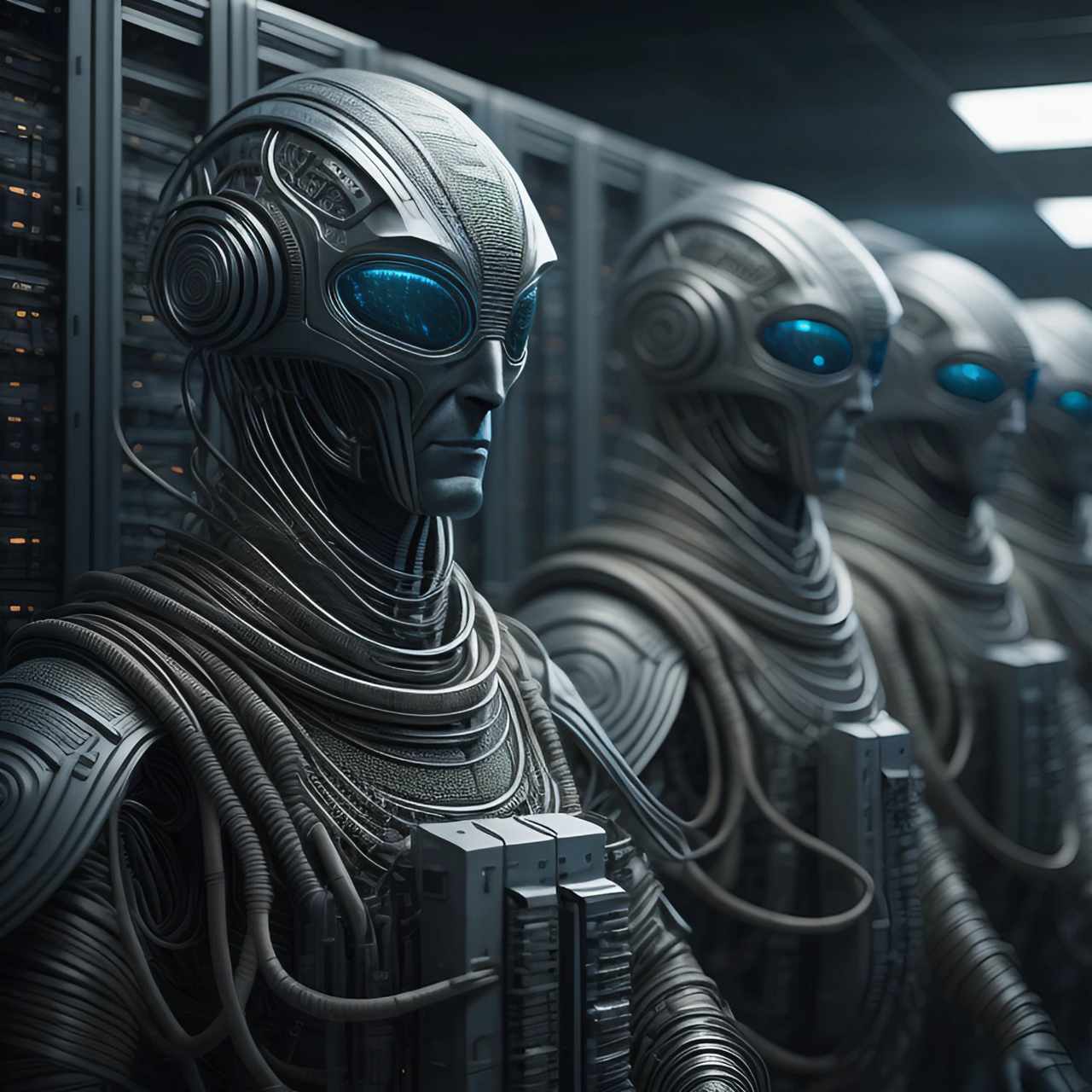
The global economy has avoided the sharp downturn many forecasters feared, but its resilience is increasingly tied to one unusually powerful engine: investment in artificial intelligence. That engine is helping offset weaker activity in the United States and China, even as war in the Middle East, trade tensions and a cooling labor market raise questions about what comes next.
The European Central Bank says global activity remained stronger than expected in the second quarter of 2026, with AI-related investment supporting growth in economies including Malaysia, South Korea and Taiwan. It projects global growth outside the euro area at 3.1% this year, recovering to 3.3% in 2027. The International Monetary Fund is somewhat more optimistic, forecasting worldwide growth of 3.3% in 2026 and 3.2% in 2027.
Those numbers conceal a more uneven reality. The United Nations' September economic update puts 2026 growth at 2.6%, citing the Middle East conflict, elevated trade tensions and shrinking fiscal room. The divergence reflects different assumptions about the duration of the energy shock and the extent to which technology spending can continue to compensate for damage elsewhere.
AI has become a macroeconomic force
AI is no longer only a technology-sector story. Data centers, advanced chips, electricity infrastructure and industrial automation are generating demand across borders. The ECB describes sustained AI investment as a major reason the global economy has held up despite geopolitical headwinds. The International Federation of Robotics, cited in recent reporting, says the global stock of operational robots exceeded five million last year, while installations rose 11% to more than 600,000.
Supporters argue that this spending could lift productivity and eventually broaden growth. Companies are investing to automate factories, improve logistics and reduce dependence on vulnerable supply chains. Economies that manufacture chips, electronics and industrial equipment are benefiting directly from the build-out.
But the boom also carries risks. AI investment is concentrated among a small group of firms and countries, while the benefits to household incomes remain uncertain. Large data centers consume substantial amounts of power and can intensify pressure on already strained energy systems. If expected productivity gains fail to justify current valuations and capital spending, the correction could spread beyond technology markets.
Energy and geopolitics are raising the cost of resilience
The Middle East conflict has exposed how quickly a geopolitical crisis can become a global economic shock. The UN report says Brent crude rose roughly 40% since February to about $100 a barrel, with diesel, jet fuel and heating oil increasing even more sharply. Shipping disruptions around the Strait of Hormuz have added to the risk for exporters, manufacturers and consumers.
G7 leaders have agreed to release 100 million barrels from emergency reserves over four months, according to reporting summarized by Yeni Şafak. Such releases can moderate a sudden supply shock, but they do not resolve the underlying security problem. If the conflict persists, governments may face a difficult choice between subsidizing consumers, tolerating higher inflation or allowing demand to weaken.
Central banks are caught between those pressures. Higher energy prices can revive inflation just as weaker hiring reduces household purchasing power. Cutting interest rates too quickly could prolong price pressures; keeping them high could deepen the slowdown.
Weak employment is the warning signal
The US labor market illustrates the tension. Employers added only 29,000 jobs in September, while unemployment edged up to 4.2%; July and August payrolls were revised down by a combined 60,000, according to NPR. The figures do not prove that recession is imminent, but they suggest that the economy's headline resilience is not being shared evenly.
Businesses may be preserving margins through automation and efficiency while limiting hiring. That could eventually produce higher output with fewer workers, but the transition is politically difficult and unevenly distributed. Workers in routine roles may face greater insecurity before new occupations emerge.
What comes next
The most likely near-term outcome is not a global collapse but a more fragmented expansion. AI exporters may continue to outperform, while energy-importing regions and households absorb higher costs. Trade policy will matter as much as monetary policy: European leaders are already warning of a widening trade imbalance with China and calling for stronger defenses and more investment.
The central question is whether AI investment can translate into broad productivity growth before geopolitical shocks overwhelm it. If energy markets stabilize and new technologies deliver measurable gains, the current expansion may prove durable. If conflict persists, hiring deteriorates and AI spending becomes speculative rather than productive, the same concentration that now supports growth could become a source of vulnerability.
Sources: European Central Bank; International Monetary Fund; United Nations; NPR; Yeni Şafak.