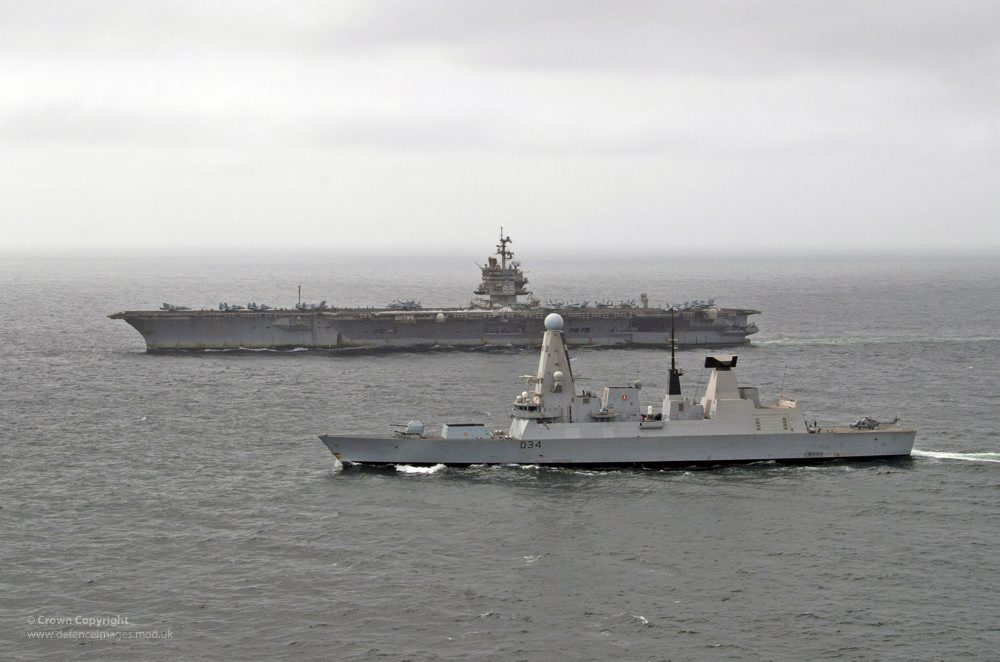
The Middle East is entering a more dangerous phase as Washington expands pressure on Iran while keeping open the possibility of renewed military action. The Pentagon is preparing to send a third aircraft-carrier strike group and additional Marine Corps ships to the region, a deployment estimated at 9,000 to 10,000 personnel, as President Donald Trump weighs resuming strikes after the U.S. midterm elections. At the same time, Washington has announced new sanctions targeting Iran’s rail and automotive sectors and a Russia-linked alleged shadow-banking network.[1]
The immediate effect is strategic ambiguity. The troop buildup can be read as preparation for attack, an effort to strengthen negotiating leverage, or both. For Iran, the arrival of more U.S. forces raises the cost of miscalculation but may also reinforce the argument that confrontation with Washington is unavoidable. For U.S. officials, deterrence depends on convincing Tehran that escalation would carry consequences without necessarily committing to a new war.
From sanctions to military pressure
The latest sanctions are designed to restrict Iran’s access to finance and trade while signaling that Washington intends to squeeze sectors connected to domestic production and transportation. Such measures can degrade a government’s capacity over time, but they rarely produce quick political change. Iran has long adapted to sanctions through informal commerce, alternative payment channels and partnerships with countries willing to trade despite U.S. restrictions.
That is why the military component matters. A larger U.S. presence gives the administration more options to protect shipping, respond to attacks or launch strikes. It also creates more targets and more opportunities for escalation. The central dilemma is familiar: pressure may bring an adversary back to negotiations, but excessive pressure can persuade it that compromise offers no security benefit.
The stated U.S. objective remains contested. Supporters of a tougher approach argue that sanctions and credible force are necessary to prevent Iran from exploiting negotiations while advancing regional influence. Critics counter that coercion has repeatedly failed to produce durable concessions and can strengthen hard-line factions in Tehran. Neither side can yet demonstrate that the current combination will achieve a different result.
Oil markets feel the risk first
Energy markets have responded faster than diplomacy. Oil prices rose by more than 2% as uncertainty over U.S.-Iran negotiations clouded expectations for a sustained recovery in Middle Eastern supplies.[1] The market’s concern is not limited to a direct attack on production facilities. Any threat to shipping routes, insurance, ports or the Strait of Hormuz can add a risk premium to prices.
Governments are already discussing ways to limit the shock. The Group of Seven has agreed to release 100 million barrels from strategic reserves, while European diesel stockpiles are also expected to reach the market.[2] Such releases can buy time and reduce panic, but they cannot permanently replace disrupted supply. Their effectiveness will depend on timing, the duration of the crisis and whether traders believe further interruptions are likely.
Higher energy prices would transmit the conflict well beyond the region. Transport, heating and industrial costs would rise, complicating efforts by central banks to contain inflation. Lower-income economies, which spend a larger share of household income on energy and food, would be especially exposed. A brief price spike is manageable; a prolonged disruption could revive the inflationary pressures that governments have spent years trying to suppress.
A region with fewer safety valves
The confrontation is unfolding alongside broader instability. Ethiopia has closed its embassy in Eritrea and expelled 10 Eritrean diplomats, while Iraq’s prime minister has set a June 2027 deadline to disarm groups operating outside state control.[1] These developments are not all directly connected to Iran, but they illustrate how regional governments are managing competing security pressures while major powers focus on deterrence.
In Gaza, the first stage of a U.S.-brokered plan remains poorly implemented one year after Israel and Hamas agreed to it. The United Nations Security Council’s October forecast says violence and humanitarian conditions remain severe, while later stages involving Hamas’s disarmament, an Israeli withdrawal and an international stabilization force have not been implemented.[3] The unresolved Gaza crisis makes it harder to build a regional coalition around de-escalation: governments face public pressure over the conflict even as they seek practical security arrangements.
What comes next
The next test will be whether military signaling produces negotiations or a chain reaction. If Iran responds through proxies, maritime disruption or attacks on U.S. personnel, Washington may face pressure to act on the deployments it has made. If Tehran holds back, the administration may claim deterrence is working, but the underlying disputes will remain.
Three indicators will matter: whether U.S.-Iran talks resume or collapse; whether shipping disruptions become sustained rather than episodic; and whether reserve releases calm prices without encouraging governments to underestimate the risk. The wider question is political. A campaign built around maximum pressure can create leverage, but leverage is useful only if there is a diplomatic off-ramp.
For now, the region is caught between deterrence and escalation. The military buildup, sanctions and emergency energy planning show governments preparing for disruption rather than trusting diplomacy alone. That may reduce vulnerability in the short term. It also signals that the cost of failure—strategic, economic and humanitarian—will be paid far beyond Washington and Tehran.