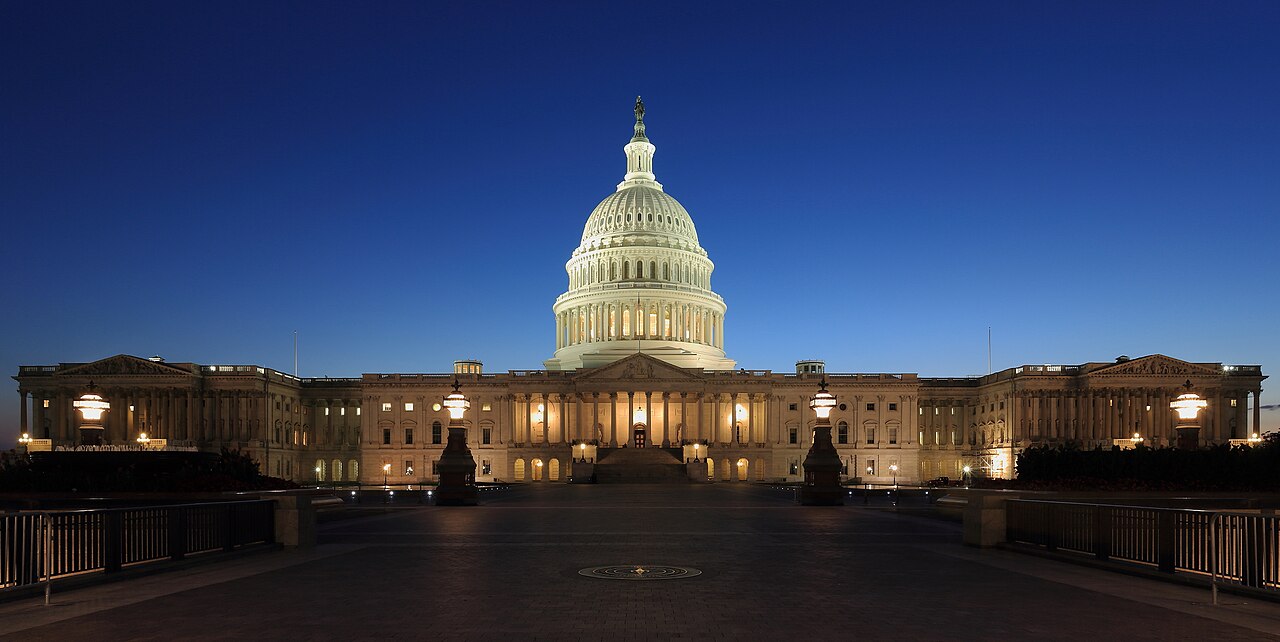
The Democratic sweep of both chambers of the U.S. Congress has transformed the political backdrop for President Donald Trump’s administration—and introduced a new layer of uncertainty for an already strained global economy. The immediate result is not a change in presidential power, but a shift in Congress’s ability to investigate, legislate, approve spending and scrutinize foreign policy.
Reuters reported that the midterm result is already being watched by allies, trade partners and adversaries. Democratic control could intensify congressional examination of U.S. military operations involving Iran, Gaza and Lebanon, while also creating space for new aid to Ukraine. At the same time, governments negotiating with Washington may reconsider the durability of tariff concessions made under Republican control.[Reuters]
Why the vote matters beyond Washington
The election changes the balance between presidential discretion and congressional resistance. Congress cannot automatically end a war or reverse every executive order, but control of both chambers gives Democrats powerful tools: hearings, subpoenas, appropriations and the ability to block or reshape legislation. That could make the administration’s foreign-policy decisions more politically costly, particularly if military action expands or civilian casualties rise.
For Ukraine, the result may improve the prospects of additional assistance, although funding would still face negotiation over its size, conditions and strategic purpose. For Israel, Reuters reported that Democratic lawmakers may increase scrutiny of military operations and weapons transfers. Supporters of continued assistance are likely to argue that congressional pressure could weaken deterrence; critics will say oversight is necessary when U.S. weapons are used in contested operations.
The consequences may be equally significant in trade. Countries that offered investment or market-access commitments to avoid U.S. tariffs could slow implementation if they conclude that American policy is becoming less predictable. China, meanwhile, could see an opportunity to present Washington as divided and exploit the pause between electoral promises and durable legislation.
The economy is resilient—but exposed
The political shock arrives as the world economy is growing, but with little room for error. The International Monetary Fund projects global growth of 3.1 percent in 2026 and 3.4 percent in 2027. It also expects global headline inflation to rise to 4.7 percent this year before easing to 4.1 percent next year.[IMF]
Those figures describe resilience rather than comfort. The IMF identifies renewed trade tensions, production-chain adjustments and a reassessment of expectations surrounding artificial intelligence as risks to the outlook. The institution also warns that a prolonged or wider Middle East conflict could keep energy and food prices elevated, revive inflationary pressure and weaken growth.[IMF]
That combination makes U.S. political uncertainty unusually consequential. If investors believe congressional opposition will restrain escalation, oil prices could remain lower. Reuters reported that markets have already interpreted the midterm result as potentially increasing pressure on Trump to de-escalate the Iran conflict. But if the election produces prolonged confrontation between the White House and Congress, uncertainty could instead raise risk premiums and delay corporate investment.
Markets are already looking past the vote
Financial markets are also contending with a sharp reassessment of technology stocks. Reuters described investors as entering the following week worried about a technology sell-off, the growth outlook and the possibility that renewed conflict could push oil prices higher.[Reuters]
The technology question matters because the sector has been a major engine of investment and market optimism. A correction could be relatively healthy if it brings valuations closer to corporate earnings. It could become more damaging if it reduces investment in artificial intelligence, tightens financial conditions and reinforces fears that productivity gains will not arrive quickly enough to justify current expectations.
What comes next
Three tests will determine whether the midterm result becomes a stabilizing force or another source of volatility.
- Iran diplomacy: Iran and the United States remain far apart on a deal, while Reuters reported continuing military tensions and attacks involving Iran-aligned forces. Any escalation would threaten the IMF’s inflation assumptions.[Reuters]
- Congressional funding: Democratic control will matter most when lawmakers vote on military assistance, foreign aid and budgets. Bipartisan agreements could reassure allies; partisan deadlock would deepen uncertainty.
- Trade credibility: Negotiating partners will watch whether tariff policy changes through law, executive action or bargaining. Predictability—not merely the level of tariffs—will shape investment decisions.
The election therefore does not resolve America’s strategic disputes. It changes who can challenge them, when and at what cost. For the global economy, the central question is whether that constraint produces moderation—or merely a slower, more contentious path through war, trade friction and technological adjustment.
Sources: Reuters on the international impact of the U.S. midterms; IMF World Economic Outlook, October 2026; Reuters on markets and global risks; Reuters on U.S.-Iran tensions.