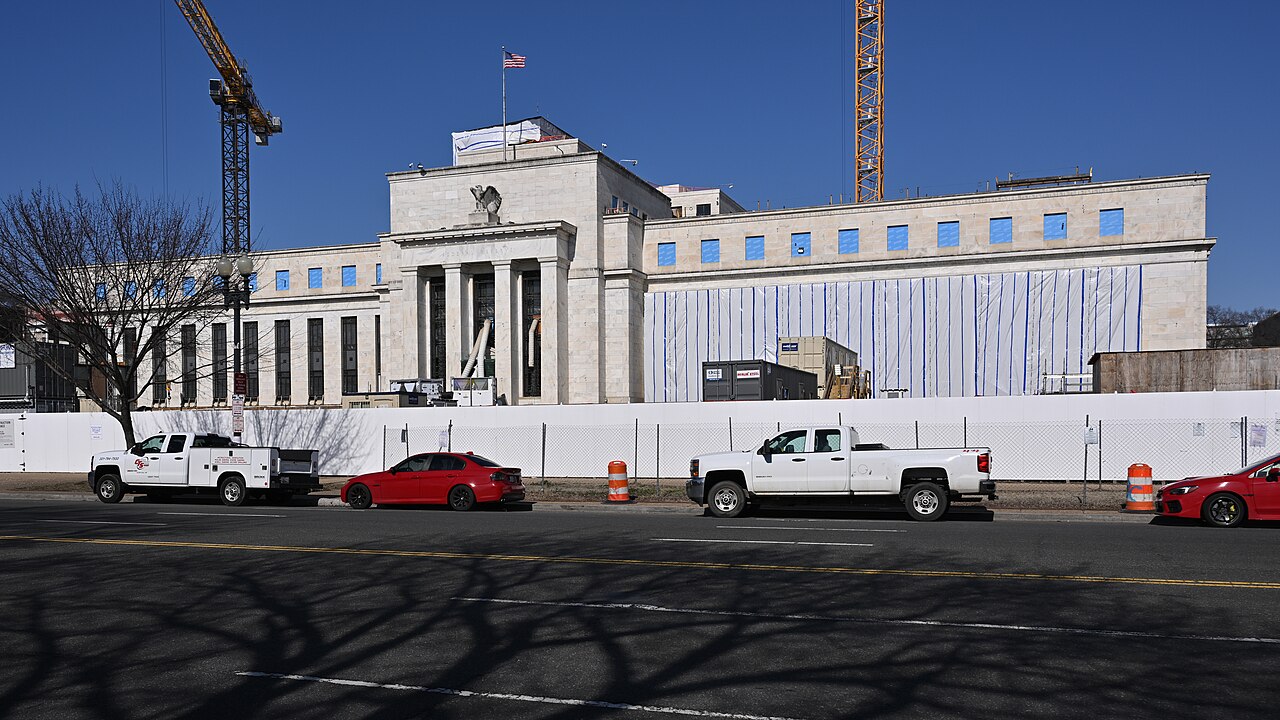
Commentary. The Federal Reserve is approaching a decision that will be read not only through economic data but through the charged calendar of American politics. Its meeting on Oct. 27–28 comes days before the Nov. 3 midterm elections, while voters are already confronting high prices and political leaders are searching for someone to blame.
That timing makes the Fed’s obligation unusually clear: it must act—or pause—according to its mandate, not according to what either party wants to hear. Our view is that a carefully justified pause in October can be defensible, but only if policymakers make equally clear that rates may need to rise again soon.
Markets and economists largely expect no change at the October meeting. A Reuters poll found that 94 of 100 economists anticipated the federal funds rate would remain at 3.75% to 4.00%, while all respondents expected a December increase.[1] That forecast reflects a reasonable concern: monetary policy works with a lag, and an automatic response to every fresh price shock risks pushing the economy into an unnecessary downturn.
The case for patience is not imaginary. The economy expanded at an annualized 2.2% pace in the second quarter, and AI-related investment has helped sustain demand.[1] If the Fed raises rates too aggressively while growth remains positive and unemployment relatively low, it could weaken hiring, housing and business investment before inflation has genuinely become entrenched.
But patience is not the same as passivity. Recent inflation data have been hotter than expected, and policymakers face additional pressure from higher energy costs and import prices. Fed Governor Christopher Waller said further increases would probably be needed to return inflation to the central bank’s 2% target, even as he acknowledged flexibility over the pace.[8]
The disagreement inside the Fed is therefore substantive, not theatrical. Minutes from September showed policymakers divided over whether energy and other supply shocks required a rate increase or whether stronger demand posed the larger threat.[2] That distinction matters. Supply-driven inflation cannot be cured cleanly with interest rates; demand-driven inflation can worsen when officials wait too long.
“Additional hikes” may be needed for a “timelier return” of inflation to the Fed’s 2% goal, Waller said in prepared remarks.[8]
Critics of another increase have a powerful argument. Rate hikes do not produce more oil, repair disrupted supply chains or reduce geopolitical risk. They can, however, make mortgages and business loans more expensive. The burden falls unevenly, often hardest on younger households, renters seeking to buy and smaller companies without access to cheap credit.
Yet the opposing danger deserves equal weight. If households and businesses conclude that inflation will remain high, they may build that expectation into wages, contracts and prices. Restoring credibility later would require more severe tightening. The International Monetary Fund has also warned that public debt is at its highest level since World War Two and is projected to exceed 100% of global GDP before 2030, leaving governments and developing countries particularly exposed to higher borrowing costs.[4]
That is why political pressure must be resisted from both directions. Democrats can point to the cost-of-living pain caused by higher rates; Republicans can argue that inflation reflects weak policy or excessive spending. Both may have legitimate criticisms. Neither should determine the overnight lending rate.
The Fed should hold in October if its full data set supports a pause, then publish a plain explanation of what would trigger a December increase. That guidance should identify measurable conditions—persistent core inflation, resilient demand and continued wage pressure—rather than offer vague assurances. A pause without such discipline would look like hesitation. A hike made merely to demonstrate toughness would be equally irresponsible.
Independence is not a ceremonial privilege. It is the practical condition that allows a central bank to make unpopular decisions before a crisis becomes worse. Voters deserve relief from inflation, but they do not deserve a central bank that confuses short-term political comfort with economic stability.