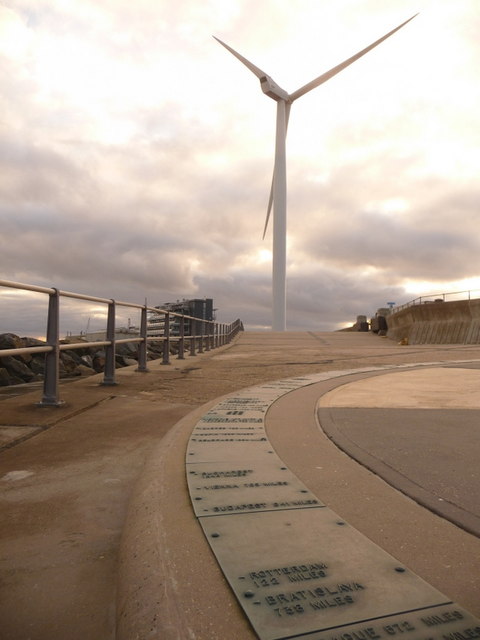
Commentary. Europe has chosen a more ambitious climate path. The European Union’s amended Climate Law now requires a 90% net reduction in greenhouse-gas emissions by 2040, compared with 1990, while allowing a limited contribution from international credits. That is a significant political commitment. It is also the point at which grand targets must meet ordinary household budgets.
Our view is straightforward: the EU should keep the target and become much more candid about the work required to reach it. The alternative—weakening the goal whenever implementation becomes difficult—would sacrifice credibility without solving the underlying economic problem.
The case for urgency is strong. The OECD’s latest climate assessment says global policy progress continued in 2025, but momentum slowed sharply. Policy effort increased by only 1% that year, and current national commitments remain insufficient for the Paris Agreement’s temperature goals. The same assessment points to continuing growth in renewable energy and a less emissions-intensive global economy, but also warns that implementation is uneven.
Those findings argue against climate fatigue. They also argue against pretending that announcements are equivalent to results. A target is useful only when it is connected to power grids, transport networks, industrial investment, building renovations and reliable public funding.
The politics of the bill
Critics of faster decarbonisation have legitimate concerns. Energy-intensive manufacturers face global competition, and electricity prices already shape whether factories expand or close. Lower-income households cannot treat the cost of heating, transport or home improvements as an abstract policy variable. Farmers and small businesses may reasonably question whether new obligations arrive faster than affordable alternatives.
There is also a geopolitical argument for caution. The war-related disruption of oil shipments and resulting price shocks have reminded governments that energy security cannot be separated from climate policy. At COP31 in Turkey, negotiators debated a proposal to raise electricity’s share of global energy use to 35% by 2035, while critics warned that electrification alone would not cut warming sufficiently without a clearer reduction in fossil-fuel use.
These objections should not be dismissed as obstruction. A transition perceived as punitive will generate backlash, delay investment and empower politicians who offer nostalgia instead of a workable energy strategy.
But the answer is not to preserve an expensive fossil-fuel status quo. Dependence on imported fuels exposes households and businesses to international shocks, while delayed investment makes later adaptation more abrupt and costly. The practical choice is between managing change deliberately and having change imposed by prices, disasters or supply disruptions.
What credibility requires
First, European governments should make affordability a core climate metric. Assistance should target households least able to pay, rather than relying on broad subsidies that also reward those who need help least. Renovation grants, public transport and lower-cost clean heating can make emissions cuts visible as improvements in daily life.
Second, industrial policy must be concrete. Companies need dependable electricity, faster permitting and infrastructure for clean power, storage and low-carbon materials. Carbon pricing can guide investment, but it cannot substitute for public coordination when entire supply chains must change at once.
Third, leaders should be honest about trade-offs. International credits may help meet the 2040 target, but they must supplement—not replace—domestic emissions cuts. Likewise, electrification is essential, yet it works best alongside efficiency, renewable deployment and a credible plan to reduce fossil-fuel consumption.
The counterargument is that Europe’s action cannot determine the global climate alone. That is true. Europe’s share of emissions is limited, and unilateral costs could weaken support for ambitious policy. Yet leadership still has value when it produces technologies, standards and financing models that others can adopt. The relevant test is not whether Europe can solve climate change by itself, but whether its policies make clean development more competitive and politically durable.
The EU’s 2040 target deserves support. So does rigorous scrutiny of the route toward it. Climate policy should neither promise painless transformation nor demand sacrifice without protection. It should offer a bargain: cleaner energy, greater security and new economic opportunity in return for sustained investment and fair, transparent rules.
That bargain will not be secured by targets alone. It will be secured when voters can see that the transition is not merely something being done to them, but something that improves the resilience and prospects of their communities.