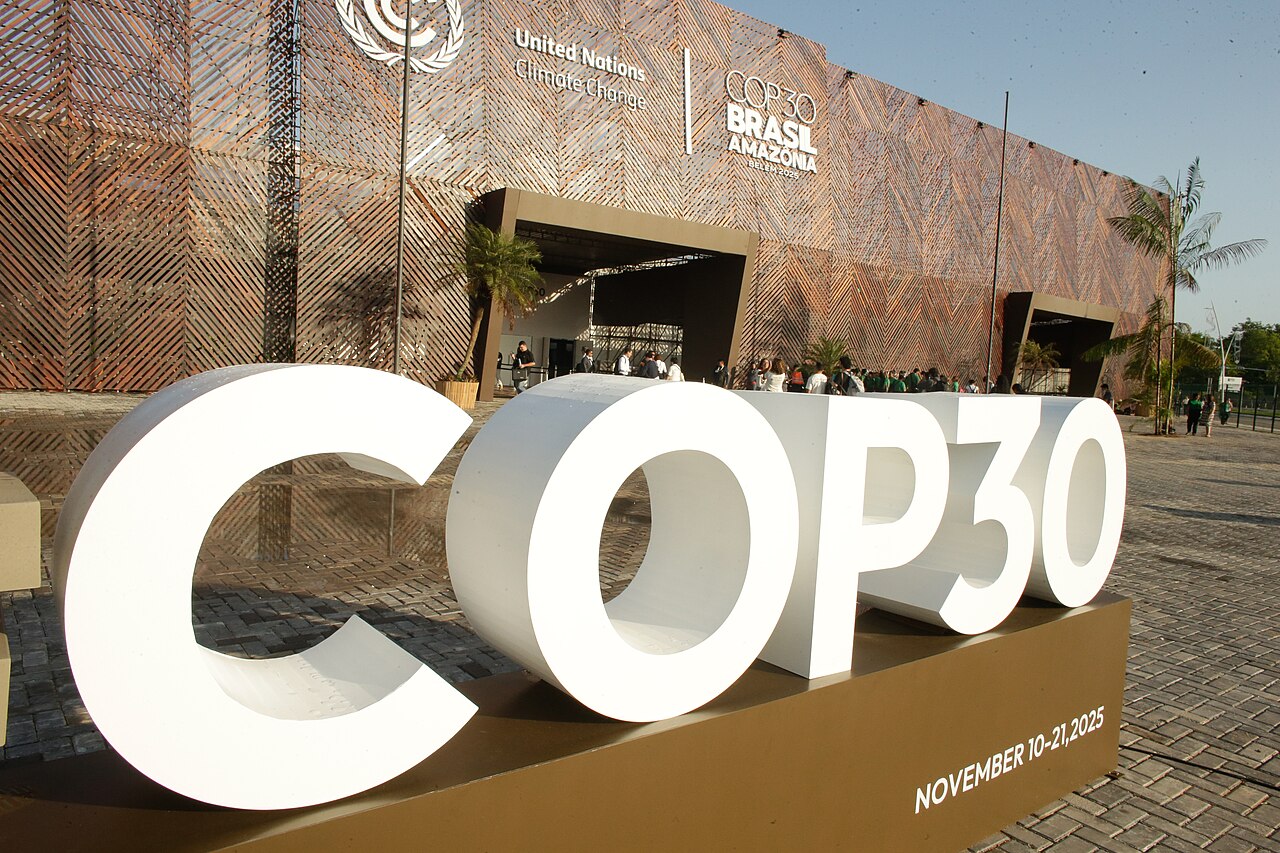
The climate negotiations in Antalya have reached a familiar but consequential impasse: governments broadly agree that emissions must fall faster, yet remain divided over who pays, how quickly economies should move away from fossil fuels and which scientific timetable should guide the next phase of action.
That tension matters because COP31 is not simply another annual summit. It is helping launch the second Global Stocktake under the Paris Agreement, a two-year process intended to measure whether national commitments are sufficient and to shape the next round of climate policy before 2030. The stocktake will assess mitigation, adaptation and financial support, turning diplomatic promises into a test of implementation.
A widening gap between targets and delivery
The European Union has attempted to set a benchmark by agreeing to a legally binding target of cutting net greenhouse-gas emissions by 90% from 1990 levels by 2040. The decision signals that some advanced economies still view long-term regulation and industrial transformation as central to competitiveness, despite political pressure over energy prices and the cost of decarbonisation.
But the broader picture is less reassuring. The OECD’s 2026 Climate Action Monitor says climate policy is advancing while implementation remains uneven, with momentum slowing and uncertainty increasing. That assessment captures the central problem: targets are becoming more ambitious on paper, while permitting delays, grid constraints, high financing costs and resistance from affected industries complicate delivery.
“The emerging picture is one of continued progress but slowing momentum and growing uncertainty over implementation.”
For vulnerable countries, the shortfall is not an abstract governance issue. It is a question of protection from floods, droughts, heat and food insecurity. UN reporting from the talks describes continuing disputes over adaptation support and over who should bear the cost of climate-related damage. Developing countries argue that historical responsibility and unequal access to capital require richer states to provide substantially more finance.
The politics of money and fossil fuels
Negotiators are also divided over language on fossil fuels. The 2023 Global Stocktake called for a transition away from fossil fuels, alongside commitments to triple renewable capacity and double the rate of energy-efficiency improvement. Yet governments dependent on oil, gas or coal revenues resist wording that could be interpreted as an immediate phaseout mandate.
The disagreement reflects competing economic realities. Fossil-fuel producers see continued investment as a source of revenue, employment and energy security. Many governments facing unreliable power supplies argue that development requires affordable energy before it requires faster decarbonisation. Climate-vulnerable states counter that new fossil-fuel infrastructure risks locking in emissions and leaving them to absorb consequences generated elsewhere.
Finance is the point where those arguments become concrete. Higher interest rates make clean-energy projects more expensive in emerging markets, even when solar and wind technologies are becoming cheaper. Without concessional lending, guarantees and stronger public support, the transition may remain concentrated in countries that already possess deep capital markets.
At the same time, the economic case for action is not limited to avoiding future damage. The European Commission’s autumn forecast reports vigorous AI-related investment and robust merchandise trade, illustrating how industrial policy and technology are reshaping demand for electricity, chips and infrastructure. Clean power, storage and efficient grids could become strategic assets. But rapid construction can also intensify competition for minerals, land and skilled workers.
Science as a political deadline
Another dispute concerns when the next major Intergovernmental Panel on Climate Change assessment should be completed. Vulnerable countries want findings ready by 2028 to inform the second Global Stocktake; others oppose a rushed timetable that could strain scientific review and institutional capacity.
The disagreement is partly technical, but its political significance is larger. A 2028 report would arrive while governments are deciding whether current policies are compatible with the Paris temperature goals. A later assessment could protect scientific thoroughness, but it would also reduce the time available for governments to respond before 2030.
What comes next
The likely outcome is not a single breakthrough but a package of incremental agreements: procedures for the stocktake, language on adaptation and finance, and political signals on industrial decarbonisation. The decisive test will come afterward, when governments translate those signals into budgets, permits, grid investments and national legislation.
Three forces will shape the next phase. First, climate finance will determine whether developing economies can move from pledges to projects. Second, domestic politics will decide how much transition costs are passed to households and workers. Third, technological progress will influence whether clean energy is experienced as an economic opportunity or as a constraint.
COP31 therefore exposes both the strength and weakness of the Paris system. Nearly every government accepts the need for action, but agreement on the destination has not solved disputes over speed, cost and responsibility. The next two years will show whether the Global Stocktake becomes a mechanism for raising ambition—or another record of promises that implementation failed to match.