🔴  Breaking News🇺🇸  USA Edition🇪🇺  Europe Edition🌏  Asia & Oceania🌍  Africa Edition
Tuesday, May 19, 2026
🌙 Evening Brief
The Daily Brief

Your daily newspaper · Every night at midnight

Preferences

S&P 500738.65▼ 0.07%NASDAQ705.88▼ 0.43%DOW497.01▲ 0.33%CAC 4044.83▲ 1.52%DAX42.34▲ 2.34%FTSE 10046.63▲ 2.33%Nikkei90.92▼ 0.16%Apple297.84▼ 0.80%Amazon264.86▲ 0.27%Microsoft423.54▲ 0.38%Google396.94▲ 0.04%Tesla409.99▼ 2.90%Nvidia222.32▼ 1.33%Meta611.21▼ 0.49%Netflix89.65▲ 3.02%Coca-Cola81.20▲ 0.47%Nike42.57▲ 1.65%Disney103.91▲ 1.16%JPMorgan300.73▲ 0.98%LVMH105.15▼ 1.64%TotalEnergies93.43▲ 1.25%SAP174.62▲ 3.03%Gold418.43▲ 0.27%Oil149.29▲ 0.72%S&P 500738.65▼ 0.07%NASDAQ705.88▼ 0.43%DOW497.01▲ 0.33%CAC 4044.83▲ 1.52%DAX42.34▲ 2.34%FTSE 10046.63▲ 2.33%Nikkei90.92▼ 0.16%Apple297.84▼ 0.80%Amazon264.86▲ 0.27%Microsoft423.54▲ 0.38%Google396.94▲ 0.04%Tesla409.99▼ 2.90%Nvidia222.32▼ 1.33%Meta611.21▼ 0.49%Netflix89.65▲ 3.02%Coca-Cola81.20▲ 0.47%Nike42.57▲ 1.65%Disney103.91▲ 1.16%JPMorgan300.73▲ 0.98%LVMH105.15▼ 1.64%TotalEnergies93.43▲ 1.25%SAP174.62▲ 3.03%Gold418.43▲ 0.27%Oil149.29▲ 0.72%
🇺🇸 USA Edition
POLITICS

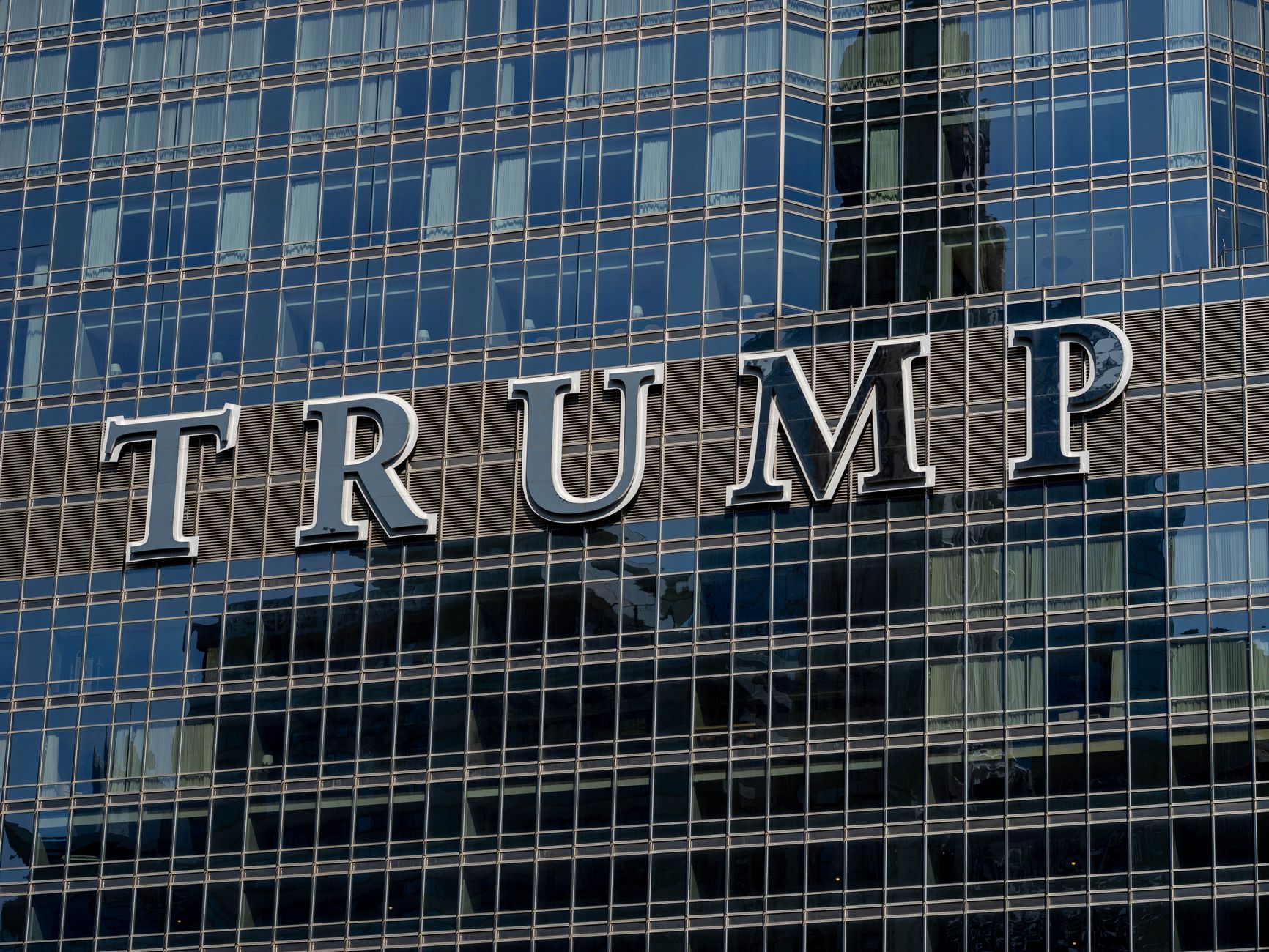
TRUMP VERSUS THE FED

The biggest USA story is the escalating clash between the Trump White House and the Federal Reserve over interest rates and central-bank independence. This fight carries major implications for inflation, borrowing costs, markets, and the credibility of U.S. economic policy. It also reflects a broader struggle over presidential power, as courts and institutions weigh whether Trump can reshape key parts of the government. If the Fed loses its independence, the consequences could reshape the economy well beyond 2026.

Topic sections
🏛️

Politics

Governments under strain as war fallout and coalition politics collide

Latvia’s leadership crisis shows how quickly security incidents tied to Ukraine can become domestic political events. Across regions, governments are being forced to govern in crisis mode while trying to preserve legitimacy at home and credibility abroad.

Latvia’s government falls into crisis after drone incident

The resignation reflects the political cost of security spillover from the war in Ukraine. It will now test Latvia’s ability to restore stability while keeping allied confidence intact.

Nakba Day protests sharpen fears of regional escalation

Global demonstrations are feeding an already tense political climate around the Israel-Hamas war. The diplomatic problem is that symbolism, street protest and military signaling are now tightly intertwined.

💼

Business & Finance

Trump weighs $14 billion Taiwan arms package as defense and trade risks stay intertwined

The proposed sale would bolster U.S.-Taiwan security ties while reinforcing demand for defense contractors. It also raises the temperature around China policy at a time when investors are already sensitive to tariffs, export controls, and supply chain disruptions. Taipei’s higher defense spending suggests the island is preparing for a longer contest over deterrence and diplomacy. Markets will watch whether the administration frames the move as a one-off approval or the start of a broader hardening in policy.

NextEra’s $66.8 billion Dominion bid puts AI power demand at the center of utility consolidation

The acquisition underscores how data centers are driving new capital spending across the power sector. It could also intensify scrutiny from regulators concerned about rates, service quality, and concentration in key regional markets. For shareholders, the question is whether NextEra can translate scale into earnings growth without sacrificing balance-sheet discipline. The deal would be a strong signal that energy companies see AI infrastructure as a long-cycle growth opportunity.

Jury verdict in Musk’s OpenAI suit adds governance pressure to the AI sector

The case highlights the tension between original mission statements and present-day commercial realities in artificial intelligence. It could also influence how investors think about board control, nonprofit structures, and the durability of corporate claims around AI ethics. OpenAI’s business prospects remain strong, but legal uncertainty can still complicate fundraising and partnerships. The verdict will be read as a broader signal about how courts may treat the governance of dominant AI platforms.

📊

Economics

Manufacturing Rebound Points to Faster First-Quarter Growth

New orders in U.S. manufacturing jumped sharply in the latest reading, a sign that business activity may be recovering more quickly than many economists expected. Because new orders often lead production and output, the move improves the odds that GDP growth held up or even surprised to the upside in early 2026. The key question now is whether the improvement is broad-based or just a temporary burst from a few sectors and policy distortions.

Factory Input Costs Ease, Improving the Inflation Outlook

Manufacturers report less pressure on input prices, a development that could help inflation slow further after a volatile stretch. The easing is especially notable because it suggests earlier tariff-related shocks may be losing force instead of building into a new inflation wave. For households and policymakers alike, the direction of these costs matters as much as the current level.

Central Banks and Fiscal Policy Face a Narrower Path

With growth firmer and inflation easing, the policy debate is moving toward timing rather than direction. Central bankers want proof that price pressures are truly cooling before cutting rates, while fiscal support may still be adding demand in the background. That leaves the economy in a delicate but potentially favorable position if the next few months confirm the softer inflation trend.

💡

Technology & Media

Google I/O puts Gemini at the center of the next AI platform battle

Google’s I/O 2026 agenda shows Gemini moving from product add-on to core platform strategy. The company is expected to use the event to demonstrate how AI will be woven through search, devices, cloud services, and software development. That is a defensive move as much as an offensive one, since rivals are racing to make their own assistants the default interface for work and life. The bigger question is whether Google can convert its scale into a durable AI advantage rather than just a fast-follow response.

Microsoft’s giant energy deal shows AI growth is now a utility-scale race

Microsoft’s latest power commitment highlights the hidden infrastructure cost of the AI boom. The company is not just buying electricity, it is reserving future operating room for a fleet of data centers built for massive model training and inference demand. That puts pressure on competitors to secure the same kind of long-horizon power deals or risk falling behind in capacity. It also shows that the AI arms race is increasingly being fought in boardrooms, grid operators, and permitting offices.

Apple’s reported Intel manufacturing shift could reshape chip supply chains

A reported move by Apple toward Intel for some chip production would mark an unusual turn in one of tech’s most carefully managed supply chains. Apple has spent years reducing dependence on external partners, so any change in manufacturing strategy would be highly consequential. Intel, meanwhile, would gain a powerful validation point as it tries to rebuild itself as a foundry for major customers. The story is really about resilience: in an era of geopolitical risk and supply uncertainty, even the most vertically integrated companies may be forced to broaden their options.

🌱

Green & Climate

Energy transition moves from targets to bottlenecks

Governments and utilities are increasingly focused on grid congestion, storage deployment, and faster permitting because those constraints now limit how much renewable power can actually reach consumers. The debate has shifted from setting clean-energy goals to building the wires, backup systems, and market rules needed to make those goals credible. In practical terms, the transition is becoming a race to remove infrastructure barriers before they undermine investment and public support.

Adaptation finance becomes the next climate test

Rising climate impacts are making resilience spending unavoidable, from coastal protection to water systems and emergency planning. The challenge is that many governments must now fund adaptation at the same time they are investing in cleaner energy and industrial upgrades. That makes climate finance less of a side issue and more of the central political question.

Sustainability pressure widens beyond carbon

Companies are being asked to show real progress on emissions, materials, biodiversity, and supply-chain transparency rather than rely on vague green claims. That is changing sustainability from a communications strategy into a compliance and operations issue. The broader environmental agenda is now about how entire economic systems use land, water, energy, and materials.

🏭

Industries

Manufacturers brace for a year of trade risk as supply chains keep reorganizing

Industry leaders are still contending with tariff uncertainty and higher costs. Companies are responding by front-loading inventory and reworking supplier footprints. The stronger firms are treating visibility and diversification as board-level priorities. The ones that wait will likely face the next disruption at the worst possible moment.

Automotive and aerospace suppliers keep shifting toward regionalized production

Both sectors are rethinking how much risk they can tolerate in far-flung supply chains. Regional sourcing and deeper supplier mapping are becoming standard defenses. The goal is not just lower cost, but fewer surprises when the next disruption hits. That makes logistics as strategic as engineering.

Pharma and energy are converging on resilience as the new operating standard

Both sectors need dependable inputs, not just lower prices. The lesson from recent shocks is that capacity, logistics, and compliance all matter at once. Firms that invest early in redundancy and visibility are better placed to ride out volatility. Those that do not may find the next shortage harder to absorb.

✍️

Opinion

Gaza’s Humanitarian Crisis Has Become the World’s Failure

What is unfolding in Gaza is no longer only a wartime tragedy but a political indictment of the international system’s inability to protect civilians. Governments that speak forcefully about rules and human rights are now being judged by whether they can impose those principles when it matters most. If the world accepts starvation and displacement as collateral logic, it is not just Gaza that is diminished but the entire postwar order. The hardest truth is that humanitarian language without enforcement has become a form of complicity.

Tech Controls Are Redrawing the Global Economy

Export restrictions and strategic subsidies are no longer exceptional policy tools; they are the new grammar of competition among major economies. The U.S. and its partners are trying to secure critical technologies, but they are also accelerating a world in which markets are split by geopolitics. That may protect sensitive industries in the short term, yet it also invites retaliation and inefficiency. The real question is whether leaders want a safer global economy or simply a more controllable one.

Climate Disasters Are Outpacing Political Will

Extreme weather is increasingly shaping daily life in South Asia, and the region’s response still looks too reactive to match the scale of the threat. Infrastructure, insurance, and emergency planning are not keeping pace with the speed of warming, leaving the poorest communities to absorb the worst shocks. The cost is measured not only in damage, but in lost trust when governments arrive late and promise again what they failed to prepare for. Climate change has become a governance crisis before it is anything else.

🎭

Ideas & Culture

NEA widens museum access as culture doubles as civic infrastructure

The National Endowment for the Arts is highlighting the launch of Blue Star Museums, a longstanding program that gives free admission to military families at participating museums nationwide. The timing is significant because cultural organizations are being asked to prove not just artistic value but social relevance, and access programs are one of the clearest ways they do that. The move also reflects a broader shift in how institutions think about audience building, equity, and public trust. In practice, the story is less about a discount than about who culture is for.

Local arts commissions remain where culture policy becomes real

A city arts and culture commission meeting on the calendar for today is a reminder that the future of public culture is often determined at the municipal level. These meetings shape how art appears in civic spaces, how budgets are allocated, and how communities are represented in the built environment. They also reveal the tension between public aspiration and practical constraints, especially when cities want arts programs to do more with limited resources. The larger story is that cultural policy is increasingly local, visible, and contested.

Open arts processes are becoming part of the cultural story

Recent announcements from public arts agencies and commissions show how much of cultural life now happens through transparent process rather than behind-the-scenes programming. Public agendas, funding calls, and open meetings give artists and residents a chance to engage with decisions that shape museums, installations, and community arts work. That procedural openness may not grab headlines the way a blockbuster exhibition does, but it often determines who gets included in the cultural landscape. The bigger idea is that process itself is becoming a public-facing cultural value.