🔴  Breaking News🇺🇸  USA Edition🇪🇺  Europe Edition🌏  Asia & Oceania🌍  Africa Edition
Thursday, May 21, 2026
🌙 Evening Brief
The Daily Brief

Your daily newspaper · Every night at midnight

Preferences

S&P 500741.25▲ 1.02%NASDAQ713.15▲ 1.66%DOW500.24▲ 1.27%CAC 4045.49▲ 2.41%DAX42.88▲ 2.00%FTSE 10047.06▲ 1.66%Nikkei91.21▲ 1.02%Apple302.25▲ 1.10%Amazon265.01▲ 2.19%Microsoft421.06▲ 0.87%Google388.91▲ 0.32%Tesla417.26▲ 3.25%Nvidia223.47▲ 1.30%Meta605.06▲ 0.41%Netflix88.09▼ 1.39%Coca-Cola81.55▼ 0.45%Nike44.19▲ 4.17%Disney104.08▲ 1.75%JPMorgan301.98▲ 2.12%LVMH106.78▲ 0.40%TotalEnergies92.54▼ 0.39%SAP179.89▲ 0.61%Gold417.40▲ 1.43%Oil144.27▼ 5.68%S&P 500741.25▲ 1.02%NASDAQ713.15▲ 1.66%DOW500.24▲ 1.27%CAC 4045.49▲ 2.41%DAX42.88▲ 2.00%FTSE 10047.06▲ 1.66%Nikkei91.21▲ 1.02%Apple302.25▲ 1.10%Amazon265.01▲ 2.19%Microsoft421.06▲ 0.87%Google388.91▲ 0.32%Tesla417.26▲ 3.25%Nvidia223.47▲ 1.30%Meta605.06▲ 0.41%Netflix88.09▼ 1.39%Coca-Cola81.55▼ 0.45%Nike44.19▲ 4.17%Disney104.08▲ 1.75%JPMorgan301.98▲ 2.12%LVMH106.78▲ 0.40%TotalEnergies92.54▼ 0.39%SAP179.89▲ 0.61%Gold417.40▲ 1.43%Oil144.27▼ 5.68%
🇺🇸 USA Edition
POLITICS

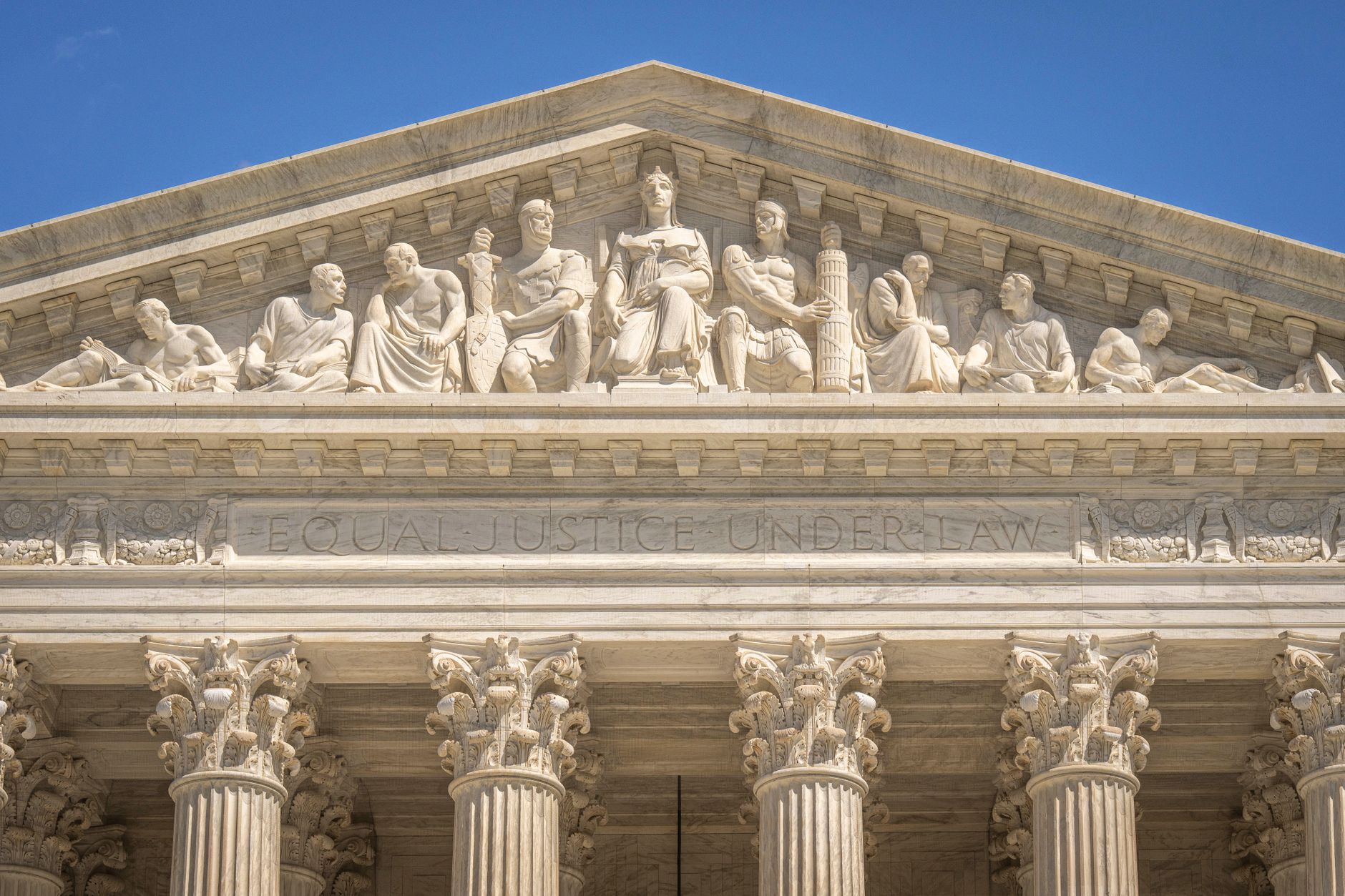
SUPREME COURT CURBS TRUMP TARIFF POWER

The Supreme Court has ruled that the Trump administration cannot use emergency powers under IEEPA to impose tariffs, a major setback to the White House's trade agenda. The decision says the President lacks inherent peacetime authority to levy tariffs and cannot bypass the limits Congress built into other tariff laws. The ruling could force the administration to unwind or revise parts of its tariff strategy and may affect ongoing trade and inflation debates. It also intensifies the broader fight over presidential power, congressional authority, and the direction of U.S. economic policy.

Topic sections
🏛️

Politics

Trump backs Paxton as Cornyn fight reshapes Texas GOP

President Trump’s late endorsement of Ken Paxton in the Texas Republican Senate runoff has turned an already bitter intraparty contest into a referendum on the party’s future direction. The move strengthens the argument that loyalty to Trump remains the most valuable currency in GOP politics, even against a sitting senator with deep establishment backing. It also highlights how 2026 is becoming a cycle in which internal party discipline may matter as much as the general election.

Cabo Verde’s opposition wins power after a decade in opposition

The PAICV victory marks one of the more notable democratic turnover stories of the week. It suggests that even relatively stable systems are not insulated from the global mood against incumbents. The next test will be whether the new government can convert electoral momentum into competent governance.

Iran floats broader peace proposal as U.S. weighs pressure and talks

The diplomatic channel is still open, but the gap between the sides remains wide. Iran is pressing for sweeping concessions while the U.S. is trying to preserve leverage without triggering a wider war. That makes the next round of contacts potentially decisive for the region’s security and for global markets.

💼

Business & Finance

Indian markets slip as global yield pressure keeps traders defensive

Indian benchmarks struggled for direction as overseas rate anxiety and a softer Wall Street tone fed into a cautious open. The Nifty’s pullback around 23,400 and Bank Nifty’s narrow range suggest traders are trading levels, not conviction, ahead of expiry. Near term, any relief rally will need stronger banking participation and better global cues to stick. Without that, the market looks set for a tactical, headline-driven session rather than a broad risk-on move.

Nvidia earnings loom as the AI trade faces a high bar

Investors are treating Nvidia’s latest report as a referendum on the whole AI infrastructure cycle. The key questions are margin resilience, demand visibility and whether hyperscaler spending is still accelerating fast enough to justify current valuations. A strong print could stabilize the chip trade, but any miss would likely pressure the wider growth complex. That makes tonight’s results a market event, not just a company update.

Commodities stay mixed as energy risk and yields pull in opposite directions

Oil is holding relatively steady while gas is firmer and gold remains choppy, a combination that points to uncertainty rather than panic. Markets are still treating geopolitical risk as a background support for energy prices, not yet a full-blown supply shock. For companies tied to transport, manufacturing and import costs, that means input prices may stay manageable for now. But traders are clearly not pricing in calm for long.

📊

Economics

Inflation Fear Keeps Rates Elevated as Growth Outlook Stays Uneven

Oil volatility is still feeding inflation expectations, even after recent declines in Brent and WTI. Treasury yields remain elevated, signaling that markets expect central banks to stay restrictive and that GDP growth could cool without a clean disinflation break.

Households Stay Wary as Gasoline Prices Continue to Weigh on Sentiment

The Conference Board’s confidence data show consumers are still uneasy about inflation and business conditions. That caution could soften spending and GDP growth if energy prices stay volatile and rates remain high.

Tariffs and Industrial Policy Are Quietly Adding to the Inflation Mix

Trade policy remains a live fiscal channel, with metal tariffs and related measures pushing up costs in parts of the economy. That can keep inflation sticky even if energy prices ease and growth slows.

💡

Technology & Media

Google uses I O to push Gemini deeper into daily computing

Google is turning I O 2026 into a showcase for how far it can extend Gemini across its products and developer tools. The company is trying to make AI feel less like a separate app and more like the operating system for work and search. That approach could strengthen Google’s position, but it also raises the stakes on trust, pricing, and product clutter.

Microsoft patches Copilot after confidential data exposure concern

A reported Copilot issue put new pressure on Microsoft’s promise that enterprise AI can be both useful and secure. The problem highlights how quickly confidence can erode when assistants operate inside sensitive business systems. For companies buying AI tools, security is becoming just as important as capability.

AI recommendation poisoning emerges as a new threat to trust

Hidden prompts designed to steer AI assistants toward certain brands are becoming a serious concern. The technique shows how easily recommendation systems can be gamed when models rely on stored context and summarization. It is a warning that the next major cyber fight may be over what AI chooses to recommend.

🌱

Green & Climate

Cheap solar and wind force scientists to trim the worst-case warming outlook

Researchers have cut their highest-end warming projection by about 1 degree Celsius, saying the most catastrophic fossil-fuel scenario is now much less plausible. Even so, the revised picture still leaves the planet on track for severe disruption unless emissions fall much faster and cleaner energy keeps scaling. The new modeling is a reminder that progress is real, but it is arriving too slowly to prevent a dangerous overshoot of the Paris goal.

The climate future looks less apocalyptic, but still far outside safe bounds

The revised scenarios show the world may avoid the most extreme emissions track, but not the warming that would put food systems, coasts and public health under intense strain. Analysts say the best-case path still depends on rapid decarbonization and large-scale carbon removal later this century. That makes near-term policy decisions on power, transport and industry more important than ever.

Clean-energy gains are real, but the communication battle around climate is still being lost

Despite measurable progress in solar and wind, many newsrooms and governments are still treating climate as a background issue rather than the defining economic story of the decade. Scientists and advocates warn that this leaves the public with an incomplete picture of both the progress and the remaining threat. Without more urgency, the transition may continue to advance too slowly to protect communities and ecosystems from escalating damage.

🏭

Industries

Manufacturers are retooling for a year of tariffs, AI and uneven demand

Manufacturers are entering the year under pressure from policy volatility, supply chain stress and uneven end-market demand. The strongest investment is flowing toward semiconductor capacity, automation and data-center-linked production, while lower-margin segments remain cautious. That makes 2026 less a broad recovery than a reshaping of where industrial money and jobs will land. Companies that can cut risk and speed up decisions will gain share fastest.

Supply chains are shifting from efficiency to survival mode

Supply chain leaders are treating disruption as a permanent condition rather than a temporary shock. Supplier distress, labor stoppages and concentrated sourcing are emerging as the most immediate threats to continuity. In automotive and manufacturing, the winners will be the firms that can see deeper into their networks and react before a minor issue becomes a production stop.

Energy demand and industrial capacity are now moving together

Industrial electricity demand, data-center growth and reshoring are pushing energy and manufacturing planning into the same conversation. Aerospace and pharma are also drawing investment because companies want more secure domestic production in critical sectors. The result is a more capital-intensive industrial landscape, where power, permitting and capacity are becoming strategic advantages.

✍️

Opinion

Flotilla Blockade Reopens the Gaza Humanitarian Dilemma

Israel’s maritime interceptions may reduce immediate security risks, but they also widen the diplomatic cost of sustaining the blockade. Humanitarian organizations will argue that stopping aid ships turns a crisis of access into a crisis of credibility. The deeper issue is not whether one convoy reaches Gaza, but whether the world accepts a system in which relief is continually delayed by force.

San Diego Mosque Attack Exposes the Cost of Normalized Hate

The massacre at the Islamic Center should be treated as a national warning, not an isolated act of madness. America’s anti-Muslim violence has long been undercounted and often under-reacted to until bodies are counted. If the response is limited to ritual condemnation, the next attack is already being licensed.

ICE Shooting Case Tests Whether Immigration Enforcement Is Above Scrutiny

Criminal charges against an immigration officer are unusual enough to signal a possible turning point. But one prosecution will not fix a system where raids, fear, and coercion are often treated as policy tools. Real reform would require independent oversight, clear use-of-force rules, and consequences that do not depend on public outrage.

🎭

Ideas & Culture

New York returns more than 650 looted antiquities

Authorities in New York have handed back more than 650 antiquities identified as looted or trafficked, marking a major victory for cultural restitution. The case shows how law enforcement is widening the net around art crime and forcing the market to confront the cost of provenance failures. It also highlights a global shift toward returning heritage to the communities and nations that lost it.

NEA names 2026 National Heritage Fellows

The NEA’s latest Heritage Fellows announcement spotlights artists working in traditions rooted in community, craft, and lived history. The program remains one of the clearest signals that public arts policy can still shape what the country values culturally. It also reinforces the idea that preservation and innovation often depend on the same people.

Miami-Dade arts office opens funding workshop

Miami-Dade’s cultural affairs department is using today’s workshop to steer artists and groups toward grant opportunities and application deadlines. The event highlights how public arts agencies are still central to the survival of local creative scenes. It also shows that culture policy is increasingly about access, not just programming.