🔴  Breaking News🇺🇸  USA Edition🇪🇺  Europe Edition🌏  Asia & Oceania🌍  Africa Edition
Tuesday, June 9, 2026
🌙 Evening Brief
The Daily Brief

Your daily newspaper · Every night at midnight

Preferences

S&P 500739.22▲ 0.23%NASDAQ716.07▲ 1.56%DOW508.91▼ 0.16%CAC 4045.55▲ 0.42%DAX42.14▲ 0.07%FTSE 10046.43▲ 0.11%Nikkei91.95▲ 1.36%Apple301.54▼ 1.89%Amazon245.22▼ 0.33%Microsoft411.74▼ 1.18%Google363.31▼ 1.42%Tesla408.95▲ 4.59%Nvidia208.64▲ 1.73%Meta585.39▼ 1.28%Netflix82.64▲ 0.56%Coca-Cola79.54▲ 0.08%Nike43.23▲ 0.58%Disney98.87▼ 0.84%JPMorgan311.11▼ 0.40%LVMH109.90▼ 0.78%TotalEnergies88.63▼ 0.09%SAP181.92▼ 1.54%Gold397.27▲ 0.26%Oil135.15▲ 1.60%S&P 500739.22▲ 0.23%NASDAQ716.07▲ 1.56%DOW508.91▼ 0.16%CAC 4045.55▲ 0.42%DAX42.14▲ 0.07%FTSE 10046.43▲ 0.11%Nikkei91.95▲ 1.36%Apple301.54▼ 1.89%Amazon245.22▼ 0.33%Microsoft411.74▼ 1.18%Google363.31▼ 1.42%Tesla408.95▲ 4.59%Nvidia208.64▲ 1.73%Meta585.39▼ 1.28%Netflix82.64▲ 0.56%Coca-Cola79.54▲ 0.08%Nike43.23▲ 0.58%Disney98.87▼ 0.84%JPMorgan311.11▼ 0.40%LVMH109.90▼ 0.78%TotalEnergies88.63▼ 0.09%SAP181.92▼ 1.54%Gold397.27▲ 0.26%Oil135.15▲ 1.60%
🇺🇸 USA Edition
POLITICS

ICE PROTESTS ESCALATE

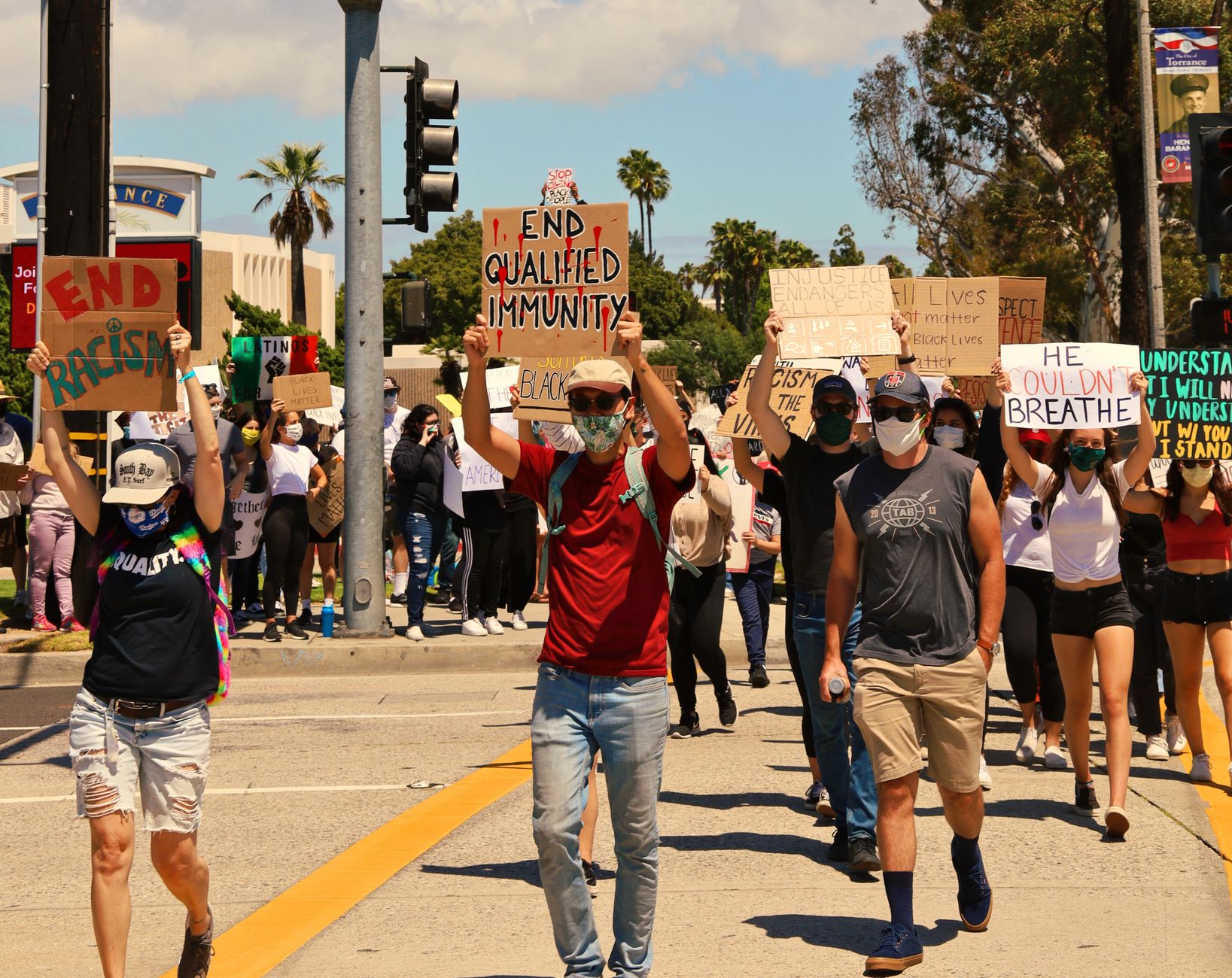
Massive protests against ICE immigration operations in Los Angeles are driving the top U.S. domestic political story. The backlash has intensified after Trump said he would support arresting California Governor Gavin Newsom over immigration enforcement. The episode is sharpening debate over immigration, federal power, and public safety. It is also likely to dominate coverage because it combines street unrest, high-level political conflict, and national policy implications.

Topic sections
🏛️

Politics

Election season intensifies from Colombia to Armenia

Colombia’s presidential race has already produced a first-round result that points toward a runoff between the left and right, underscoring how polarized governance has become in one of the region’s largest democracies. Armenia’s parliamentary election, held on June 7, is now the key test of whether Prime Minister Nikol Pashinyan can hold his governing coalition together against a pro-Russia challenger. Together, the two contests show how voters are weighing economic performance, institutional trust, and geopolitical orientation at the same time.

Governance pressure rises as votes become tests of state capacity

In Ethiopia, the June 1 general elections put governance and stability at the center of the political agenda. The vote matters not only for leadership selection but also for whether institutions can manage deep social, regional, and economic strains. Across these contests, the real issue is whether election results can produce legitimate authority that governments can actually exercise.

G7 and NATO prepare to test alliance unity

The coming G7 summit in France will be a major venue for coordinated responses to global economic and security pressure. NATO’s summit in Ankara will then push allied governments to clarify defense priorities and strategic commitments. Both meetings are likely to reveal how difficult it has become to maintain common positions across a more fractured geopolitical landscape.

💼

Business & Finance

MARKETS WHIPSAW AS CHIP STOCKS LEAD A BOUNCE AFTER FRIDAY’S TECH SELLOFF

Stocks rebounded Monday after a brutal late-week drop, with semiconductors driving the recovery and helping steady sentiment. The rebound came ahead of inflation data that could shape the next move in rates and determine whether investors keep rewarding AI-heavy growth names.

MEGADEALS DRIVE M&A EVEN AS MOST DEALS STAY STUCK

PwC says global deal value surged in 2025 even though overall volume was flat, showing that very large transactions are carrying the market. That imbalance suggests corporate buyers are still willing to act, but only where strategic scale or financing strength makes the case compelling.

BANKS FACE A PIVOTAL YEAR AS AI AND STABLECOINS PRESSURE THE MODEL

Deloitte says 2026 could be decisive for banks because they must navigate macro headwinds while also adapting to AI, data fragmentation, and stablecoin disruption. The pressure is forcing lenders to upgrade technology and rethink payments infrastructure at the same time.

📊

Economics

Inflation Data and ECB Decision Set the Tone for Markets

The most important macro story today is the market’s focus on Wednesday’s U.S. CPI and Thursday’s ECB decision, which together will shape expectations for rates, bonds, and currencies. Inflation remains the key concern because the U.S. price backdrop has re-accelerated and traders are bracing for another firm reading, even if core prices cool slightly. The ECB is widely expected to tighten by 25 basis points, signaling that policymakers still see inflation risk as more urgent than growth support. Together, those events frame a week in which central banks are still fighting inflation while the growth outlook remains only modestly constructive.

U.S. GDP Shows Growth, but Not Enough to Ease Policy Pressure

The latest GDP revision points to a recovering economy, but the pace is still moderate and leaves room for caution. Investment and exports helped lift output, which suggests business activity has not stalled despite tighter financial conditions. At the same time, slower growth gives central banks less room to ignore inflation surprises. The result is a macro backdrop in which growth is positive, but policy remains constrained by prices.

Fiscal Stimulus and Energy Costs Complicate the Inflation Outlook

Recent commentary points to fiscal stimulus as an additional support for growth, but it also raises the risk that demand stays too strong for inflation to fall quickly. Energy prices are especially important because they affect transport, food, and industrial costs across the economy. That makes inflation less dependent on one-off data points and more tied to broader input-cost pressure. For investors, the combination of fiscal support and energy inflation argues for a more cautious view on how quickly central banks can pivot.

💡

Technology & Media

Google turns Search into an AI agent platform

Google says it is bringing Gemini 3.5 Flash into Search as the default AI Mode model and expanding agentic features to bookings, custom layouts, and mini apps. The company is also broadening Personal Intelligence in AI Mode to nearly 200 countries and 98 languages, with secure connections to apps like Gmail and Google Photos. The strategic shift is clear: Google wants Search to become the front door for task completion, not just information retrieval.

White House ties advanced AI growth to security policy

The White House issued a presidential action on promoting advanced AI innovation and security, signaling that AI policy is now being shaped around both competitiveness and risk management. The language points to coordinated federal attention on how advanced systems affect national security. For companies, this increases the importance of governance, model safety, and supply-chain security as part of any major AI strategy.

AI agents raise the privacy and security stakes

Google’s expansion of agentic features and app connections highlights the growing tradeoff between convenience and control in AI products. As systems gain access to email, photos, and other personal data, security protections become central to adoption rather than a back-end concern. The broader industry takeaway is that AI success now depends as much on trust architecture as on model capability.

🌱

Green & Climate

Climate risk is becoming an energy-security issue

Climate change is now affecting how power systems are planned, not just how they are regulated. The most important development is that resilience has become part of the clean-energy agenda. That change is likely to accelerate investment in forecasting, storage, and diversified supply.

🏭

Industries

Tariff uncertainty is still the dominant shock for manufacturing and logistics

Industry commentary from today’s automotive supply-chain coverage says tariff uncertainty, supplier stress, and market fragmentation remain central concerns for 2026 planning. That pressure is not confined to vehicles, because it affects freight flows, sourcing decisions, and the timing of production ramps across industrial sectors. The immediate business consequence is a more defensive operating stance, with companies using buffers and alternates to avoid stoppages.

Domestic capacity builds are accelerating as firms hedge disruption

Manufacturing leaders are expanding U.S. production footprints to reduce exposure to overseas shocks and logistics delays. That strategy is especially relevant for automotive, aerospace, and pharma, where qualification cycles are long and interruptions are expensive. The result is a supply network that is becoming more regional, more redundant, and more capital intensive.

Operational risk is spreading across aerospace, pharma, and energy supply chains

Companies are now planning around disruptions that can originate anywhere in the network, from a supplier’s software outage to a storm that halts transport. That makes resilience programs more integrated, linking procurement, compliance, logistics, and plant engineering. In practice, the industries with the longest certification and replenishment cycles are the ones most exposed.

✍️

Opinion

World leaders face a crowded diplomatic calendar as global tensions meet major summer events

As the calendar turns toward June's large international gatherings, governments are being judged not only on their foreign policy but on their ability to deliver order, coordination, and credibility. The coming days will show whether alliances can still function as practical governing tools rather than symbolic partnerships. If logistics fail or politics intrude, the costs will be measured in both reputation and leverage. The real headline is that global leadership is increasingly being tested in public, under pressure, and in real time.

World Oceans Day exposes the mismatch between climate promises and marine policy

The annual focus on oceans is useful only if it leads to harder choices about conservation, energy, and coastal planning. Too many states still treat marine protection as a ceremonial issue rather than a strategic one. That is shortsighted because the health of the oceans now shapes inflation, migration, and disaster risk. The countries that act early will have an advantage in both resilience and credibility.

National observances are becoming instruments of political identity, not just tradition

This week's civic calendar reflects a broader trend in which governments use holidays and commemorations to shape national mood. That can reinforce shared purpose, but it can also sharpen divisions when leaders turn memory into ideology. The countries best positioned for the next phase of global uncertainty will be those that can honor identity without narrowing citizenship. In that sense, ceremonial politics is now part of strategic politics.

🎭

Ideas & Culture

Culture’s quieter engine: who gets funded, booked, and shown

Public arts calendars show how much of cultural life is driven by institutional decisions rather than splashy debuts. Miami-Dade’s cultural department has multiple artists’ grant panel meetings scheduled around June 8 and June 10, while other arts organizations are actively managing calls for entry and exhibition timelines. That points to a broader story about cultural power: the most consequential choices are often made before the public ever sees the work. The pattern suggests a season of planning, gatekeeping, and resource allocation that will shape what audiences encounter later in the year.

Neighborhood culture is settling back into routine

Arts spaces are advertising recurring jazz nights and gallery-based events, showing that live culture is becoming normalized again in local venues. These offerings matter because they build habits of attendance and keep small institutions economically and socially visible. They also highlight the role of intimate spaces in sustaining arts participation beyond major museums and theaters. For many communities, this regular programming is the most direct measure of cultural vitality.

Public process is shaping the next wave of cultural work

Recent arts meetings and grant panels show that cultural policy is a live, ongoing force. The decisions made in these settings determine which artists, programs, and communities receive support. That gives the day’s culture news a structural dimension that goes beyond exhibitions or performances. The real story is how institutions are setting the terms for future artistic visibility.