The soft-power century arrives
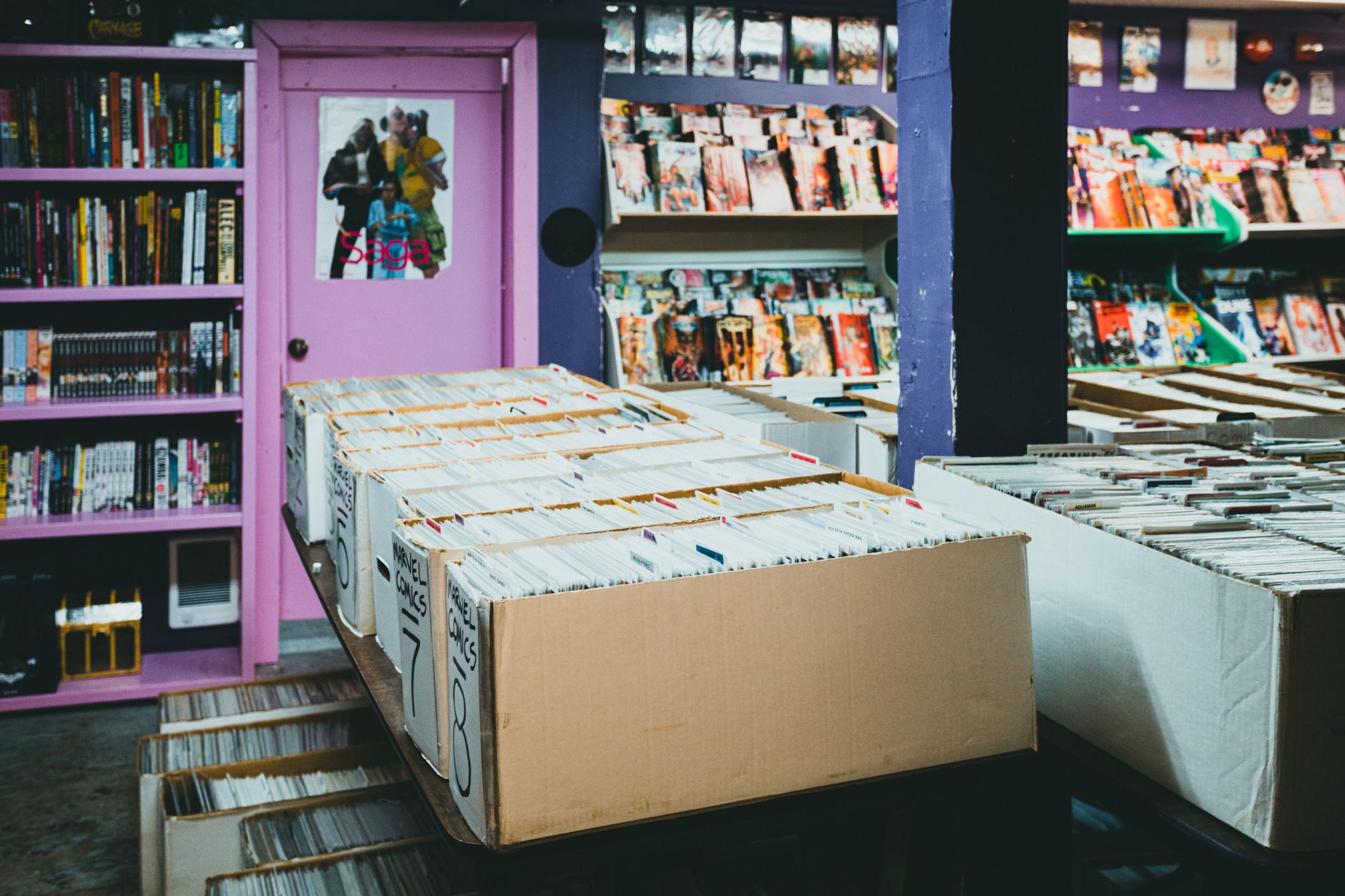
Asia’s cultural power no longer announces itself with a single flag or format. It arrives in fragments: a manga panel on a train commute, a K-pop choreography clip looped on a phone, a Japanese film shared by prestige-streaming subscribers, a drama binge that turns strangers into export markets, a Tokyo alley where fashion, gaming, and fandom blur into one restless consumer scene. What once looked like a collection of national subcultures now functions as a transnational ecosystem, one that increasingly sets the terms of global taste.
The old story of cultural influence ran from West to East, with Hollywood, American pop music, and European luxury establishing the grammar of cool. That hierarchy has not vanished, but it has been complicated beyond recognition. Japan and South Korea, in particular, have helped build an alternative model: culturally dense, digitally native, visually distinctive, and perfectly suited to the age of algorithmic discovery. Their exports succeed not merely because they are popular, but because they are *sticky*. They generate communities, routines, and identities.
This matters because culture is no longer a decorative layer on globalization. It is one of its operating systems. The rise of anime, manga, K-pop, K-drama, Asian cinema, and Tokyo street culture reflects a larger shift in how value is created in the attention economy. Identity is now monetized through fandom. Prestige is now measured by the speed at which a local aesthetic becomes globally legible. And the most successful Asian cultural industries have learned to convert scarcity into scale.
Tokyo as a laboratory of the future
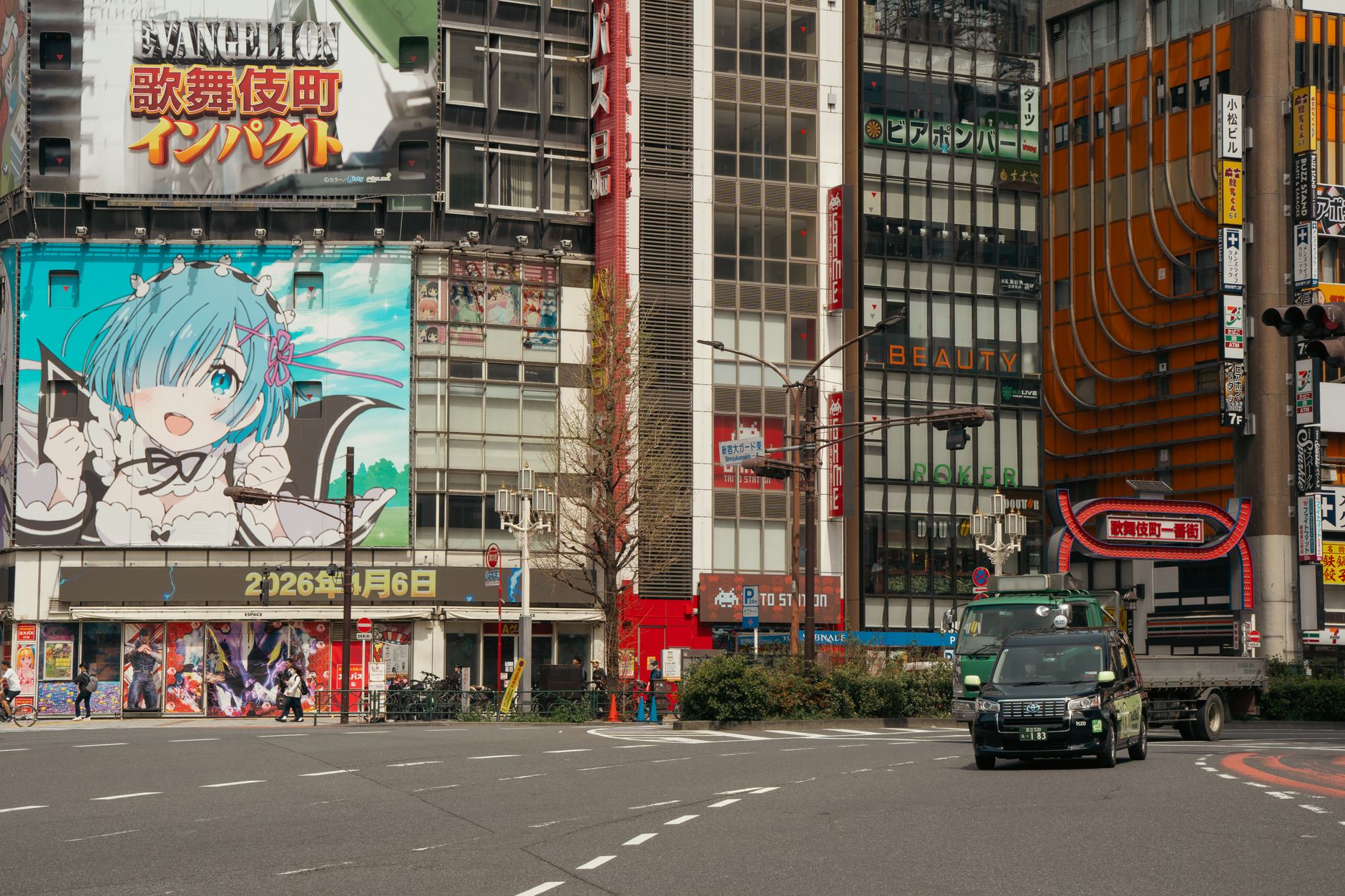
Tokyo remains the great urban theater of this transformation. Its streets are not just scenery; they are a market research instrument. In districts such as Akihabara and Ikebukuro, retail, entertainment, and fandom are fused into a highly refined commercial environment. Akihabara still trades on the thrill of old-world anime and game culture, but it is increasingly shaped by esports venues, fan events, and newer forms of immersive entertainment. Ikebukuro has become especially important for female-oriented anime and manga consumption, with character cafés and pop-up spaces embedded in shopping complexes. Odaiba, meanwhile, extends the logic into larger-scale VR and exhibition experiences.
What is striking is not that Tokyo preserves subculture, but that it industrializes it without fully flattening it. The city knows how to package obsession while preserving a sense of discovery. This is one reason Tokyo street culture remains so influential abroad. Harajuku fashion, after all, never succeeded simply because it was eccentric; it worked because it offered a visible, reproducible language of self-invention. In a world of standardized clothing and platform sameness, Tokyo’s streets still suggest that identity can be built, not merely consumed.
That aesthetic economy is also deeply technological. Japan’s pop culture has long been entangled with devices, screens, games, and fan infrastructures. The result is a culture that understands how to live inside machines without surrendering to them. Manga panels anticipate cinematic framing. Anime borrows from graphic design, melodrama, and game logic. Retail spaces are engineered for repeat visitation, collectible behavior, and social sharing. The city itself becomes a feed before the feed.
The anime-manga feedback loop
Anime and manga remain the core engine of Japan’s global cultural presence. Their power lies in flexibility. A manga can begin as niche serialization and, if successful, be adapted into anime, films, merchandise, games, stage productions, and live events. This is not merely adaptation; it is ecosystem design. It allows stories to circulate across age groups, geographies, and media formats while keeping intellectual property at the center of the business model.
That structure helps explain why the anime boom has endured rather than peaked. The global audience for anime now ranges from longtime enthusiasts to casual viewers who encounter it through streaming platforms and social media clips. In 2026, the pipeline remains crowded with sequels, new adaptations, and franchise extensions, evidence that studios and distributors continue to treat anime as a long-tail cultural asset rather than a one-season phenomenon.
But the more important point is aesthetic. Anime travels because it does not look like anything else. Its expressive faces, compressed emotion, stylized action, and willingness to move from the intimate to the cosmic in a single scene make it especially compatible with fragmented digital consumption. It can be read as art, entertainment, fantasy, or emotional architecture. It can also absorb regional anxieties: alienation, overwork, coming-of-age confusion, ecological dread, technological unease.
Manga does something similar, but more quietly. It gives form to interiority. It rewards patience, re-reading, and accumulation. In an age when most media competes for instantaneous attention, manga remains a medium of gradual possession. That may be one reason it has traveled so well across borders: it asks readers not just to watch but to inhabit.
South Korea’s polished machine
If Japanese pop culture often sells depth, South Korean pop culture sells precision. K-pop and K-drama have become masterclasses in industrialized emotional affect: highly trained, highly packaged, and meticulously optimized for global circulation. Their success is not accidental or purely organic. It reflects a national entertainment system built to pair performance with platform strategy, and to treat global fandom as a designed outcome rather than a lucky accident.
K-pop is the clearest example. It blends music, fashion, choreography, visual branding, and fan participation into one relentless product. The industry understands that songs are only one part of the proposition. The choreography must be memeable. The styling must be convertible into lifestyle aspiration. The members must be individually legible while remaining collectively coherent. In effect, K-pop is a factory for shared intimacy. Fans do not simply consume it; they organize around it.
K-drama extends the formula into serialized narrative. Its global appeal rests on a combination of emotional clarity, visual polish, and high-concept accessibility. The best dramas are not passive comfort food; they are social technologies, translating family tension, class conflict, romance, and moral ambiguity into a universally readable format. On streaming platforms, they can travel from Seoul to São Paulo to Sydney with startling speed, often aided by subtitles, social media discussion, and algorithmic recommendation.
The relationship between Japan and South Korea in the pop-culture market is often framed as rivalry, but that misses the larger pattern. Together they have helped relocate the center of gravity in global popular culture. Japan contributes long-form fandom, aesthetic experimentation, and a dense legacy of graphic storytelling. South Korea contributes promotional discipline, cross-platform choreography, and a formidable export infrastructure. The two systems differ, yet they reinforce a broader regional reality: Asia is no longer merely supplying content to the world; it is defining how entertainment is packaged, circulated, and emotionally consumed.
Asian cinema and the prestige lane
For decades, Asian cinema was treated in Western markets as either art-house discovery or genre specialty. That frame is now too narrow. The region’s filmmakers increasingly move between local audiences, streaming platforms, festival circuits, and international prestige markets with far greater confidence. Japanese cinema brings a long tradition of formal elegance, social observation, and genre mastery. Korean cinema combines sleek visual grammar with sharp social critique. Other Asian film industries, from mainland China to Thailand to India, have also expanded the range of what global audiences will watch and celebrate.
The crucial shift is that Asian cinema no longer waits for Western validation to become culturally consequential. Festivals and awards still matter, but they are no longer the sole gatekeepers. A film can now build influence through online discourse, streaming discoverability, and transnational fandom. Genre boundaries have softened. Horror, thriller, melodrama, and family drama can all become international vehicles if the emotional signal is strong enough.
This has consequences for taste itself. Audiences who enter through anime or K-drama often graduate to cinema, animation, design, and fashion. The cultural pipeline is no longer linear, if it ever was. Instead, it resembles a network of adjacent obsessions. A viewer drawn in by one medium may leave with a wider regional vocabulary: Tokyo neighborhood aesthetics, Korean idol styling, Japanese narrative restraint, and the visual intensity of Asian genre cinema.
Technology culture and the aesthetics of immersion
One reason Asian pop culture has been so globally influential is that it understands technology not as a backdrop but as a setting for social life. The region’s entertainment industries have been early and adept adopters of platforms, games, mobile media, and immersive retail. The result is a distinctly technological culture: not sterile futurism, but a lived environment in which screens, devices, and fandom merge.
In Japan, that technological culture often appears through gaming, collectibles, robotics, and highly designed retail spaces. In South Korea, it is visible in the seamless integration of entertainment with social media, fan commerce, and mobile consumption. Across both countries, the dominant insight is the same: technology is not merely a distribution channel. It is part of the aesthetic experience.
That helps explain why Asian pop culture has been so successful in the age of smartphones. These industries make content that is modular, visual, shareable, and emotionally intense. They are built for clipping, remixing, rewatching, and collecting. They understand that the contemporary consumer does not simply watch culture. The consumer curates it, displays it, and uses it to signal belonging.
Even the design philosophies associated with Japanese culture—minimalism, meticulous detail, an appreciation for imperfection—have found new life in a world hungry for authenticity but mediated by screens. The irony is obvious: the more digital the world becomes, the more valuable tactile, stylized, and handcrafted aesthetics appear. Asian cultural industries have exploited that tension better than most.
The new global mainstream is regional
The most important fact about Asian pop culture in 2026 is not that it has gone global, but that it has altered what global means. Once, global culture implied homogenization under American leadership. Now it looks more regional, plural, and networked. Fans can move from anime to K-pop to Korean thrillers to Tokyo street fashion without ever leaving a single app. The result is not a monoculture but a shared reference space built from multiple Asian centers of production.
That transformation is cultural, but also economic and political. Countries in Asia understand that soft power is not a luxury. It affects tourism, consumer brands, tech ecosystems, and diplomatic presence. Pop culture creates familiarity; familiarity creates advantage. The same cities and studios that produce entertainment also shape perceptions of modernity itself.
And so the deeper story of Japanese culture, K-pop, K-drama, Asian cinema, Tokyo street life, and technology culture is not simply that they are popular. It is that they have become infrastructures of modern identity. They give form to the ways people dress, imagine, desire, and belong. In the 21st century, Asia does not merely export content. It exports the grammar of cool.
“The new global mainstream is not one culture spreading outward. It is a constellation of Asian cultures teaching the world how to want.”