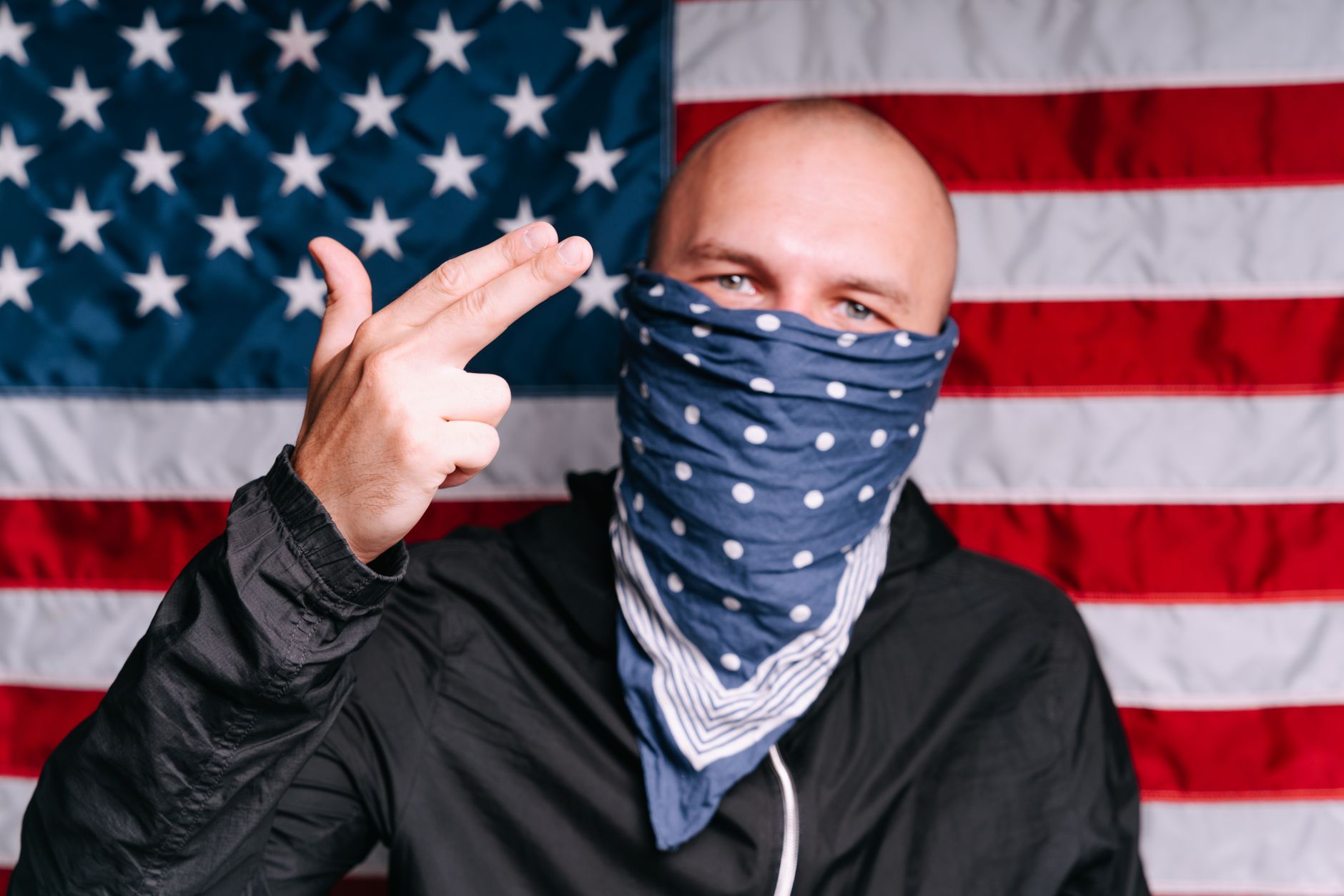
America’s culture war no longer looks like a war. It looks like a feed.
What once unfolded through cable-news monologues, campus protests and presidential stump speeches now arrives in a faster, harsher and more intimate form: short videos, quote-tweets, screenshot tribunals and private-group pile-ons that become public scandals by lunchtime. The old battle lines—secular versus religious, elite versus populist, individual liberty versus social justice—have not disappeared. They have been absorbed into a new ecology of attention in which every cultural dispute can be turned into content, and every piece of content can be weaponized. The result is a politics that feels simultaneously omnipresent and exhausting.
This is the central paradox of the American culture wars in 2026. They are everywhere in discourse and yet increasingly detached from the lived priorities of most Americans. They remain powerful because they organize identity, status and belonging. But they are also strangely hollow, because their most intense versions are sustained by platforms that reward outrage, institutions that fear scandal and political actors who know that symbolic conflict is cheaper than governing.
The algorithm is the arena
Social media has not created America’s cultural divisions, but it has profoundly changed their texture. The internet transformed old moral disagreements into performance. Platforms favor content that provokes quick moral judgment, and culture-war material is built for exactly that: it is legible, emotional and immediately tribal. A campus slogan, a celebrity apology, a pronoun dispute or a church’s stance on gender can be cut into a 20-second clip and distributed as proof that the other side is either decadent or deranged.
That dynamic matters because it changes the scale of conflict. In the past, cultural disputes often remained local or institutional: a university senate vote, a school-board meeting, an editorial fight, a denominational split. Now they are instantly nationalized. A student protest at one campus becomes a referendum on higher education itself. A dean’s memo becomes evidence of elite capture. A corporate diversity campaign becomes a symbol of civilizational decline. The medium rewards the conversion of nuance into moral theater.
And the theater is profitable. Influencers, pundits and political entrepreneurs have discovered that culture-war outrage is a durable business model. The incentives are particularly strong because the content is self-reproducing: every condemnation generates a counter-condemnation, every apology invites a demand for deeper contrition, every attempt at restraint is framed as cowardice. The best way to win an argument online is often to make it impossible to finish.
America’s most influential public square no longer rewards persuasion first. It rewards escalation.
Gen Z inherited the quarrel—and made it fluent
Gen Z is often described as more tolerant, more secular and more fluid in matters of identity than older generations. Those descriptions are broadly true, but they do not mean this cohort is less attached to culture-war politics. If anything, younger Americans have become more fluent in the grammar of moral conflict. They know the categories, the vocabulary and the disciplinary rituals: call-out, ratio, platform, allyship, harm, de-centering, accountability.
That fluency has produced a generation that is at once more expressive and more brittle. Many young Americans are genuinely committed to inclusion and pluralism. At the same time, they have grown up in environments—digital and educational—where status is continuously negotiated in public. This makes cultural offense feel personal, immediate and morally total. Disagreement is not merely disagreement; it can be read as erasure, violence or complicity.
There is a generational contradiction here. Gen Z is often mocked by older Americans as hypersensitive, but it is also the most psychologically self-aware generation in modern memory. Young people speak more openly about mental health, trauma and identity than their parents did. Yet that openness can feed a politics of self-protection in which emotional discomfort is treated as political injury. The politics of feeling has become central to the politics of belonging.
At the same time, many Gen Z voters are more pragmatic than their online caricatures suggest. They care deeply about housing costs, wages, debt and instability. In that sense, the culture war is not the only thing on their minds; it is often the thing that adults use to define them. But because the loudest voices among the young are usually the most online, outsiders often mistake the algorithm for the generation.
Cancel culture has matured into a permanent condition
The phrase “cancel culture” has become so worn that it is easy to miss how enduring the phenomenon remains. The label itself may be declining, but the underlying practice is not. The basic mechanism—public punishment for norm violations, often accelerated by social media—has become a standard feature of American life. It now operates not as an exceptional event but as a background condition.
In some cases, cancellation is a form of accountability for misconduct that institutions once ignored. In others, it is ritualized humiliation with little relation to proportionality or due process. The distinction matters, but online discourse often erases it. The culture-war logic demands a binary: either all public sanction is necessary justice, or all public sanction is mob rule. Real life is messier. A society can have a legitimate appetite for consequences and still become addicted to overreach.
What is new in 2026 is not the existence of shaming, but the speed and memory of it. Old controversies do not vanish; they are archived, searchable and re-deployable whenever someone becomes inconvenient. Institutions, from universities to media companies to nonprofits, have learned that the safest response to trouble is often a public statement that satisfies no one. This has not solved the problem. It has professionalized anxiety.
The result is a culture of anticipatory compliance. People self-censor not because they have been formally punished, but because they have watched others be punished and decided not to test the boundaries. That may reduce some forms of public cruelty. It also narrows the range of permissible expression, especially in institutions that are supposed to reward argument and inquiry.
Universities are where the contradictions become visible
Higher education remains the symbolic heart of the culture wars because it concentrates several American anxieties in one place: elite power, youth politics, speech norms, affirmative action, gender identity, Israel and Palestine, and the future of expertise itself. Universities are supposed to model inquiry. Instead, they are often treated as moral battlegrounds where the nation’s unresolved questions are staged in miniature.
That symbolic role has made universities unusually vulnerable. They depend on public legitimacy, donor confidence and student enrollment, all of which can be shaken by controversy. So they have increasingly tried to manage conflict rather than process it. The result is a paradox familiar to anyone who has worked in academic administration: campuses are full of people who believe in open debate, yet many institutions respond to controversy with risk management rather than intellectual courage.
At the same time, the most serious criticisms of universities cannot be dismissed as right-wing fantasy. Many students do experience peer pressure to conform. Some departments do blur the line between scholarship and advocacy. Some administrators do behave as though avoiding offense matters more than cultivating serious discussion. None of this means universities are propaganda mills. It does mean they have sometimes failed to defend the conditions under which free inquiry can survive.
But the right’s attack on universities is also selective. Conservatives denounce ideological conformity while demanding their own orthodoxy on patriotism, gender, race and religion. The complaint is often less about open debate than about which doctrines deserve protection. Universities are thus trapped between rival moralities, each accusing the other of censorship while insisting on its own sacred truths.
Religion has returned, but not as before
Religion once seemed to be fading from the culture wars as secularism advanced. That was too simple. Religion never left American politics; it changed shape. In one register, the country has seen renewed public religious assertion, especially among conservative Christians who view secular elites as hostile to their values. In another, religion has re-entered the culture wars through issues of gender, sexuality, family formation and schooling.
Yet the revival is not evenly distributed. America is not becoming uniformly more devout. Rather, religion is becoming more politically salient for the groups that still practice it intensively, while many of the secular still use moral language with unmistakably religious intensity. The old divide between believers and nonbelievers has blurred. Both sides increasingly speak in absolutes, seek purity and treat dissent as contamination.
This is one reason the culture wars are so durable. They are not merely about policies or even identities. They are about moral anthropology: what human beings are, what families are for, what authority means, whether the self is given or constructed, whether history can be redeemed by confession or only managed by compromise. These are theological questions even when they are not discussed in churches.
In that sense, the return of religion is also the return of metaphysics. Americans are arguing not only about what the state should do, but about what kind of people the state should presume its citizens to be. That disagreement cannot be settled by a better communications strategy. It goes to the structure of American self-understanding.
Identity politics became mainstream—and less stable
Identity politics is no longer a niche academic phrase; it is the operating language of American civic life. The question is not whether identity matters. It plainly does. The question is whether identity can remain a tool for justice rather than becoming a permanent sorting mechanism for grievance and status.
In the 2010s, identity politics was often justified as a corrective to exclusion. Groups long denied representation sought visibility, voice and institutional recognition. That effort produced real gains, especially around race, gender and sexuality. But once identity became the dominant idiom of legitimacy, it also became vulnerable to fragmentation. Every group learned the logic of claim-making. Every institution learned the logic of symbolic repair. Soon the politics of recognition began to crowd out the politics of coalition.
The weakness of identity politics in 2026 is not that it has gone too far in one direction, but that it now carries too many conflicting promises. It is expected to be liberating, disciplining, inclusive, therapeutic and administratively manageable all at once. No political framework can bear that much weight indefinitely. The result is a permanent tension between the desire to see difference recognized and the desire to be seen as more than one’s category.
That tension helps explain why so many Americans are simultaneously tired of identity politics and unable to stop speaking in its terms. Identity remains the easiest language for articulating injustice. But it also encourages a politics of suspicion, where every institution is asked to prove it has no hidden hierarchy, and every person is asked to disclose the correct loyalties before speaking.
The culture war is not ending; it is changing scale
There are signs that some old battles are becoming less useful. On several social questions, public opinion has settled enough that the fiercest arguments have lost their freshness. But the broader culture war is not disappearing. It is migrating upward into institutions and downward into everyday life, where it is absorbed as habit. It is less a single conflict than a way of organizing distrust.
What makes the current moment distinctive is that the culture war now coexists with policy fatigue. Americans know, dimly, that housing, health care, wages, immigration and the cost of raising children matter more to their material future than most online skirmishes do. Yet the symbolic fights continue because they offer clarity in a disordered environment. They tell people who the enemies are, what counts as betrayal and what kind of person one must be to remain in good standing.
That is why the culture war persists even when people say they are tired of it. Exhaustion does not end a system that converts exhaustion into content. The platforms keep feeding it, the institutions keep reacting to it and the politicians keep harvesting it. The only real antidote is not silence, which is impossible, but a renewed willingness to distinguish disagreement from moral apocalypse.
America has not lost the capacity to argue about big questions. It has lost the confidence that argument itself is a civic good. Until that changes, the culture war will remain less a dispute over values than a national habit of mutual suspicion—loud, self-reinforcing and, for all its omnipresence, strangely empty at the center.