The rocket is no longer the whole story
Space exploration is often sold as a drama of distance: the first launch, the first landing, the first glimpse of a distant world. But the more important story in 2026 is that spaceflight has become an industrial system, and industrial systems change economies, science, and politics in ways that a single heroic mission never can. Reusable rockets have driven down launch costs and made frequent access to orbit practical, while NASA’s lunar program increasingly depends on private companies for transport, cargo, and hardware development. That shift is not merely commercial; it is reorganizing the logic of exploration itself.[2]
SpaceX sits at the center of that rearrangement. Its Falcon 9 and Falcon Heavy rockets helped normalize the idea that launch vehicles should return, be inspected, and fly again, not burn up once in the atmosphere like disposable appliances. NASA has also leaned on SpaceX’s Crew Dragon to carry astronauts to the International Space Station, a partnership that marks a historical reversal: the U.S. civil space program, once the uncontested owner of human spaceflight, now buys a major share of its own access to orbit.[2][4]
That is an extraordinary fact about modern space exploration. The most visible frontier technology is increasingly defined by procurement, logistics, and reliability. The glamour of launch remains, but the real contest is now over cadence, cost, and the capacity to turn orbital access into something closer to routine infrastructure.
Why launch economics matter more than launch spectacle
In the 20th century, spaceflight was characterized by scarcity. Every mission was expensive, brittle, and heavily symbolic. Today, the strategic advantage belongs to whoever can fly more often, more cheaply, and with fewer resets between missions. Reusability does more than reduce costs; it changes the architecture of ambition. When a launch vehicle is no longer a one-use artifact, planners can contemplate larger constellations, more ambitious science payloads, and a continuous presence in low Earth orbit rather than isolated visits.[2]
That shift helps explain why the public conversation about space has become more fragmented. One audience watches for moon landings; another watches for satellite deployment, station resupply, and the incremental improvement of propulsion, materials, and automation. The second audience may be less captivated, but it is closer to the future. A space economy cannot be built on occasional triumphs. It requires repetition, standardization, and the quiet accumulation of technical trust.
NASA’s Artemis program embodies both the promise and the fragility of this new era. Its aim is not simply to revisit the Moon, but to create a sustainable lunar presence that can support science, industry, and eventually deeper exploration. The agency’s strategy depends on a blend of government systems and private capabilities, including commercial launch and lander services. That is a practical response to budget constraints and technical complexity, but it also means the next era of exploration will be shaped by a bargaining process between public purpose and private engineering.[2][4]
The Moon as a rehearsal for a harsher civilization
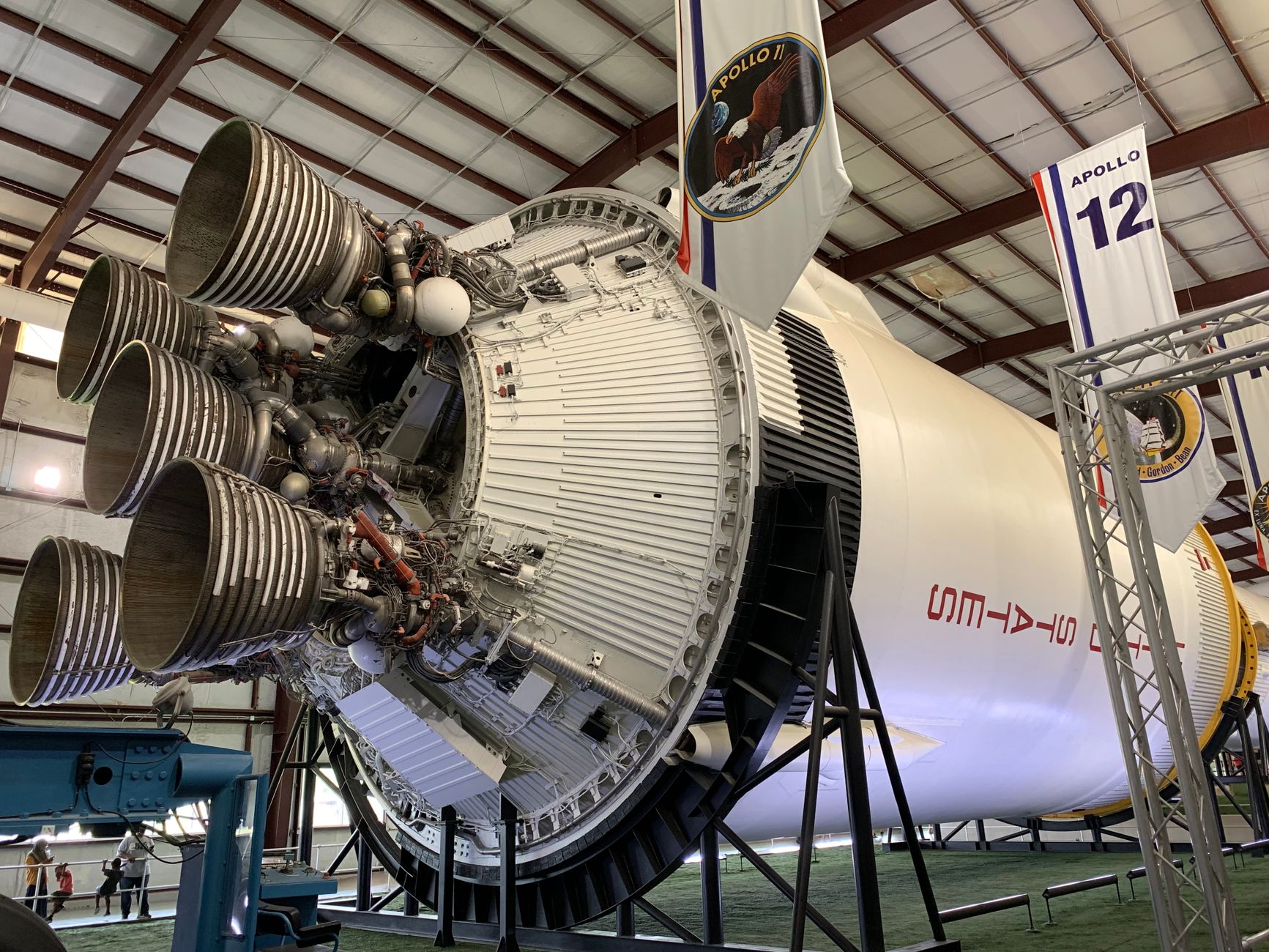
The appeal of the Moon is often described in poetic terms, as though it were a destination in itself. In operational terms, however, the Moon is a proving ground. It is close enough for repeated missions and far enough to force hard choices about life support, radiation shielding, habitat construction, and long-duration operations. Artemis is therefore less a sequel to Apollo than a test of whether humanity can learn to live with partial permanence off Earth.[2][4]
That distinction matters because sustainable exploration is fundamentally different from exploration-as-event. Apollo was a sprint. Artemis aspires to be a system. A sustainable lunar presence would require transport cycles, robotic and human coordination, maintenance of power and communications infrastructure, and a credible model for using local resources rather than shipping everything from Earth. The Moon’s value is not just scientific. It is organizational. It reveals whether a spacefaring civilization can be built on repeatable engineering rather than singular national effort.
The international dimension remains crucial. The International Space Station has already shown that even in a divided geopolitical era, countries can collaborate on a platform of shared research and technical interdependence.[2] That model is now being extended, imperfectly, into an age when private firms can outpace governments in launch operations while governments still define the scientific agenda. The result is not a clean transfer of power. It is a hybrid regime in which states, contractors, and research institutions all pull in different directions, yet remain dependent on one another.
The hidden medicine of orbit
The strongest argument for space exploration may be the least glamorous one: space changes the body in ways that reveal medicine we could not have discovered otherwise. NASA notes that space station research has led to breakthroughs in human health on Earth, including investigations into diseases through experiments such as Ring Sheared Drop, one of many studies on the station examining the causes, progression, and treatment of illnesses.[5] The logic is elegant. Microgravity strips away some of the background forces that complicate biology on Earth, allowing scientists to observe molecular behavior, fluid dynamics, and tissue formation in new ways.[5][7]
That is why the station has become more than a laboratory in orbit; it is an instrument for seeing the body differently. Space health research studies how travel beyond Earth affects physiological, psychological, and biochemical systems, including bone loss, muscle atrophy, immune changes, and other effects that matter not only to astronauts but to aging populations and patients with chronic disease.[6] In other words, the astronaut is a proxy patient. The extreme conditions of space accelerate problems that medicine on Earth often encounters more slowly.
NASA has also emphasized the downstream benefits of space-based research, noting that some technologies and biomedical insights developed for flight have found terrestrial applications. The agency’s history includes work that contributed to tools and techniques now common in medicine, and space station science continues to produce insights that can be translated into diagnostics and treatments.[1][5][7] The deeper lesson is that space is not the opposite of practical science. It is one of the few places where practical science can be pursued under conditions impossible to replicate in a normal clinic or laboratory.
Physics in a place where gravity is optional
If medicine benefits from space because biology becomes cleaner when gravity is reduced, physics benefits for a similar reason: matter behaves differently when the most familiar force in everyday life is partly removed. On the space station, researchers can study fluids, crystals, combustion, and material formation with an unusual degree of control.[5][7] NASA’s science summaries describe a wide range of breakthroughs achieved through station research, underscoring that orbit is not only a venue for astrophysics but also for fundamental experimentation in soft matter, physical chemistry, and engineering.[7]
Some of the most important discoveries in science happen when systems are pushed out of equilibrium. Space is a natural engine of disequilibrium. Fluids do not settle the same way. Interfaces form differently. Heat moves differently. Processes that are masked by sedimentation or convection on Earth become visible. That makes orbit a kind of high-cost microscope: expensive, but uniquely revealing.
This matters for more than academic curiosity. Better understanding of material behavior in microgravity can inform manufacturing, drug formulation, and biomedical research. The point is not that humanity will soon make everything in space. The point is that space can isolate variables Earth hides. That is why a space program remains scientifically defensible even in an age of tighter budgets and competing national priorities. It is one of the few investments that expands the experimental boundaries of multiple disciplines at once.
The climate paradox: Earth’s crisis is making space more useful
Climate research is another arena where space is becoming indispensable. Satellites provide the observational backbone for understanding atmospheric composition, ice loss, sea-level change, drought, wildfire, and storm development. The climate crisis has turned orbital observation from a specialist tool into a civic necessity. Without it, much of the planet’s changing surface and atmosphere would be statistically underseen.
That creates a paradox at the heart of the new space age. Spaceflight is often criticized for being expensive and remote from urgent terrestrial needs, yet the technologies and platforms it supports are increasingly central to monitoring those needs. The same launch systems that carry crews and cargo can place Earth-observation satellites in orbit. The same computational and materials advances that serve missions beyond Earth can improve how we track the health of the one we have.
There is also a political lesson here. Climate science depends on continuity, and continuity depends on infrastructure. Satellites do not merely provide data; they create memory. They allow scientists to compare conditions over years and decades, turning isolated measurements into trends and trends into policy-relevant evidence. In this respect, the space sector is not an escape from climate politics. It is one of the tools through which climate reality becomes visible enough to govern.
Private power, public purpose
The growing role of SpaceX and other private firms has made space exploration faster and more flexible, but it has also concentrated influence in a small number of corporate hands. That concentration is not inherently bad. It may be the only practical way to sustain high launch rates and rapid technical iteration. Yet it raises an old question in a new form: what happens when a public mission depends on private priorities?
NASA’s current model suggests a pragmatic answer. The agency no longer attempts to own every layer of the stack. Instead, it sets goals, funds capabilities, and purchases services where commercial providers can move faster. That approach has already altered human spaceflight and is likely to shape Artemis, lunar logistics, and eventually Mars planning.[2][4] The danger is dependence; the advantage is speed. Modern exploration is being built less like a monument and more like a network.
That networked model may prove stronger than the old one because it spreads risk and encourages specialization. But it also makes public policy more contingent on the health of firms, markets, and contractual relationships. The 1960s imagined space as a national achievement. The 2020s are making it a distributed enterprise. The question is whether democratic governments can still steer such an enterprise toward broad scientific and civic goals, or whether they will become customers in a system they only partly control.
The next breakthrough may be less visible than the last
There is a temptation to read space history as a series of dramatic leaps: first orbit, first Moon landing, first reusable booster, first human settlement beyond Earth. But the most consequential breakthroughs often arrive in quieter forms. A more durable launch cadence. A medicine better understood because it was tested in orbit. A climate record that makes denial harder. A lunar architecture that can survive more than a political cycle.
That is why the current moment matters. Space exploration is no longer just about proving that humans can leave Earth. It is about building a durable relationship with the systems that surround Earth and the knowledge that only those systems can provide. Reusable rockets have made access more routine. NASA’s partnerships with commercial firms have made exploration more modular. Orbital science has made medicine and physics more exact. Climate research has made space indispensable to life on the ground.[1][2][5][7]
Seen that way, the new space age is not a retreat from earthly concerns. It is an increasingly sophisticated way of confronting them. The Moon is a test of permanence. Orbit is a laboratory of the body and matter. Earth, watched from above, is the object of the most important scientific and political scrutiny of all.
Space is no longer valuable only because it is far away. It matters because it makes the near world more legible, and therefore more governable.