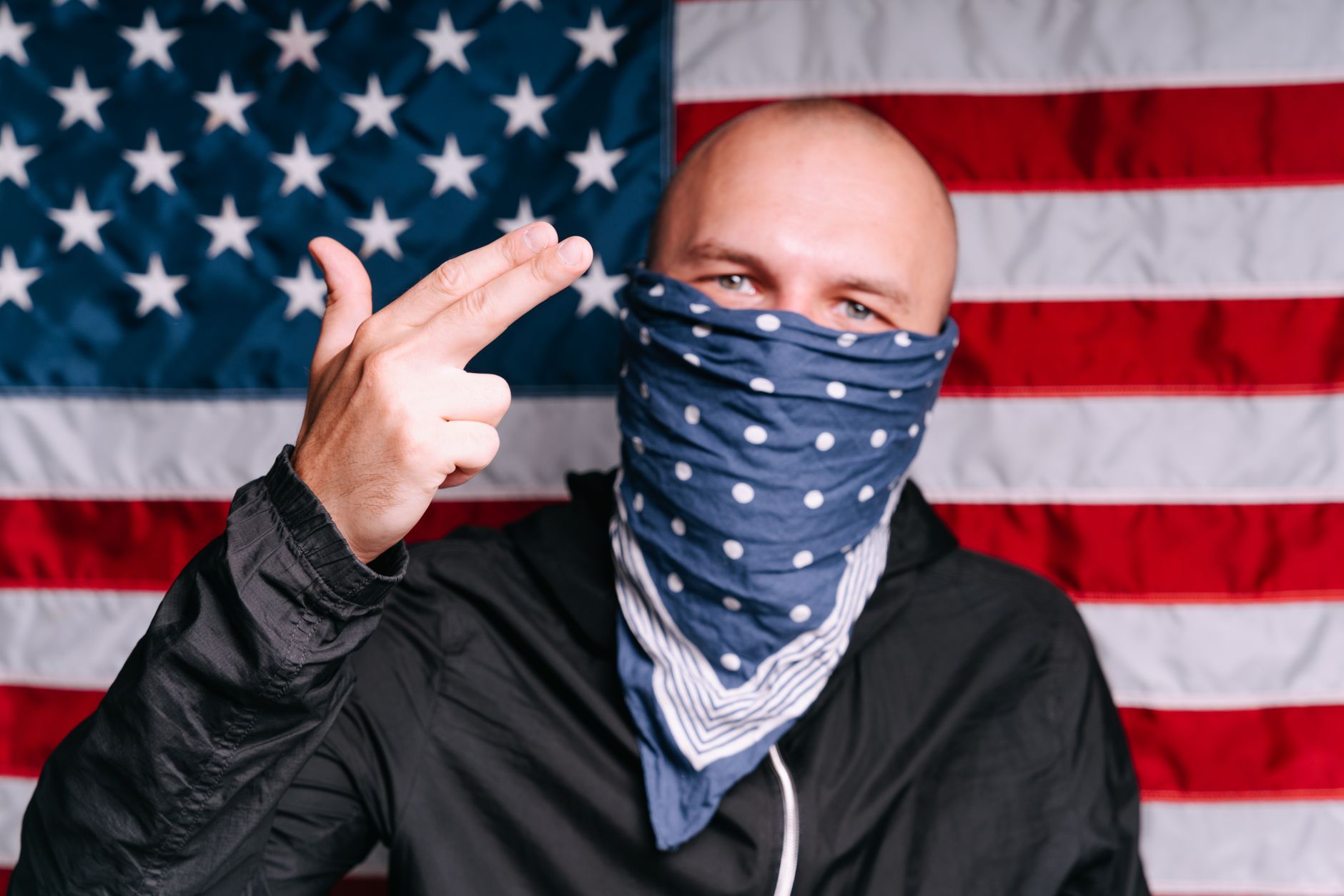
America’s culture war has changed shape. What once looked like a contest between left and right over a few symbolic battlegrounds has become a permanent condition of civic life: a daily struggle over speech, status, belonging, and moral legitimacy. The old subjects still matter—religion, race, sex, family, schooling—but they now move through a new system of transmission, accelerated by social media and amplified by a generation that came of age inside the argument rather than before it.
The result is less a single war than a layered one. Universities have become proxy states in a larger conflict over truth and authority. Religion has returned not as a stable shared language but as a marker of tribal identity. “Cancel culture” has evolved from a slogan into a social discipline enforced by platforms, employers, and peer groups. Identity politics, once a theory of representation, has become a practical grammar for organizing public outrage. And Gen Z, often cast as either unusually progressive or secretly reactionary, is better understood as the first generation raised in a permanent feedback loop of moral performance.
The algorithm as agitator
To understand the contemporary culture war, it helps to start not with ideology but with infrastructure. Social media did not create America’s divisions, but it altered their physics. Platforms reward speed, certainty, and emotional intensity; they punish nuance, delay, and ambiguity. As a result, disputes that would once have remained local or temporary are now nationalized within hours. A campus protest, a comedian’s joke, a corporate slogan, a church’s statement on gender, or a school-board speech can become a political event before the people involved have fully understood what has happened to them.
This is one reason the culture war feels both broader and thinner than its earlier versions. Broader, because more domains are now politicized. Thinner, because the argument often takes place at the level of symbols rather than material policy. It is easier to fight about a pronoun, a mascot, a reading list, or a brand campaign than to negotiate wages, housing, health care, or family leave. The attention economy favors conflict that can be explained in a screenshot. The platforms do not merely host the fight; they standardize it.
In that sense, the modern culture war is not just ideological. It is economic. Outrage is monetizable. Moral certainty travels well. Public shaming is sticky content. And because platform visibility now shapes status in real life, the costs of speaking become social as well as reputational. This helps explain why so many Americans describe the same environment in opposite terms: one group sees overdue accountability, another sees arbitrary punishment. Both are describing the same mechanism from different ends of the hierarchy.
Gen Z and the inheritance of permanent politics
Gen Z is the first cohort to have known the culture war as atmosphere rather than event. Older Americans can remember a before and after: before social media, before campus speech codes became national headlines, before every institutional disagreement was instantly translated into a test of allegiance. For younger Americans, that distinction barely exists. They learned politics through feeds, not institutions, and feeds reward posture before policy.
This has produced a generation that is at once more fluent in the language of justice and more fatigued by the rituals of moral sorting. Many Gen Z Americans are deeply invested in inclusion, gender fluidity, racial consciousness, and mental-health language. Many others are quietly moving in the opposite direction, skeptical of administrative liberalism, suspicious of elite consensus, and drawn to forms of masculinity, religion, or nationalism that their older peers had assumed were in retreat. The important point is not that Gen Z is “left” or “right,” but that it has internalized the idea that identity is political and politics is personal.
That condition produces two contradictory impulses. The first is expressive sincerity: the desire to make one’s values legible at all times. The second is irony and withdrawal: the suspicion that every public commitment is performative, monetized, or reversible. The same generation that speaks most fluently about authenticity also understands better than any before it that online authenticity is a managed product. This makes Gen Z a perfect audience for the culture war and, at the same time, a population increasingly bored by it.
One can see this boredom in the rise of pragmatic skepticism among young voters and students, who are often less interested in doctrinal purity than in whether institutions actually work. Yet boredom does not end the conflict. It often radicalizes it. When public argument feels stale, people do not always abandon it; they seek sharper identities, more dramatic symbols, and more absolute forms of belonging. The internet rewards the move from opinion to tribe.
Cancel culture after the slogan
No phrase has been more overused, or more revealing, than “cancel culture.” Critics invoke it as proof that liberalism has turned punitive; defenders treat the phrase as a bad-faith complaint from people who resent accountability. Both views capture part of the truth. The deeper reality is that public reputation has become easier to damage and harder to repair, because the institutions that once mediated conflict—editors, universities, unions, churches, local associations—have weakened or lost trust.
In the vacuum, informal enforcement has expanded. A post, a clip, a leak, or a decade-old remark can trigger consequences that range from public criticism to termination. Sometimes that is a democratic correction. Sometimes it is a mob. Usually it is a mixture: a genuine moral grievance filtered through competitive attention. The question is no longer whether society should hold public figures accountable. It is who gets to decide the standard, what process exists before punishment, and whether there is any path back into good standing.
The culture-war significance of cancel culture lies in its asymmetry of perception. To its advocates, it is often a response to structural impunity, a way of forcing powerful people to face harms long ignored. To its detractors, it is evidence that a progressive elite has privatized coercion through social pressure rather than law. That disagreement matters because it reveals the core fracture in American liberalism: one side increasingly trusts moral exposure as a corrective, while the other sees it as a substitute for due process.
What has changed in recent years is that cancellation is no longer a one-way political weapon. Conservatives have built their own parallel systems of boycotts, blacklist-making, and reputational warfare. The result is not a society with less punishment but one with more rival standards of punishment. Everyone claims to be defending free expression while participating in a market for exclusion.
Universities as the culture war’s stage set
American universities remain among the most visible theaters of culture conflict because they combine three things the modern public cannot resist: authority, youth, and symbolism. They are supposed to represent merit, openness, and rational inquiry. When they appear captured by ideology, or alternatively attacked by demagogues, the breach feels existential.
That is why debates over diversity initiatives, admissions, speech policies, labor organizing, and responses to protest have become so combustible. The university is not merely a workplace or a credentialing machine; it is a national myth about how intelligence and fairness should coexist. When that myth cracks, the reaction is rarely narrow. It spreads outward into law, philanthropy, hiring, and state politics.
Recent fights on campus have exposed a central tension in American higher education: universities are expected to cultivate inquiry, yet they are also expected to protect students, signal values, and manage reputational risk. Those goals can coexist only up to a point. Once administrators begin treating every controversy as a public-relations crisis, students and faculty learn that intellectual disagreement is not the same as institutional freedom. Once critics conclude that universities are ideological fiefdoms, they treat all academic claims as partisan gestures.
The consequence is not just polarization but self-censorship. Scholars avoid certain topics. Students sort themselves into moral camps. Donors and legislators use funding as leverage. Faculty increasingly operate in a climate where every utterance may be interpreted through a partisan lens. The university remains one of the few places where the culture war still has an institutional center, but that center now looks less like a lighthouse than a siege tower.
Religion’s unexpected return
For years, secularization looked like the culture war’s long-term destination. Then religion re-entered the scene, not as a universal settlement but as a contested badge of identity. The American right has increasingly framed itself as the defender of religious liberty, traditional morality, and inherited order. Meanwhile, parts of the left have treated religion either as private consolation or as a source of oppression, except when mobilized for social justice. Neither camp has fully reckoned with the fact that religion still supplies what politics cannot: sacrifice, ritual, continuity, and a language for moral seriousness.
This matters because culture wars thrive when they become substitutes for transcendence. In a vacuum left by thinning civic institutions and declining religious affiliation, politics takes on spiritual functions. It tells people who they are, what to fear, whom to forgive, and when to denounce. But politics is a poor religion. It can create zeal without grace, identity without mercy, and conviction without humility.
Religion’s return also complicates the familiar map of American polarization. Not all religious Americans fit neatly into conservative politics, and not all secular Americans are doctrinaire progressives. Yet the larger pattern is clear: in a fragmented society, churches, synagogues, mosques, and religious schools offer one of the few remaining sources of stable community. That makes them both refuges from the culture war and participants in it.
Politics is a poor religion. It can create zeal without grace, identity without mercy, and conviction without humility.
Identity politics becomes common sense
Identity politics is now so deeply embedded in American public life that the phrase often obscures more than it explains. What began as an effort to ensure that race, gender, sexuality, and other identities were not ignored by dominant institutions has become a general language of self-description. Employers, schools, media organizations, and political campaigns all use it to define audiences and frame grievances. The logic of recognition has moved from the margins into the center.
That shift was not inevitable, but it was predictable. In a diverse democracy, recognition matters. People want institutions to reflect them honestly and to respond to unequal treatment. Yet identity politics becomes corrosive when it turns every disagreement into a struggle between fixed groups and every institution into a tribunal of competing injuries. At that point, identity no longer broadens democratic participation; it narrows the terms on which people can speak to one another.
The strongest critique of identity politics is not that it cares too much about difference, but that it often mistakes visibility for justice. Representation can matter enormously, but not every question can be solved by putting the right face in the right room. Likewise, the strongest defense of identity politics is not that group identity is everything, but that institutions have historically ignored or distorted the lived experience of many Americans. The problem in 2026 is that both truths have hardened into orthodoxy, leaving little room for ambiguity.
That is why the culture war now reaches into ordinary life so easily. It is not confined to national elections or Supreme Court cases. It shows up in hiring decisions, school curricula, workplace trainings, sports leagues, media casting, and family conversation. Americans are not simply divided over issues; they are divided over the moral rules used to discuss them.
What remains unsolved
The most tempting mistake is to treat the culture war as proof of national decline. There is truth in that view: a society that cannot disagree without humiliation is not healthy. But there is also a danger in nostalgia. Earlier eras of American calm often depended on exclusions that are now morally and politically untenable. The old consensus was real for some people because it was enforced against others.
The harder task is to build institutions that can absorb conflict without converting every dispute into existential combat. That means clearer norms around speech, more procedural fairness in punishment, less performative outrage, and a better distinction between symbolic victory and durable reform. It also means admitting that neither social media nor partisan branding can supply what the country is missing: trust.
American culture wars persist because they solve problems for the actors who profit from them. Platforms gain engagement. Politicians gain turnout. Media organizations gain attention. Universities gain or lose donors, depending on the moment. Activists gain visibility. But the public loses something harder to quantify: the ability to treat disagreement as a feature of democracy rather than evidence of betrayal.
That is the central drama of the present moment. The culture war survives not because Americans love fighting, but because modern institutions have made fighting unusually rewarding and unusually public. The question is no longer whether the country can eliminate culture conflict. It cannot. The question is whether it can recover enough shared norms to keep the conflict from becoming its permanent civic language.