The Commodity Paradox That Explains Everything
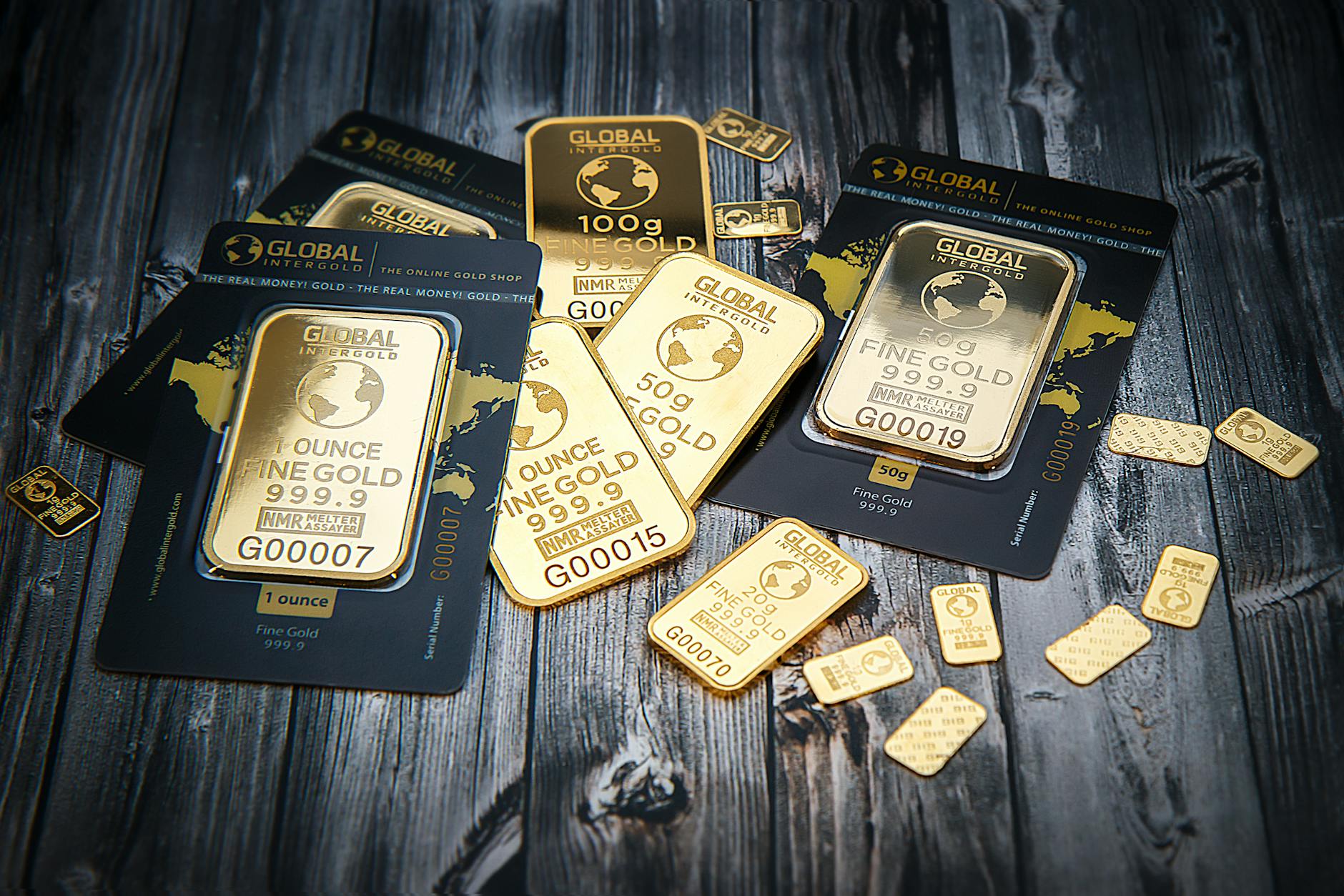
In January 2026, something peculiar happened in the markets that should have triggered alarm bells among institutional investors. Crude oil and gold, those twin sentinels of global anxiety, stopped moving together. When geopolitical risk spiked—when tariff threats materialized and tension in the Middle East escalated—gold surged past $4,700 per ounce, driven by what market participants called "political uncertainty" and "risk sentiment." Oil, by contrast, barely flinched.
This was not the behavior of normal commodity markets. Historically, oil and gold move in synchrony during periods of synchronized global stress. They rise together, fall together, tell the same story about fear and opportunity. But by mid-January, the distance between them had widened noticeably. Gold maintained upward pressure even as oil fluctuated within narrow bands. Something fundamental had shifted in how investors perceived risk itself.
The explanation, it turns out, reveals the architecture of 21st-century financial anxiety. Oil reacts to headlines but prices revert quickly when no lasting supply loss follows. Goldman Sachs projects a sizable supply surplus for 2026 and sees West Texas Intermediate averaging around $52 per barrel. The market knows this. Every supply disruption, every flashpoint, gets priced in instantly and then discounted just as quickly because the underlying reality—massive global oversupply, with U.S. production at all-time highs and OPEC+ maintaining output levels—cannot be wished away. Oil is tethered to fundamentals, to the brutal mathematics of supply and demand.
Gold, by contrast, trades in fear. It responds not to what is, but to what might be. When investors search for protection from political uncertainty, when central banks need to manage their reserves amid shifting global dynamics, gold rises. And it stays risen, because fear, once kindled, does not extinguish quickly. This divergence captures something essential about markets in 2026: we are witnessing a bifurcation between those investments that reflect reality and those that reflect anxiety about reality.
The Revenge of Volatility
The first quarter of 2026 was supposed to be a straightforward story. Metals would continue their 2025 rally into January, driven by declining real yields, elevated government spending, and structural central bank demand. Then came the Iran conflict, and suddenly the metals reversed hard. Crude oil soared. Bitcoin continued its downtrend. The orderly narrative collapsed into chaos.
But from this chaos emerged an entirely new market structure. Weekly trading volume in commodity perpetual swaps surged 65,463 percent in the first quarter of 2026—from $38.1 million to $25 billion. This explosion did not happen by accident. Traders are fleeing traditional commodity markets, which operate on fixed schedules and limited hours, for crypto-native exchanges that trade continuously, around the clock, on weekends, at 3 a.m. on Tuesday mornings whenever volatility strikes.
By mid-March, the tokenized commodities market on Hyperliquid had distributed itself across silver contracts commanding 34.8 percent of trading, crude oil at 27.7 percent, gold at 27.5 percent. These are not trivial allocations. This is infrastructure. This is the plumbing through which serious capital now flows when traditional markets close their doors.
The driving force behind this migration is elegantly simple: geopolitical uncertainty makes traditional market schedules untenable. Weekend disruptions cause volatility. News breaks on Sunday evening. Monday morning gaps open. Institutional investors and sophisticated traders have discovered that they cannot protect themselves in markets that sleep while the world burns. Crypto derivatives do not sleep. They do not have gaps. They do not force you to wait until Monday morning to hedge your Saturday night fears.
This represents a structural shift in how financial markets operate. It is not a speculation. It is not a temporary phenomenon. It is the market solving a problem that traditional finance created—and in solving that problem, creating an entirely new financial system parallel to the old one.
Gold's Unfinished Business
Gold's trajectory through early 2026 has followed an Elliott wave pattern, a technical framework suggesting that the precious metal experienced a wave four consolidation after reaching unsustainable heights. In March, gold bottomed at $4,099, a correction that vindicated those who warned of speculative excess. Yet the larger pattern tells a different story. This wave four correction is part of a larger five-wave bullish sequence, which implies that gold will eventually see new highs above $5,600 in coming quarters.
Major banks have calibrated their forecasts accordingly. Goldman Sachs and other institutions project price ranges of $4,500 to $4,700, with upside toward $5,000 if macro conditions persist. More bullish analysts, including Ole Hansen, head of commodity strategy at Saxo Bank, argue that gold should reach $6,000 within twelve months despite needing a near-term correction. These are not fringe predictions. They represent institutional consensus about where capital will flow as confidence in fiat currency diminishes and governments continue their spending trajectories.
The case for gold rests on three pillars. First, declining real yields—the return on bonds adjusted for inflation—remain structurally depressed, making zero-yielding gold attractive by comparison. Second, elevated government spending shows no sign of abating, which pressures central banks and currency values. Third, structural central bank demand remains intact as nations diversify their reserves away from traditional currency concentrations. Gold, in this framing, is not speculation. It is diversification. It is the rational response to an irrational policy environment.
Yet gold's rally has been forceful rather than gradual. After closing 2025 at elevated levels, prices accelerated again in January, briefly touching the $4,750 to $4,766 range as political risk overtook macro data as the dominant driver. This suggests something other than patient institutional accumulation. This suggests fear.
The Silver Mirage
Silver presents a more complicated case. After a 120 percent surge in 2025, silver broke above critical resistance zones and entered what analysts call "price-discovery territory." The fifth consecutive year of structural supply deficit and accelerating industrial demand provide fundamental support for higher prices. Yet the volatility and speculative fervor that accompanied silver's near-$100 rally in early 2026 raises troubling questions about sustainability.
Ole Hansen's assessment proves instructive: silver's rally to $100 was largely speculative and unlikely to go much further. The distinction matters. Industrial demand for silver remains real and robust—solar panels, electric vehicles, electronics all require the metal. But industrial demand, no matter how strong, cannot support indefinite price expansion. At some point, demand destruction occurs. Manufacturers find substitutes or reduce consumption. The speculative component evaporates. What remains is the industrial foundation, which is real but limited.
Looking ahead into the second quarter and beyond, silver finds headwinds due to industrial demand possibly slowing down as global economic growth decelerates. This is the inverse of gold's trajectory. Gold rises as economic uncertainty increases. Silver falls as economic activity slows. They are not the same asset. They do not tell the same story. An investor who treats them interchangeably will eventually suffer.
Oil's Structural Problem
Crude oil's price action in early 2026 reveals a market trapped between two incompatible realities. The geopolitical reality—Middle East tension, supply disruption risks, geopolitical flashpoints—suggests higher prices. The economic reality—massive global oversupply, record non-OPEC+ production, weak demand growth—suggests lower prices. These forces have collided, and the economic reality has prevailed.
West Texas Intermediate crude fell to approximately $58 per barrel in late 2025, down over 15 percent year-on-year. U.S. crude oil production reached an all-time high of over 13.4 million barrels per day. The International Energy Agency projects global oil demand growth below one million barrels per day in 2025, attributed to economic deceleration in major importing nations, weaker manufacturing activity, and the accelerating adoption of electric vehicles. Against this backdrop, even geopolitical risk cannot sustain price rallies. The supply fundamentals overwhelm the risk premium.
Yet forecasters expect crude to remain stubbornly high in the near term, potentially averaging in the $50 to $60 per barrel range. It appears crude oil may bottom in Q1 2026 and begin a multi-month rally that ultimately challenges $100 or higher, according to technical analysis. This projection seems optimistic given the structural headwinds. But it reflects a reality that most oil market participants have internalized: at some point, the supply cuts become unsustainable, the demand rebound becomes undeniable, and the marginal barrel becomes genuinely scarce again. We are not there yet. But the trajectory suggests we will arrive there eventually.
The Emerging Picture
What emerges from this commodity complexity is a market undergoing profound structural transformation. Traditional asset correlations are breaking down. Crypto derivatives are capturing trading volume that traditional exchanges cannot accommodate. Gold and oil no longer move together. Investors flee to assets that protect against uncertainty while simultaneously abandoning assets that merely hedge against risk.
The Great Commodity Divide that characterized late 2025 has not narrowed. It has widened. Green metals rally while energy languishes. Precious metals rise while industrial metals face headwinds. Central banks accumulate gold while reserves diminish in other assets. None of these movements are coordinated by any central authority. They are all expressions of the same underlying anxiety: the current financial and monetary system is unsustainable, and capital must find shelter before the inevitable adjustment begins.
For investors navigating this landscape, the message is stark. Portfolio construction in 2026 cannot rely on historical correlations or traditional diversification frameworks. The old rules have stopped working. Gold is not rising because of geopolitical risk alone—it is rising because of structural monetary policy failures. Oil is not falling because of supply fundamentals alone—it is falling because demand destruction has outpaced supply growth expectations. And crypto derivatives are not growing because of speculation alone—they are growing because institutional capital has discovered that traditional markets cannot meet the requirements of 24/7 portfolio management in a 24/7 risk environment.
The markets are breaking apart, as commodity strategists have begun to warn. Whether this represents creative destruction—the emergence of superior market structures from the ruins of legacy systems—or systemic fragmentation remains uncertain. What is certain is that investors who fail to recognize this transformation will find themselves holding yesterday's assets in tomorrow's market.