The Cosmic Convergence of 2026
For decades, humanity has gazed upward, dreaming of a return to the Moon and a future among the stars. In 2026, that dream has crystallized into tangible, observable reality. This is not merely another year of incremental progress; it is a defining moment where space exploration, medical miracles, and climate resilience intersect to forge a new paradigm for human advancement. The headline story is unmistakable: space is capable of producing moments that stop us in our tracks, even as the quiet scaling of satellite constellations and reusable launch systems continues in the background.
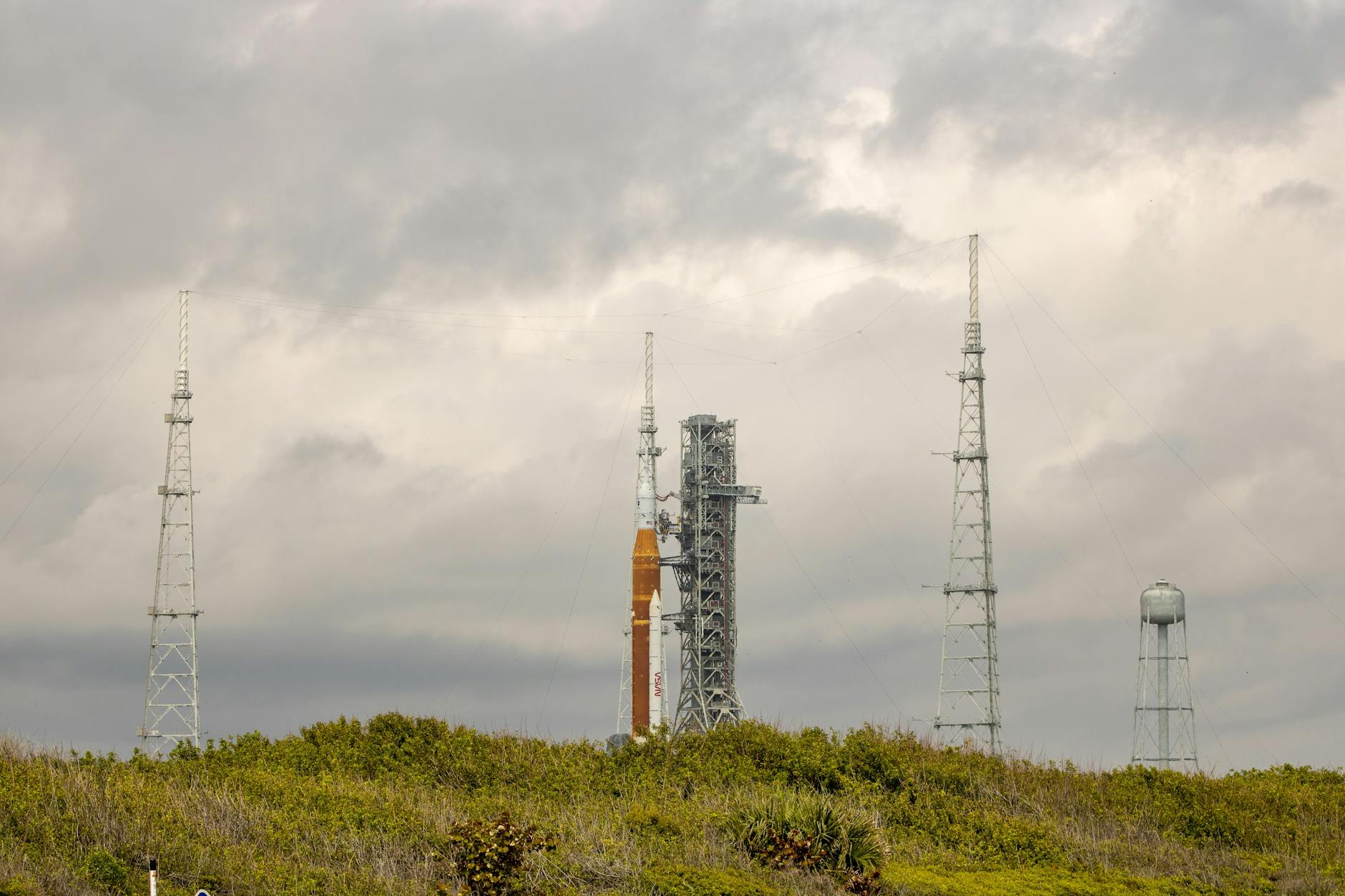
At the heart of this cosmic convergence is NASA's Artemis II mission. Scheduled for a crewed flyby of the Moon, this mission represents the first time humans will travel beyond low Earth orbit since the Apollo era. It will not involve a landing, yet its significance is profound. Artemis II demonstrates that humans can safely operate in cislunar space once more, transforming decades of planning into lived experience. This milestone signals a substantial advancement in the United States' return to space, marking the beginning of a new, sustained chapter in lunar exploration.
"2026 could be pivotal for the United States' return to space. It signifies that humans can safely operate in cislunar space once more, transforming decades of planning into lived experience."
While NASA leads the charge toward the Moon, SpaceX continues to dominate the launch landscape with its relentless cadence and expanding satellite constellations. The proliferation of reusable launch systems across various nations has become the steady backdrop of this new era, but 2026 is poised to offer select initiatives that culminate in moments the public can directly observe. The synergy between government ambition and private efficiency is creating an ecosystem where space is no longer a distant frontier but an accessible domain for commerce, science, and exploration.
Artificial Cells and the Future of Medicine
Parallel to the cosmic leap, 2026 is witnessing a revolution in biotechnology that promises to redefine the boundaries of life. The public announcement of SpudCells—a type of artificial cell—marks a breakthrough that could reshape our understanding of cellular organization and therapeutic potential. These artificial cells are not just a scientific curiosity; they represent a fundamental shift in how we approach drug development and disease treatment.
In the realm of cancer therapy, a study published in Nature has revealed that GPNMB-targeted CAR-T cells can target both glioblastoma cells and tumor-associated macrophages. This dual-action mechanism eliminates detectable tumors and produces long-term disease control in preclinical models. The discovery offers a potential cure for one of the most aggressive and challenging forms of brain cancer, bringing hope to patients who previously faced a grim prognosis. The precision of these cells, combined with their ability to navigate the complex immune landscape, underscores the maturity of modern immunotherapy.
"GPNMB-targeted CAR-T cells can target both glioblastoma cells and tumor-associated macrophages, eliminating detectable tumors and producing long-term disease control."
The breakthrough in life sciences extends to neurodegenerative diseases as well. Bryan Traynor and Rosa Rademakers were honored for discovering the most common genetic cause of both amyotrophic lateral sclerosis and frontotemporal dementia. Their work solves a decades-old mystery in neurodegenerative disease, providing a critical foundation for future therapies. This discovery is a testament to the power of genetic research to unlock the secrets of the brain and offer new avenues for healing.
Furthermore, the development of cell-free biomanufacturing is emerging as a leading trend in biotechnology. These systems can produce proteins, enzymes, or chemicals on demand without living organisms or fermentation tanks. This innovation streamlines production processes, reduces environmental impact, and opens new possibilities for rapid response to medical needs. The ability to manufacture essential biological compounds without the constraints of traditional bioreactors is a game-changer for the pharmaceutical industry.
Roots of Resilience: Climate Science and Agriculture
As climate volatility intensifies, researchers are turning to the hidden half of plants—the root system—to develop crops that can thrive under drought stress. This focus on root architecture is a critical adaptation strategy in the face of a changing climate. Teams using CRISPR/Cas9 and base editing tools have successfully modified root architecture genes in rice, wheat, and maize to promote deeper, more efficient water uptake without compromising yield.
These genetic edits target traits like root angle and root depth, enabling plants to access moisture from deeper soil layers. The result is a new generation of crops that are resilient to drought and capable of sustaining global food supplies in the face of environmental uncertainty. This breakthrough in climate-smart agriculture is essential for ensuring food security and stabilizing ecosystems in a warming world.
"Teams using CRISPR/Cas9 successfully modified root architecture genes in rice, wheat, and maize to promote deeper, more efficient water uptake without compromising yield."
Beyond root engineering, the development of tandem perovskite solar cells is revolutionizing renewable energy. These cells, made of perovskite and silicon, have reached power conversion efficiencies over 34%, a significant improvement over existing commercial silicon-based panels. The efficiency improvements are due to breakthroughs in interface passivation, compositional tuning, and enhanced stability. As the first commercial versions are expected to reach the market in 2026, these solar cells will play a pivotal role in the global transition to clean energy.
The convergence of renewable energy innovations, green chemistry, and biotechnology advances is making 2026 a pivotal year for sustainability. The integration of Internet of Things (IoT) technology with self-healing materials is another leading breakthrough in materials science. This combination shifts industries to predictive maintenance for all types of infrastructure based on real-time data analysis, reducing waste and enhancing durability.
Quantum Physics and the Expanding Cosmos
In the realm of fundamental physics, 2026 is yielding discoveries that challenge our understanding of the universe. Astronomers have reported the discovery of Gaia23bra b, the first gravitationally bound exoplanet detected by the Transiting Exoplanet Survey Telescope using gravitational microlensing. This super-Jupiter orbits a K dwarf about 40,000 light-years from Earth, offering a new window into the formation and evolution of distant planetary systems.
The Breakthrough Prize Foundation has honored advances in dark matter, quantum physics, gene editing, and nonlinear mathematics, recognizing the profound impact of these discoveries. The prize in fundamental physics celebrates the work of Cliff Brangwynne and Tony Hyman, who discovered a fundamental mechanism of cellular organization mediated by phase separation of proteins and RNA into membraneless liquid droplets. This discovery reveals a hidden layer of complexity in cellular biology, with implications for understanding disease and developing new therapies.
The intersection of quantum physics and space exploration is also driving innovation. The ability to detect and analyze gravitational microlensing events is a testament to the precision of modern astronomical instruments. These advancements are essential for mapping the cosmos and understanding the intricate dance of gravity and matter that shapes our universe.
A Year of Pivotal Progress
By most standards, 2026 is poised to be an exceptionally year for scientific and technological progress. The deep dive via a crewed lunar flyby, the increasing activity in Earth orbit around the Moon, and steady advancements across a variety of enabling technologies all indicate a sector progressing on multiple fronts simultaneously. This is a year where space is still capable of producing moments that stop us in our tracks, even as the quiet scaling of satellite constellations and reusable launch systems continues in the background.
The convergence of space exploration, medical breakthroughs, climate resilience, and quantum physics is creating a new paradigm for human advancement. From the Artemis II mission to the development of artificial cells, from root-engineered crops to tandem perovskite solar cells, 2026 is a testament to the power of human ingenuity and the promise of a future filled with possibility.
"2026 may be a pivotal year for renewable energy innovations, green chemistry, biotechnology advances, precision medicine, and climate-smart agriculture."
In this new space age, humanity is not just looking up; it is actively reaching out, building, and healing. The breakthroughs of 2026 are not isolated events but part of a larger, interconnected tapestry of progress. As we stand on the threshold of this new era, the future is not just a dream; it is a reality we are actively shaping. The cosmic convergence of 2026 is a reminder that the stars are not beyond our reach, and the challenges of our planet are not beyond our resolve.
This is the story of a year that will define the next century. It is a story of courage, innovation, and the relentless pursuit of a better future. And as we look to the future, we know that the breakthroughs of 2026 are just the beginning of a new, extraordinary chapter in the history of human civilization.