The New Cultural Hegemony
In the early decades of the 21st century, the axis of global cultural influence shifted decisively eastward. What began as a niche fascination with Japanese animation and South Korean ballads has metastasized into the dominant lingua franca of youth culture worldwide. The term "Cool Japan," officially launched in 2013 as a state strategy to leverage soft power, was merely the formal acknowledgment of a phenomenon that had already swept the globe [6]. Today, the cultural hub of East Asia is no longer a monolith; it is a dynamic, competitive dual-engine system driven by Tokyo's deep-rooted otaku subcultures and Seoul's hyper-efficient content manufacturing, creating a paradigm where Asian cinema, music, and technology dictate global trends [4][7].
This transformation is not merely about entertainment; it represents a fundamental reordering of how modern societies consume narrative and identity. Contemporary forms of popular culture, from anime to K-drama, are not just forms of diversion but distinguishing factors that separate the contemporary Asian experience from the rest of the modern world [2]. The retention of older artistic and literary traditions within these modern mediums ensures that even as the technology evolves, the spiritual core remains tethered to centuries of aesthetic history.
The Anime and Manga DNA of Japan
Japan remains the undisputed birthplace of manga and anime, a legacy that functions as the foundational DNA for the region's pop culture export. Anime, distinct from Western cartoons, is defined by its granular detail in character design, an expansive array of facial expressions, and a commitment to in-depth character development that appeals to a wide target audience [2]. Unlike the episodic, often static nature of American animation, anime is frequently predicated on the narrative depth of manga, an ancient form of comic writing dating back to the 12th century [2].
The globalization of this medium has been staggering. From iconic Sanrio characters to the dynamic sounds of J-pop, Japanese entertainment has moved decisively from niche interests to mainstream global influence, serving as a critical instrument of soft power [5]. Yet, the industry faces a precarious future. The over-reliance on foreign streaming platforms for global distribution threatens to erode domestic control, while stiff competition from phenomena like K-pop challenges Japan's historical dominance [5]. Despite this, the "otaku" culture—the term describing those with consuming interests in anime, manga, and video games—continues to evolve, with cosplay becoming a form of pop culture that is beginning to sweep the world [1].
The most popular Japanese films still carry the weight of their cinematic history, particularly the giant monster films (*Kaiju Eiga*) of Godzilla, Gamera, and the Ultraman Series, which blend traditional mythological fears with modern technological anxieties [3]. These films, alongside the broader spectrum of Japanese cinema, television programs, and video games, retain older artistic traditions while pushing the boundaries of contemporary storytelling [2].
The Seoul Surge: K-Pop and the K-Drama Machine
While Japan built the foundation, South Korea has taken the mantle of the cultural hub, engineering a more aggressive and globally synchronized export strategy. The phenomenon of K-pop and K-drama is not accidental; it is the result of a highly industrialized system that treats pop culture as a state priority. The success of titles like *Squid Game* and the global dominance of groups like BTS have proven that some of the most successful titles of the year now come not out of Hollywood but from Asia [4].
South Korea's rise has been characterized by a unique ability to adapt Western pop structures while infusing them with distinct Korean aesthetic and emotional sensibilities. This has created a cultural product that is instantly recognizable yet universally consumable. The shift from Japan's traditional dominance to Korea's hyper-modern output represents a generational shift in Asian cultural leadership. At one point, Japan was the cultural hub of East Asia with anime, manga, and J-pop, but South Korea has now assumed that role through a more digitized, streaming-first approach [7].
K-drama, in particular, has redefined the global soap opera format. By integrating high production values, complex narrative arcs, and a distinct emotional resonance that avoids the cynicism often found in Western media, Korean dramas have captivated audiences from Latin America to the Middle East. This success is bolstered by the region's broader cinema scene, which includes award-winning masterpieces that have reshaped international perceptions of Asian storytelling.
Tokyo Street Culture and the Urban Psyche
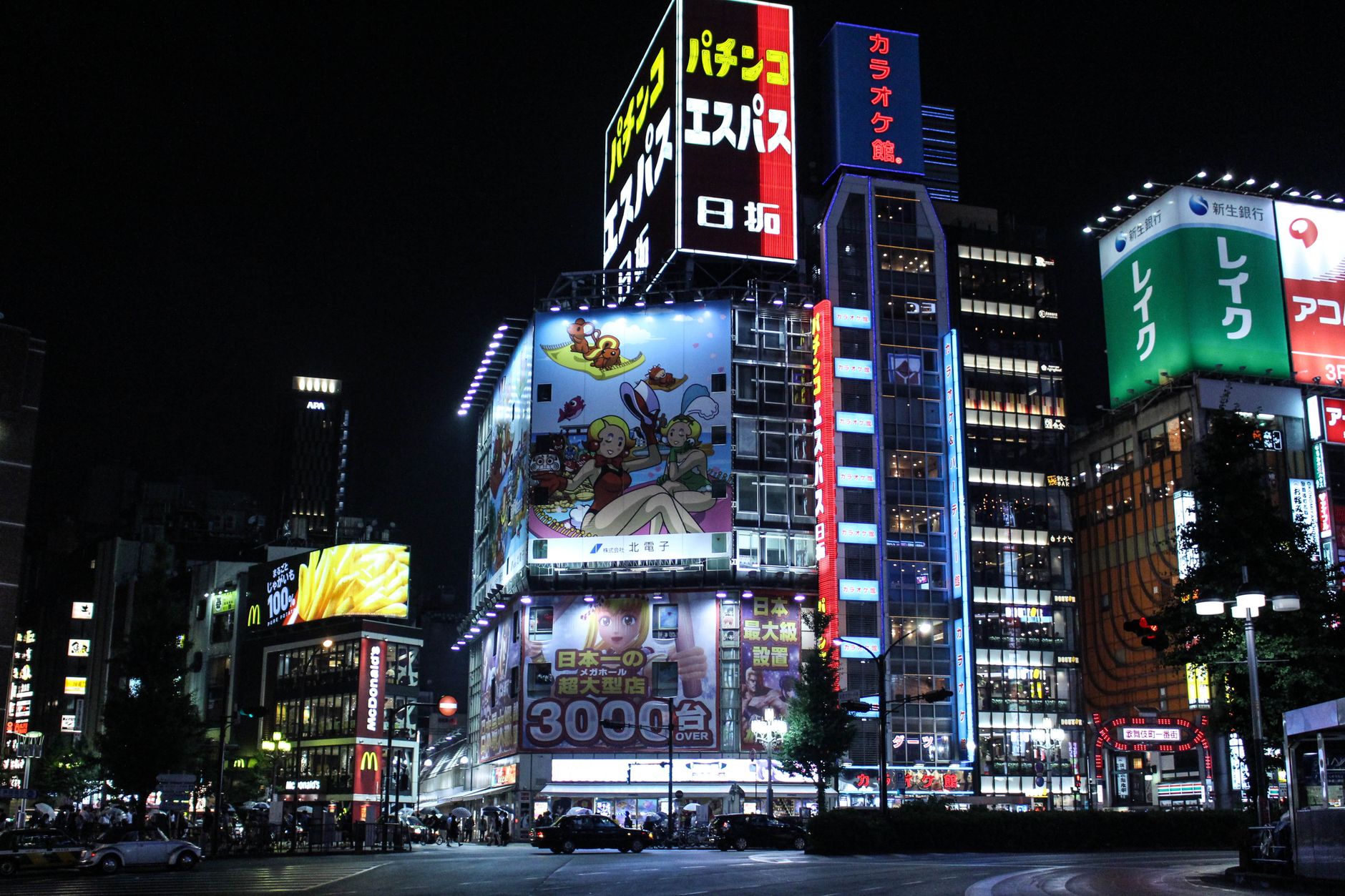
To understand the engine of this cultural output, one must step into the streets of Tokyo, where the urban landscape acts as a living museum of pop culture. Tokyo street culture is a sedimentary layer of history and futurism, where the neon glow of Shibuya and the quiet, tatami-lined alleys of Asakusa coexist. This environment is the physical manifestation of the "otaku" mindset, where the boundaries between the virtual and the real dissolve.
The street culture is defined by its visual density and its embrace of the exotic. Cosplay, once a fringe activity, has become a staple of the urban experience, with dedicated zones in districts like Akihabara where enthusiasts perform their identities in public. This is not merely performance; it is a form of social engagement that allows individuals to navigate the rigid social structures of Japanese society through the lens of fantasy characters [1]. The street is a stage where the aesthetics of anime and manga are worn, lived, and reinterpreted, creating a feedback loop that influences the next generation of creators.
Tokyo's influence extends beyond its own borders, serving as the archetype for the "future city" in global cinema and literature. The city's infrastructure, from the hyper-efficient rail systems to the 24-hour convenience stores, reflects a technology culture that prioritizes utility and seamlessness. This technological backdrop is essential to the narrative of Asian pop culture, where the digital and physical worlds are inextricably linked.
The Technology Culture Backend
The global dominance of Asian pop culture is underpinned by a technology culture that is uniquely advanced and deeply integrated into daily life. In Japan and South Korea, technology is not just a tool; it is an environment. The region's video game industry, which dates back to the 1960s in Japan, has evolved into a sophisticated ecosystem that drives innovation in hardware, software, and virtual reality [9].
Japan's popular culture has been evolving since the 1960s, with the significant opportunity of manga, anime, and video gaming serving as a testbed for new technologies [9]. The country's video game industry, home to giants like Nintendo, Sony, and Sega, has consistently pushed the boundaries of what is possible in interactive media. This technological prowess is mirrored in South Korea, where the digital infrastructure is among the most advanced in the world, facilitating the rapid dissemination of K-pop and K-drama globally.
The integration of technology into culture is evident in the rise of virtual idols and the use of AI in music production. In Japan, the concept of the "idol" has been expanded to include virtual characters who perform in real-time, blurring the line between human and machine. This trend is part of a broader cultural shift where technology is embraced as a means of expanding human expression, rather than replacing it. The technology culture of Asia is thus a critical component of its pop culture success, providing the infrastructure and the creative tools necessary for global dominance.
Cinema and the Visual Narrative
Asian cinema has emerged as a powerful force in the global film landscape, challenging Hollywood's long-held monopoly on the industry. From the warranting masterpieces of directors like Akira Kurosawa and Hayao Miyazaki to the modern thrillers of Park Chan-wook and Bong Joon-ho, Asian filmmakers have demonstrated a unique ability to blend genre conventions with deep thematic exploration. The region's cinema is characterized by a willingness to tackle difficult subjects, from social inequality to political corruption, with a level of nuance and complexity that is often absent in Western productions.
The success of Asian cinema on the international stage is not just a matter of artistic merit; it is a reflection of the region's growing economic and cultural power. Films like *Parasite* and *Shoplifters* have won top awards at major festivals, signaling a shift in the global perception of Asian art. This shift is part of a broader trend where Asian culture is no longer seen as exotic or niche but as a central component of the global cultural landscape.
The visual narrative of Asian cinema is also distinct, often characterized by a use of color and light that is both vibrant and atmospheric. This aesthetic is influenced by the region's rich history of traditional art, where color and light are used to convey emotion and meaning. The result is a visual style that is both instantly recognizable and deeply evocative, drawing viewers into the world of the film and creating a lasting emotional impact.
The Future of the Asia Paradigm
The future of the Asia Paradigm is one of continued evolution and expansion. As the region's economies grow and its cultural influence spreads, the balance of power in the global cultural landscape will continue to shift. The competition between Japan and South Korea will likely intensify, with each country seeking to maintain its position as a leading cultural exporter. However, this competition is not a zero-sum game; it is a dynamic that drives innovation and creativity, pushing the boundaries of what is possible in pop culture.
The challenges are significant. The over-reliance on foreign streaming platforms, the threat of homogenization, and the need to maintain a balance between tradition and innovation are all issues that the region must address. Yet, the resilience and adaptability of Asian pop culture suggest that it will continue to thrive in the face of these challenges. The Asia Paradigm is not just a trend; it is a fundamental shift in the way the world consumes culture, one that will define the 21st century.
As we look to the future, the question is not whether Asian culture will continue to dominate, but how it will evolve. The next generation of creators, inspired by the legacy of anime, manga, and K-pop, will be the ones to shape the future of the Asia Paradigm. Their work will be a reflection of the region's unique blend of tradition and innovation, a testament to the power of culture to transcend borders and connect people across the globe.
"Contemporary forms of popular culture, much like the traditional forms, are not only forms of entertainment but also factors that distinguish contemporary Japan from the rest of the modern world." [2]
The story of Asian pop culture is a story of resilience, innovation, and the power of the human spirit to create something new and beautiful. It is a story that is still being written, and one that will continue to captivate the world for generations to come.