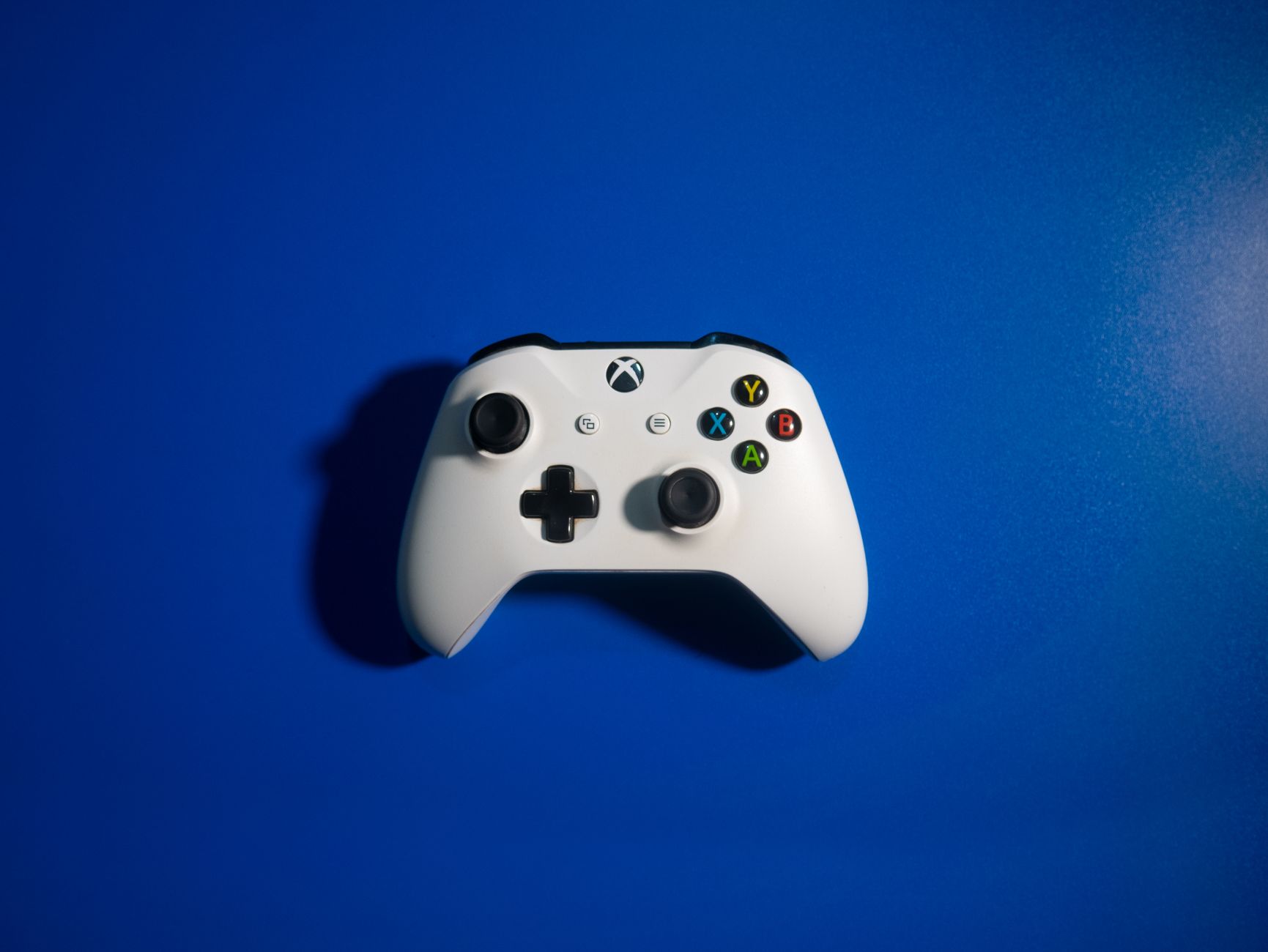
The Great Console Reset: Why Microsoft's Gaming Empire Is Crumbling While Sony and Nintendo Hold the Line
The gaming industry is currently undergoing a seismic transformation, one that threatens to overturn the decades-old hierarchy of console dominance. At the center of this turmoil stands Microsoft, the company that once seemed destined to conquer the market through sheer financial force and technological ambition. Yet, as of mid-2026, the Xbox brand is not just sliding; it is in a state of profound structural crisis. Microsoft's Q3 2026 earnings revealed a harsh reality: Xbox hardware revenue has plummeted by 33 percent, while content and services revenue has fallen 5 percent year-on-year [2]. This is not a cyclical dip typical of the post-holiday slump; it is a structural inflection point that signals the failure of Microsoft's aggressive, subscription-heavy strategy.
Simultaneously, the leadership vacuum at the top of the division has become a glaring symbol of the company's disarray. The retirement of long-time Xbox chief Phil Spencer and the exit of Sarah Bond have left the company in flux, replaced by Asha Sharma, a former head of CoreAI who now faces the daunting task of redefining what Xbox means in an era where the console itself is becoming increasingly irrelevant [2]. As Microsoft pivots toward cloud computing and enterprise solutions, the gaming business has morphed from a growth engine into a cash flow problem that threatens to distract from the company's primary AI ambitions.
In stark contrast to Microsoft's contracting empire, Sony and Nintendo continue to execute strategies rooted in the enduring value of exclusive content and hardware-software integration. While Microsoft bets on the cloud, Sony is betting on the blockbuster, and Nintendo is betting on the cult. This divergence in strategy is not merely a matter of preference; it is a reflection of two fundamentally different philosophies about the future of entertainment. One philosophy views gaming as a service to be consumed instantly across any device, the other views it as a destination to be experienced with intention and depth.
The Microsoft Fold: When Subscription Fatigue Became a Structural Crisis
For years, Microsoft's gaming strategy was built on a single, seductive premise: that Xbox Game Pass would become the Netflix of gaming, a universal subscription that would eventually replace the need for purchasing individual titles. The logic was sound in theory but flawed in execution. By 2026, the data suggests that the strategy has failed to work out as intended. CEO Asha Sharma herself admitted that Microsoft's gaming strategy "failed to work out," a rare and candid acknowledgment from a corporate leader that the subscription model has reached a point of saturation [5].
The numbers tell a story of subscriber fatigue. Despite the influx of major titles like Palworld 1.0 and Tony Hawk's Pro Skater 1+2 into the Game Pass lineup in July 2026, the service is no longer driving the kind of growth Microsoft once envisioned [5]. The problem is not just the lack of new content; it is the lack of a compelling reason for consumers to stay. As the market has become flooded with subscription services, from Netflix to Disney+ to Spotify, the gaming industry has found itself competing for a share of the consumer's wallet that is already maxed out.
Microsoft's pivot to cloud gaming has been a mixed bag. While cloud gaming hours rose to 1.7 billion in 2025, this growth has not translated into the hardware revenue or the content sales that the company desperately needs [2]. The company's attempt to bypass app store restrictions by focusing on native smart devices has yielded some results, but it has not been enough to offset the massive decline in console sales. The cloud is a promising future, but it is not a present solution for a business that is bleeding cash.
The leadership changes at Microsoft are a direct response to this failure. The shift from Phil Spencer, a visionary who believed in the power of the console, to Asha Sharma, an AI expert who sees gaming as a data problem, suggests a fundamental shift in the company's priorities. Microsoft is no longer trying to build the best gaming experience; it is trying to build the best data platform for gaming. This is a subtle but crucial difference. The former is about the player; the latter is about the platform.
Sony's Blockbuster Defense: The Power of the Exclusive Franchise
While Microsoft is rethinking its entire approach to gaming, Sony is sticking to the playbook that has worked for decades: the exclusive franchise. Sony's strategy is simple but effective. It relies on the creation of high-quality, narrative-driven games that are only available on PlayStation hardware. This strategy has proven to be remarkably resilient, even in the face of Microsoft's aggressive subscription push.
Sony's success is not just about the quality of its games; it is about the timing of its releases. By releasing its biggest titles at strategic intervals, Sony has managed to maintain a steady stream of revenue and a consistent level of consumer interest. This is in sharp contrast to Microsoft's strategy, which has been to release a wide array of titles at a rapid pace, often without the same level of quality or narrative depth.
The PlayStation brand has also benefited from the stability of its leadership. Unlike Microsoft, which has seen a significant turnover in its gaming division, Sony has maintained a consistent leadership team that has been able to execute its strategy over the long term. This stability has allowed Sony to build a loyal community of fans who are willing to wait for the next big release, rather than feeling the need to consume content immediately.
Sony's approach to cloud gaming is also more cautious. While it has invested in the technology, it has not made it the centerpiece of its strategy. Instead, it has focused on using cloud gaming as a way to extend the reach of its existing titles, rather than as a way to replace them. This is a key difference from Microsoft, which has been trying to use cloud gaming to replace the console entirely.
Nintendo's Cult Strategy: The Unlikely Success of the Cult
Nintendo's strategy is perhaps the most unique of the three. It does not rely on the blockbuster or the subscription; it relies on the cult. Nintendo's games are not just products; they are experiences that are deeply rooted in the company's history and culture. This has allowed Nintendo to build a loyal community of fans who are willing to pay for the company's products, even when they are not the most technologically advanced or the most graphically impressive.
Nintendo's success is not just about the quality of its games; it is about the timing of its releases. By releasing its biggest titles at strategic intervals, Nintendo has managed to maintain a steady stream of revenue and a consistent level of consumer interest. This is in sharp contrast to Microsoft's strategy, which has been to release a wide array of titles at a rapid pace, often without the same level of quality or narrative depth.
Nintendo's approach to cloud gaming is also more cautious. While it has invested in the technology, it has not made it the centerpiece of its strategy. Instead, it has focused on using cloud gaming as a way to extend the reach of its existing titles, rather than as a way to replace them. This is a key difference from Microsoft, which has been trying to use cloud gaming to replace the console entirely.
Nintendo's success is also due to its ability to innovate. The company has consistently pushed the boundaries of what is possible in gaming, from the introduction of the Wii to the development of the Switch. This has allowed Nintendo to stay ahead of the competition and to maintain its position as a leader in the industry.
The Mobile Frontier: The Unseen Engine of the Industry
While the console wars continue to dominate the headlines, the real growth in the gaming industry is happening in the mobile sector. Mobile gaming has become the largest segment of the industry, with revenues that far exceed those of the console market. This is not just a matter of convenience; it is a matter of accessibility. Mobile games are available to anyone with a smartphone, regardless of their income or their location.
The mobile sector is also the most diverse. It includes a wide range of games, from the simple and casual to the complex and narrative-driven. This diversity has allowed mobile gaming to appeal to a wide range of consumers, from the hardcore gamer to the casual player. It has also allowed mobile gaming to adapt to the changing needs of the market, from the rise of the blockchain to the emergence of the metaverse.
The mobile sector is also the most competitive. It is a market that is dominated by a few large players, such as Tencent and Apple, who have the resources to invest in the latest technology and the talent to create the best games. This has made it a difficult market for smaller players to enter, but it has also made it a market that is constantly evolving and innovating.
The Future of Gaming: A New Era of Competition
The gaming industry is entering a new era of competition, one that is defined by the tension between the subscription model and the exclusive franchise. Microsoft is betting on the subscription, while Sony and Nintendo are betting on the franchise. This is a battle that is unlikely to be resolved in the near future, as each side has its own strengths and weaknesses.
Microsoft's strength is its ability to invest in the latest technology and to create a wide range of games. Its weakness is its inability to create a compelling reason for consumers to stay subscribed. Sony's strength is its ability to create high-quality, narrative-driven games that are only available on its hardware. Its weakness is its inability to adapt to the changing needs of the market. Nintendo's strength is its ability to innovate and to create games that are deeply rooted in its history and culture. Its weakness is its inability to compete with the technological advancements of its competitors.
The future of gaming will be defined by the ability of each company to adapt to the changing needs of the market. It will be a battle of the subscription model against the exclusive franchise, of the cloud against the console, and of the mobile against the desktop. It is a battle that will be fought not just on the battlefield of the game, but on the battlefield of the mind.
As we look to the future, it is clear that the gaming industry is not just a market; it is a culture. It is a culture that is defined by the passion of its fans, the creativity of its developers, and the innovation of its technology. It is a culture that is constantly evolving and adapting to the changing needs of the world. It is a culture that is worth protecting and celebrating.
The next decade of gaming will be larger, more global, and more creative than anything we've seen before. This year, we'll invest as much in gaming as we have in the past decade.
This vision, articulated by Microsoft's Xbox wire, is a testament to the company's commitment to the future of gaming. It is a vision that is worth fighting for, and it is a vision that is worth believing in. The gaming industry is not just a market; it is a culture. It is a culture that is defined by the passion of its fans, the creativity of its developers, and the innovation of its technology. It is a culture that is constantly evolving and adapting to the changing needs of the world. It is a culture that is worth protecting and celebrating.