The Great Reopening of the Solar System
In the annals of human exploration, certain years stand as distinct thresholds where the future arrives before the present has caught up. 2026 is such a year. It is not merely another tick of the calendar in the long arc of spaceflight; it is the moment the sector fundamentally reorients. For six decades, space exploration was a monopoly of the state, a theater of national prestige where the only currency was the flag planted on a distant shore. Today, as the sun rises on this new era, the monopoly has shattered. The solar system is opening not to the armies of nations, but to the markets of corporations, the laboratories of startups, and the ambitions of a global citizenry that no longer views the cosmos as a distant frontier but as a new neighborhood.
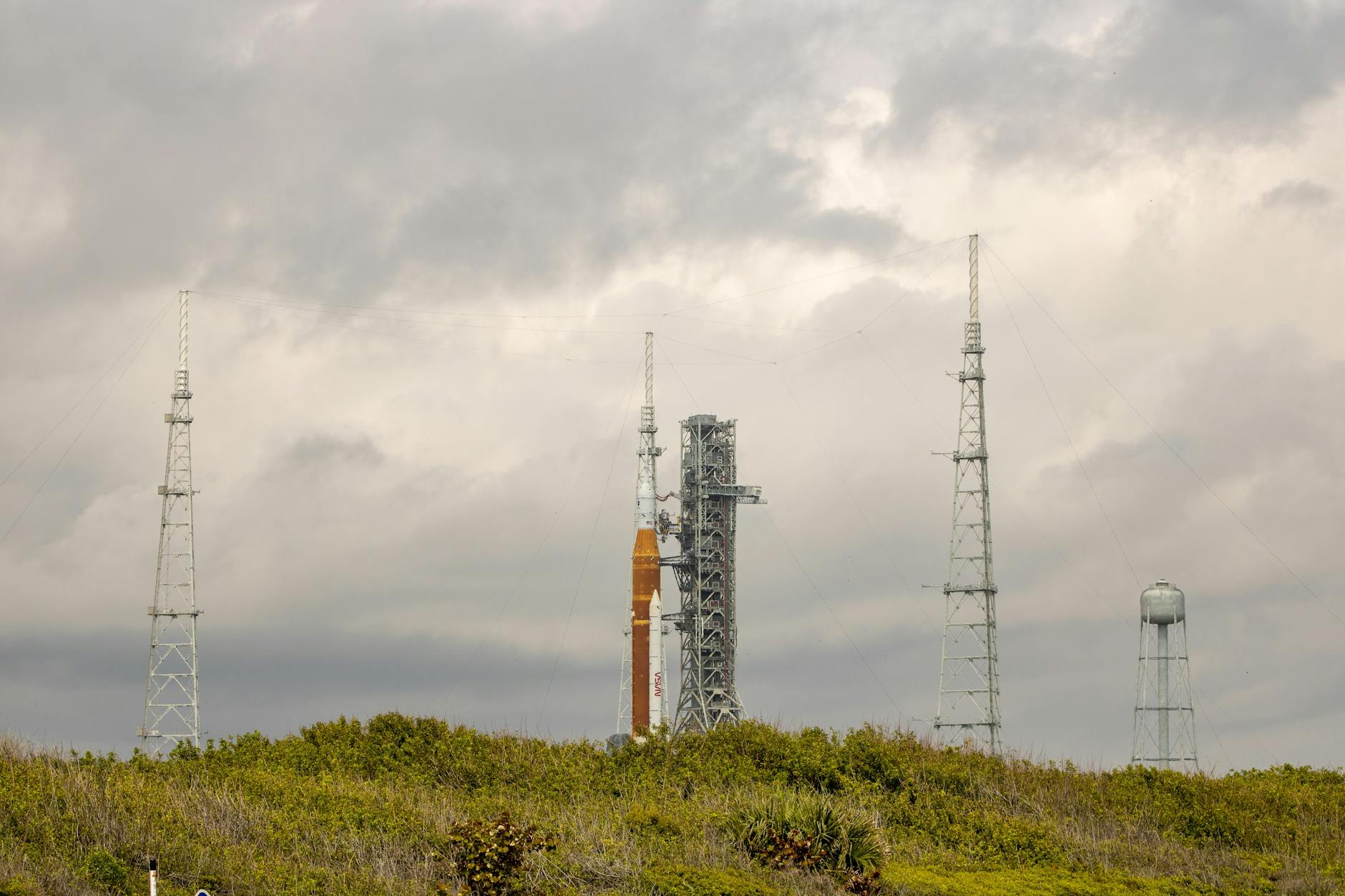
The pivot is visible in the most audacious mission on the horizon: NASA's Artemis II. Scheduled for a crewed flyby of the Moon as early as February, this mission will send four astronauts—Reid Wiseman, Victor Glover, Christina Koch, and Jeremy Hansen—on a ten-day journey around the lunar sphere [9]. It is not a landing, but it is the essential precursor. For the first time since the Apollo program concluded, humans will operate in cislunar space, transforming decades of theoretical planning into lived experience [7]. This is the bridge between the memory of the past and the mechanics of the future. It proves that the United States can once again safely navigate the deep, a prerequisite for the eventual return to the lunar surface and the long march toward Mars [2].
Yet, Artemis II is merely the headline. The real story is the collapse of the boundary between government and commercial space. The 2026 landscape is defined by a proliferation of private actors who are no longer subcontractors but primary architects of the new cosmos. Blue Origin, the rival founded by Jeff Bezos, is preparing to launch its Blue Moon Mark 1 lunar lander on a robotic demonstration mission to the moon's south pole, targeting a landing near Shackleton Crater [1]. This is not a government mission; it is a commercial proof-of-concept that signals the end of NASA's sole dominion over lunar logistics. The Moon is becoming a real estate market, and the buyers are coming.
The Private Orbit and the Death of the Monopoly
If the Moon is the new frontier of ambition, low Earth orbit is the new city of commerce. The year 2026 will see the debut of the world's first privately developed stand-alone space station, Haven-1, built by the California-based startup Vast. Planned for no earlier than May 2026, Haven-1 represents a fundamental shift in the architecture of human presence in space. It is not a module attached to the International Space Station; it is a stand-alone facility, a testament to the idea that orbit can be a commercial destination rather than a scientific outpost [1]. If successful, the Vast-1 mission will mark the first time humans live aboard a constructed and operated commercial space station, demonstrating that continuous human presence in low Earth orbit can exist beyond the ISS [7].
This commercialization is accelerating the retirement of the old guard. The International Space Station, a marvel of Cold War diplomacy, is nearing its end, and 2026 is the year the private sector takes the baton. SpaceX, the company that has dominated the decade with its Falcon 9, is pushing its in-development Starship rocket with relentless intensity. The flight tests are set to continue throughout the year, with a new iteration, Version 3 (V3), scheduled to debut [4]. This next model could become the first to achieve orbit and showcase the capability to refuel during flight—an essential feature for reaching far-off destinations like the Moon and Mars [9]. The Starship V3 is not just a rocket; it is a vehicle for the industrialization of space, a bus capable of carrying the heavy infrastructure needed for a permanent lunar presence or a Martian colony.
The monopoly of SpaceX is under siege, a fact that bodes well for the health of the industry. New Glenn from Blue Origin, a partially reusable rocket that has seen its debut in 2025, is slated for additional flights in 2026 [4]. Simultaneously, Zhuque-3, from the Chinese commercial company LandSpace, is also entering the fray, encroaching on SpaceX's decade-long effective monopoly on rapid, reusable orbital launch services [4]. Thearrival of these competitors means that the cost of access to space will plunge further, unlocking a new class of missions that were previously too expensive to contemplate. The era of the single-provider spaceflight is ending; the era of the competitive space economy has begun.
The Silent Wars: Asteroids, Planets, and the Search for Life
Beyond the orbit of Earth, the scientific machinery of 2026 is turning with a ferocity that promises to rewrite our understanding of the universe. The search for life, once a speculative dream, is becoming an empirical pursuit. In the summer of 2026, Venus Life Finder, a private collaboration between Rocket Lab and MIT, will launch to seek signs of biology in the clouds of Venus [4]. This mission targets the planet's atmosphere, a region where phosphine and other potential biosignatures have been detected, offering a glimmer of hope that life might exist in our sister planet's hostile skies. It is a bold, private gamble that challenges the traditional, government-led approach to planetary science.
Meanwhile, the search for the building blocks of our solar system is reaching a critical juncture. The Japan Aerospace Exploration Agency's Martian Moons eXploration (MMX) mission is scheduled to launch in 2026 on a trip to the Martian moon Phobos [4]. This mission aims to achieve something no one has attempted before: landing on one of Mars's moons, collecting a sample, and returning it to Earth. The spacecraft will enter orbit around Phobos in 2027, land on the moon, scoop up a piece of the surface, and return to Earth in 2031 [3]. This is the next step in the Mars Sample Return mission, a breakthrough that will allow scientists to analyze the moon's composition and potentially uncover the history of water and life on Mars [2].
The asteroid frontier is also seeing unprecedented activity. China's sample-return mission Tianwen-2 will reach and gather material from the asteroid 469219 Kamoʻoalewa in early summer to midsummer 2026 [4]. This mission is part of a broader effort to understand the origins of the solar system and the potential for asteroid mining. Near the end of the year, ESA's Hera mission will arrive at the binary asteroid 65803 Didymos to study the aftermath of NASA's earlier Double Asteroid Redirection Test (DART) impact mission [4]. Hera will survey the damage, providing critical data on asteroid composition and the feasibility of planetary defense strategies [3]. These missions are not just about science; they are about survival. The ability to redirect an asteroid is the ultimate insurance policy for humanity, and 2026 is the year we test that capability in the real world.
The New Eyes: Telescopes and the Mystery of the Dark Universe
While we reach for the Moon and Mars, our view of the cosmos is expanding to reveal the invisible. The most obvious scientific event of 2026 is the launch of NASA's Nancy Grace Roman Space Telescope, expected to launch in the fall [1]. This observatory, a successor to Hubble and the James Webb Space Telescope, is designed to study large-scale cosmic structures to help clarify the still-mysterious nature of dark matter and dark energy [4]. The Roman Telescope carries a coronagraph that enables direct measurement of planetary environments that cannot be obtained through indirect detection methods, a capability that could revolutionize our understanding of exoplanets [6]. It is a machine built to see the invisible, to map the scaffolding of the universe that holds the galaxies in place.
The ground is also seeing a renewal. The Vera C. Rubin Observatory will begin full science operations in 2026, providing a new perspective on the dynamic universe [6]. On the international stage, the European Space Agency's PLATO spacecraft, due to launch towards the end of 2026, will change the way we detect exoplanets, searching for planetary transits and oscillations of stars [3]. In November 2026, the Xuntian space telescope, also known as the Chinese space station telescope, is expected to launch [8]. This telescope will provide a new window into the universe, complementing the efforts of NASA and ESA.
The year also sees the operational debut of the European Extremely Large Telescope (ELT) by 2026, a ground-based behemoth that will be able to see the first stars and galaxies that formed after the Big Bang [2]. These telescopes are not just tools; they are the eyes of a new civilization, the instruments that will allow us to peer into the past and the future, to understand the origin of our existence and the nature of the universe that surrounds us.
The Energy Revolution: Power from the Sky
A breakthrough that may seem more futuristic than terrestrial is the demonstration of space-based solar power. The U.S. Air Force Research Laboratory plans to demonstrate the feasibility of beaming solar power from space to Earth by 2026 [2]. This technology, if successful, could revolutionize the global energy grid, providing a constant, clean source of power that is not subject to the weather or the day-night cycle. It is a concept that has been theorized for decades, but 2026 is the year it moves from theory to practice. The ability to harvest energy in space and beam it to the ground is a game-changer, a technology that could power the future of humanity and help solve the climate crisis.
This energy revolution is part of a broader trend of space-based infrastructure. Satellite megaconstellations, such as those from SpaceX and OneWeb, are aiming to provide global broadband internet coverage using low Earth orbit (LEO) [2]. These networks are not just about connectivity; they are about creating a global internet that is accessible to everyone, regardless of their location. Space is getting its own internet, and it might save us too, by connecting the world and enabling the rapid exchange of information and resources [10].
The Future is Now
The year 2026 is poised to be an exceptionally pivotal year for space exploration. It is a year of deep space access via a crewed lunar flyby, increasing activity in Earth orbit around the commercial space station, and steady advancements across a variety of enabling technologies [7]. The sector is progressing on multiple fronts simultaneously, from the Moon to Mars, from the asteroid belt to the edge of the observable universe.
The shift from government-led to commercial-led spaceflight is not just a change in management; it is a change in the DNA of the industry. The private sector is driving innovation, lowering costs, and expanding the scope of what is possible. The state is no longer the only player; it is a partner, a regulator, and a customer. The future of space is commercial, and it is already here. The solar system is opening, and the door is wide open. The question is no longer whether we can go, but how fast we can go, and how much we can build. The year 2026 is the beginning of the next great age of exploration, the age of the cosmic economy. It is the year space went commercial, and the future of humanity is no longer bound by the limits of the Earth. The stars are not just a destination; they are the future.