The region that taught the world to look again
For much of the late twentieth century, Asia’s cultural influence was often described as export power: goods left the region, and influence followed. That language now feels too flat for what has happened. Japanese anime, manga, K-pop, K-dramas, Asian cinema and Tokyo street fashion have not merely travelled outward. They have altered the vocabulary of global youth culture, giving millions of people a shared set of images, sounds and moods through which to understand modern life. Japanese pop culture in particular has long been recognized as a defining part of the country’s identity, with anime and manga serving as cultural cornerstones and enduring ambassadors of Japan abroad.[2][3]
The scale of this transformation is easiest to see in the way once-fringe tastes became everyday habits. A generation ago, anime was treated in many Western markets as a specialist interest. Manga was for collectors. Korean pop music was regional. Today, those categories have become ordinary reference points in global entertainment. The change is not only commercial; it is aesthetic and social. Asia has become the place where modern popular culture most vividly experiments with belonging, fantasy, discipline and style.
Japan’s soft power was built panel by panel
Japan’s cultural influence has always rested on a peculiar mixture of tradition and modernity. Popular culture there retains links to older artistic and literary forms, even when it appears entirely futuristic or playful.[3] Anime and manga are the clearest example. They are not just industries but systems of imagination, capable of moving from serialized print panels to cinema screens and streaming platforms while keeping their emotional grammar intact.[2] Their strength lies in range: the same medium can produce fantasy epics, intimate coming-of-age stories, political allegories and domestic realism.
That versatility has made Japanese storytelling unusually portable. A viewer in São Paulo or Nairobi can enter a world shaped by school uniforms, Shinto spirits, postwar anxiety or cyberpunk cityscapes and still recognize the underlying emotional structure. Japanese culture’s global appeal is therefore not based on easy universality, but on specificity so detailed that it becomes legible anywhere.[2][3] The world does not consume Japan because Japan resembles the world. It consumes Japan because it offers a coherent alternative to the flatness of much mainstream global entertainment.
But the industry’s very success has created new vulnerabilities. A panel on the globalization of Japanese pop culture noted both the growth of anime, Sanrio-style character branding and J-pop as mainstream influences, and the strategic challenge of dependence on foreign streaming platforms for distribution.[1] That tension matters. Cultural power is now mediated by companies that own the pipes, the recommendation engines and, increasingly, the audience relationship itself. Japan’s creative industries have become more visible than ever, but also more exposed to the logics of platforms that reward volume, speed and algorithmic familiarity over artistic patience.[1][2]
In that sense, the global triumph of anime is also a warning. The more Japanese culture becomes universal, the more it risks being filtered through systems that flatten its strangeness. The paradox of soft power is that the more influential it becomes, the less control it may have over the terms of its own circulation.
Seoul’s pop machine changed the rules
If Japan gave the world a model of durable cultural export, South Korea refined the machinery of scale. K-pop and K-dramas transformed the idea of what a national entertainment industry could do when it treated global audiences as a design problem from the start. Where older export models assumed that foreign consumers would adapt to local products, Korean entertainment often does the reverse: it calibrates production, image-making and social media strategy so that the product feels immediate across borders.
This is more than marketing. K-pop operates as a total system of performance, where music is only one part of a broader aesthetic involving choreography, fashion, fan participation and constant online circulation. K-dramas, meanwhile, have become a kind of emotional infrastructure for international audiences seeking polished narrative arcs, visual glamour and melodramatic intensity that feels both recognizable and distinctively regional. Together, they have helped redefine Asia in the global imagination as a source of not just entertainment, but precision.
The competition between Japanese and Korean pop culture is often overstated as a rivalry. In practice, the two industries have been mutually reinforcing, each expanding the appetite for East Asian style while occupying different niches within it. Japanese anime offers world-building and serial immersion; Korean pop culture often offers immediacy, polish and social synchronization. One builds long devotion. The other builds constant engagement. Both thrive because they understand that in the digital era, fandom is not a side effect of culture. It is part of the product.
That distinction matters in an age when audiences are no longer passive. Fans subtitle, remix, translate, organize, recommend and archive. They create the conditions for cultural globalization almost as much as the industries themselves do. Asia’s pop ascendancy has therefore been powered not only by studios and labels, but by communities of viewers and listeners who turned enjoyment into infrastructure.
Asian cinema still knows how to disturb the mainstream
Long before streaming made regional boundaries porous, Asian cinema had already shown that popular and elite culture need not be opposites. Japanese directors, Hong Kong action filmmakers, Taiwanese auteurs, South Korean thrillers and the broader ecosystem of Asian film industries have repeatedly produced work that travels because it is formally ambitious and emotionally exact. The region’s cinema is now one of the few spaces in global culture where genre experimentation still feels commercially viable.
What gives Asian cinema unusual force is its refusal to separate craftsmanship from affect. A gangster film, family drama or horror picture may be visually meticulous, but it also carries moral weight. Many of the region’s best-known films are grounded in social pressure: the obligations of family, the violence of hierarchy, the absurdity of class aspiration, the loneliness of urban life. That seriousness is part of the appeal. Even the most entertaining films often feel as though they are arguing with the society that produced them.
The international prestige of Asian cinema has also changed the status of regional stories. It has made it more difficult to pretend that cultural centrality belongs to Hollywood alone. Korean films now win major awards. Japanese animation is discussed in the same breath as global auteur cinema. Thai, Indian, Indonesian and Filipino filmmakers increasingly shape the conversation around genre and art-house cinema alike. Asia is no longer a peripheral market for cinema. It is one of the places where cinema’s future is being negotiated.
Tokyo street culture as a laboratory of identity
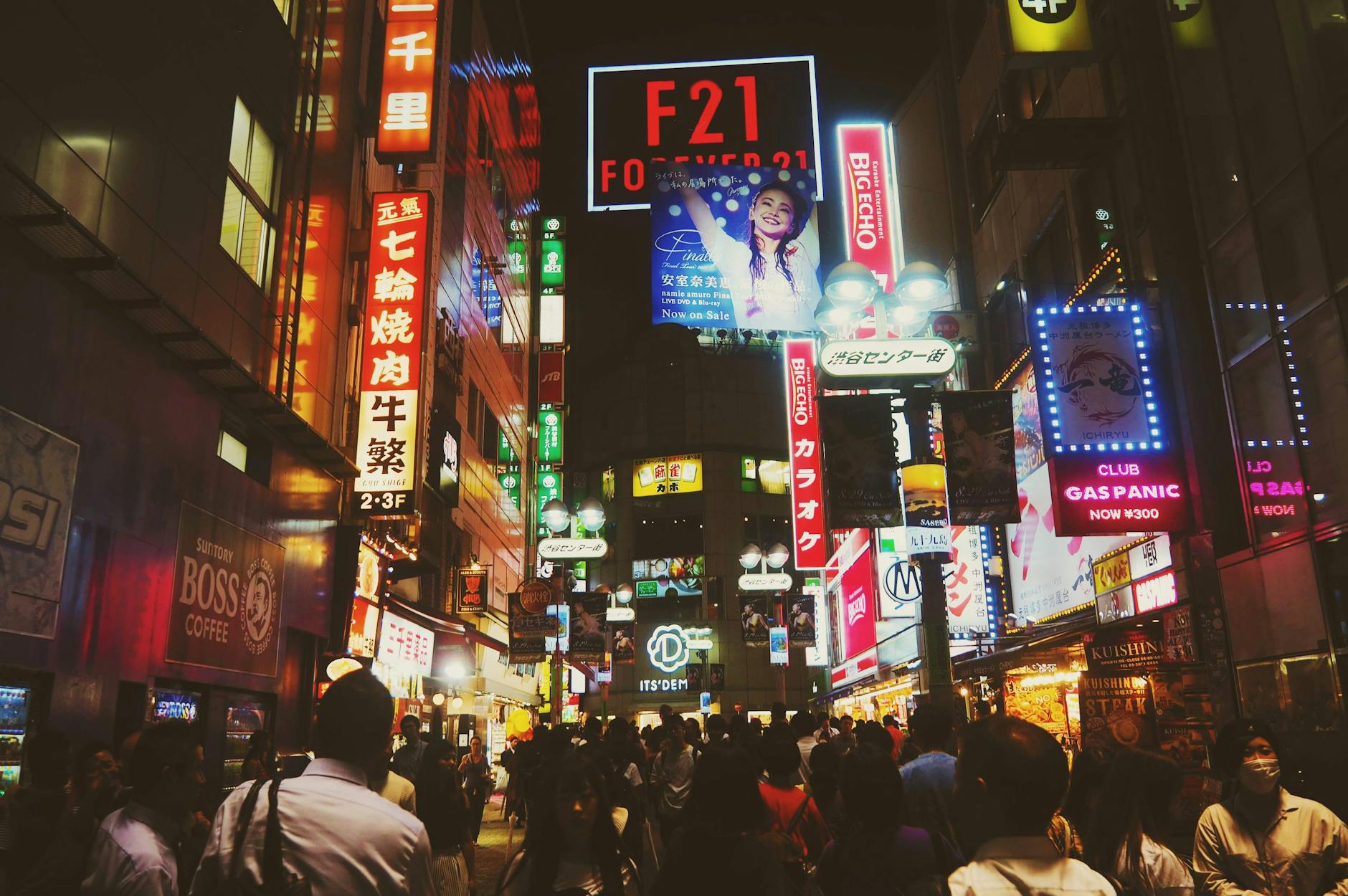
Tokyo remains the most visible stage on which Asia’s aesthetic modernity is performed. Its street culture has long been a laboratory for youth identity: Harajuku excess, Shibuya cool, Akihabara subculture, sneaker culture, vintage revival, gender play and the layering of old and new. The city’s streets do not merely host style; they generate it. What makes Tokyo compelling is not that it is chaotic, but that it can contain multiple visual languages at once without collapsing into incoherence.
Street fashion in Tokyo has always been about more than clothes. It is a form of social editing. In a society often associated with conformity, youth culture creates spaces for deliberate self-invention. The result is an ecosystem in which cuteness, irony, nostalgia and futurism coexist. Kawaii aesthetics, once dismissed abroad as frivolous, have become one of Japan’s most durable contributions to global design language. They allow vulnerability to be stylized rather than hidden.
Tokyo’s street culture also reveals a broader Asian pattern: the city as a medium. In Asia’s largest urban centers, culture is increasingly shaped not only by institutions but by density, transport, digital access and the pressure of visibility. The street becomes a screen, and the screen becomes a street. This feedback loop helps explain why fashion, fandom and nightlife travel so well from Tokyo to Seoul to Bangkok to Manila and beyond.
Technology culture is the hidden engine
The deepest reason Asia’s cultural influence feels contemporary is that it is inseparable from technology culture. Anime became global not only because people liked anime, but because digital distribution made niche fandom scalable. K-pop exploded because social platforms turned choreography and personality into shareable units. K-dramas spread through streaming interfaces. Asian cinema found new audiences through algorithmic discovery. The region’s cultural industries have benefited from technology, but they also understand it better than many of their rivals do.
In Japan, technology culture has long had a dual meaning: gadget fascination and design discipline. From consumer electronics to gaming and anime production workflows, Japanese popular culture has repeatedly fused mechanical precision with imaginative excess.[3] That fusion remains visible in the fascination with robots, virtual idols, augmented experiences and interactive worlds. The same country that gave the world beloved hand-drawn characters also helped normalize a culture of interfaces, collectibles and serialized digital devotion.
Across Asia, the line between consumer technology and cultural life has grown thinner. People do not merely use devices; they live inside platforms that curate identity, memory and taste. That matters because culture is no longer just something consumed after work. It is embedded in the commute, the feed, the fan forum and the livestream. Asia’s cultural industries have thrived precisely because they understood this shift early. They did not wait for technology to deliver an audience. They built cultures that could travel through technology.
The world now speaks in Asian references
The most revealing sign of Asia’s cultural centrality is no longer the presence of its exports, but the way they have become shorthand. Anime references, K-pop fashion cues, Japanese design motifs, cinematic styles from Seoul and Tokyo, and the visual codes of street culture now circulate in advertising, gaming, music videos and everyday personal style from Los Angeles to London. This is what cultural power looks like when it matures: not dominance, exactly, but omnipresence.
Yet Asia’s influence should not be mistaken for cultural uniformity. The region’s strength lies in difference. Japanese culture still feels distinct from Korean culture; Tokyo still differs from Seoul; the emotional texture of manga remains unlike that of K-dramas; Asian cinema resists being reduced to a single sensibility. What unites them is not sameness but an ability to make modernity feel authored rather than generic.
Asia’s cultural triumph is not that it has replaced Western pop culture, but that it has broken the monopoly on what global modernity is supposed to look like.
That is why these industries matter beyond fandom. They offer a model of cultural production that is both deeply local and intensely exportable, rooted in place yet fluent in circulation. In an era when many countries worry about fragmentation and decline, Japan, Korea and the wider Asian cultural sphere have shown something more ambitious: how to turn identity into an engine of influence without letting it become pure nostalgia.
The result is a rare kind of soft power, one that works because it never fully feels like power. It arrives as entertainment, style, romance, spectacle and obsession. But underneath those surfaces is a formidable truth: the center of gravity in global popular culture has shifted eastward, and it is not shifting back.