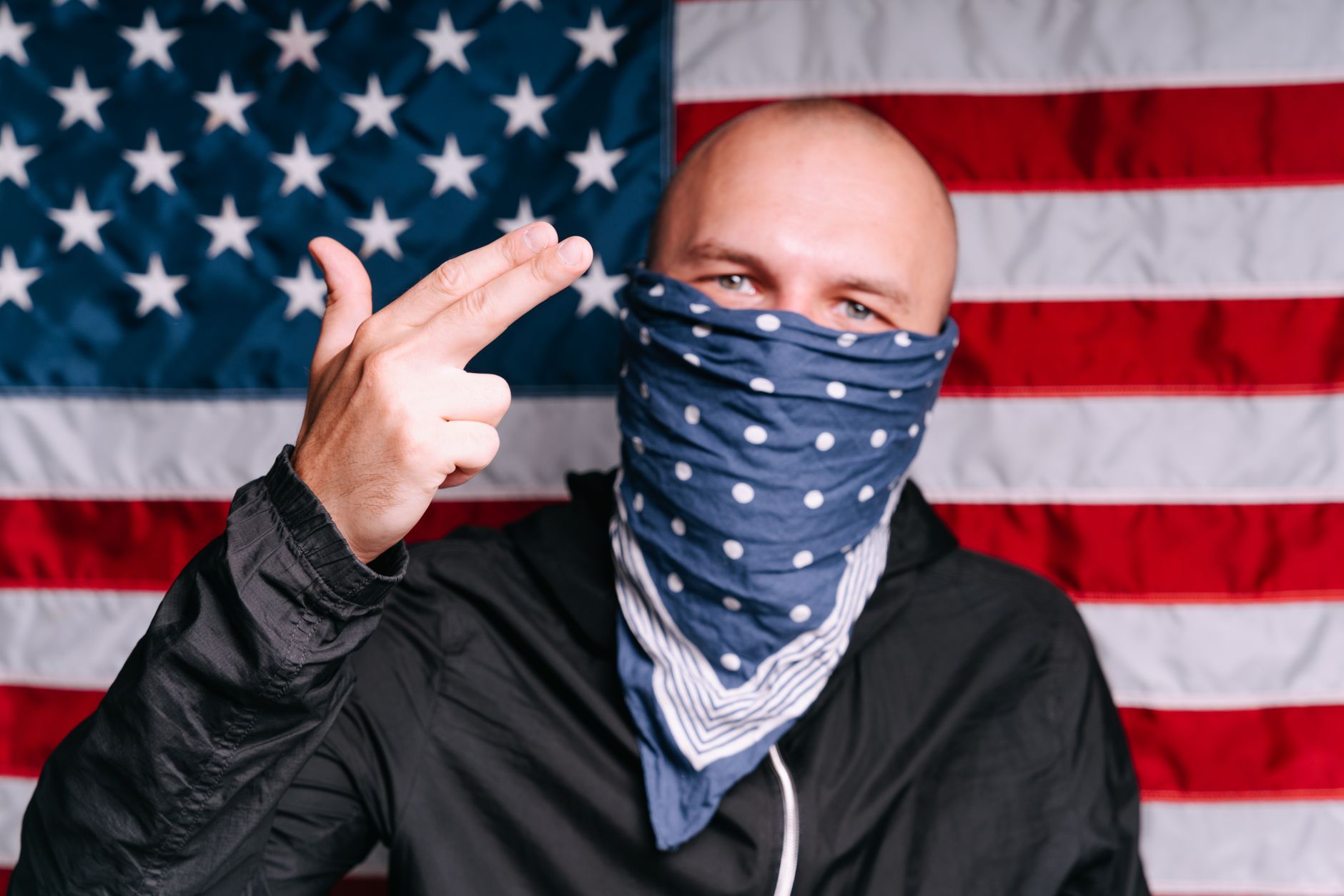
The culture war never disappeared. It changed platforms.
America’s culture war in 2026 is not the clean, trench-bound contest that politicians once imagined. It is faster, more fragmented and more performative—less a clash of neatly defined camps than a ceaseless argument over status, speech and belonging. The old battle lines between left and right still matter, but they now run through TikTok feeds, student group chats, university classrooms, workplace policies, synagogues and churches, and the algorithmic machinery that rewards outrage over nuance. Public opinion is deeply split on core questions of gender, race, sexuality and cultural change, with nearly half of Americans saying society has become overly accepting of diverse identities and a little over half disagreeing.[1]
That division is not just ideological. It is emotional, generational and institutional. The culture war today is less about winning a final argument than about controlling the terms of recognition—who is seen, who is protected, who is mocked, who is punished and who gets to claim victimhood. In that sense, it is both older and more modern than the phrase suggests. Its content has changed, but its function remains the same: to decide whose values define the public square.
Social media has made the conflict ambient
If the culture war once arrived in televised debates and magazine covers, it now lives inside the architecture of social media. Platforms do not merely reflect political conflict; they intensify it by converting attention into currency. A campus protest, a supermarket confrontation, a celebrity apology or a clumsy corporate statement can be clipped, reframed and turned into a nationwide referendum within hours. The result is a politics of instant moral legibility: each side demands that every incident be read as proof of a larger civilizational truth.
This is one reason the present era feels perpetually overheated. Social media rewards transgression and correction in equal measure. One faction celebrates boundary-breaking speech as authenticity; the other treats public correction as accountability. But both often rely on the same toolkit: call-outs, receipts, boycotts, quote-posting, and the strategic use of humiliation. What began as a language of justice has in many cases become a style of status competition.
The digital culture war is especially potent because it is decentralized. A national newspaper can no longer set the terms of a debate for long. A student, a comedian, a pastor, a musician or a middle manager can become the focus of an argument that quickly escapes its original context. This produces a paradox: people complain of censorship while producing more speech than ever; they lament polarization while participating in an attention economy that monetizes it.
That is also why “cancel culture” survives even after the phrase has become a punch line. The label is often imprecise, used to describe everything from legitimate criticism to organized harassment to the real consequences of persistent public misconduct. But the underlying phenomenon remains visible: public judgment now travels faster than institutional review. In the social-media era, reputational punishment can arrive before any formal finding of fact. Sometimes that is accountability. Sometimes it is mob dynamics wearing the language of justice.
Gen Z has inherited the argument, not resolved it
Gen Z is often described as either exhausted by the culture war or obsessed with it. Both descriptions are true. The generation that came of age amid campus speech debates, #MeToo, racial-justice protests, pandemic isolation and endless online surveillance has absorbed a political style in which identity is not merely personal but interpretive. For many young Americans, political disagreement is not just about policy; it is about whether a speaker recognizes the legitimacy of their experience.
Yet Gen Z is not uniformly progressive in the older sense. It is more fluid, more ironic and often less doctrinaire than its elders assume. It is also shaped by contradiction. Young people support inclusion and dislike being judged, support free expression and expect language to carry moral consequences, distrust institutions and still demand institutional protection. The result is a cohort that is simultaneously hypersensitive to harm and skeptical of grand moral claims.
That tension helps explain why campus culture has become a national battleground. Universities remain one of the few places where the culture war can still be fought in concentrated form: with administrators, student governments, faculty committees, donor pressure and media scrutiny all colliding at once. The modern university is expected to do incompatible things at the same time. It must be a marketplace of ideas, a guardian of safety, a site of historical reckoning, a meritocracy and a producer of social justice. It is unsurprising that it often fails to satisfy any of those demands fully.
What has changed is not merely student politics but the function of the university in the national imagination. For critics on the right, campuses are engines of ideological conformity. For critics on the left, they are still too often shaped by elite hierarchy, donor influence and racial exclusion. Both critiques contain truth. Universities are less monolithic than the caricatures suggest, but they have become symbols onto which Americans project their anxieties about the future of expertise, civility and social mobility.
That is why disputes over reading lists, pronouns, speakers, encampments, DEI offices and disciplinary codes routinely become proxy fights over whether liberal institutions can still govern disagreement without collapsing into either coercion or paralysis.
Cancel culture is a symptom, not the disease
To treat cancel culture as the defining drama of the era is to miss the deeper source of the conflict. The real issue is not whether a particular figure was silenced, punished or defended. It is that Americans no longer agree on the moral order that should govern public life. One side insists that speech must be constrained when it reproduces exclusion or harm; the other argues that the effort to police harm is itself the pathway to authoritarianism. Both sides see themselves as defending freedom.
This is why the same episode can be understood as liberation, accountability, censorship or common sense depending on the audience. A corporation that issues a diversity statement may be seen as showing responsibility or as capitulating to ideological fashion. A museum exhibition can be interpreted as honest history or as anti-American revisionism. A comedian can be defended as fearless or condemned as cruel. There is no shortage of controversies; there is a shortage of shared criteria for resolving them.
Politics has therefore become more theatrical. The public performance of conviction matters as much as the conviction itself. People do not merely want to win arguments; they want to be seen winning them. That helps explain the durable appeal of culture-war politics to elites who are otherwise unpopular. It offers a way to mobilize followers without having to solve the grinding problems of wages, housing, healthcare or educational decline.
Universities sit at the center of the storm
Few institutions are more exposed to this dynamic than the university. Campuses are simultaneously places of learning and laboratories of status conflict. Their contradictions have become more visible as the broader political system has grown less capable of mediating disagreement. Recent attacks on universities from the right have gone beyond the familiar critique of ideological bias and moved into a larger campaign to remake the cultural authority of higher education itself.[2]
That campaign reflects a more ambitious goal than reform. It aims to recast universities from imperfect civic institutions into hostile fortresses of elite orthodoxy. At the same time, some defenders of academia respond by treating every challenge as evidence of authoritarian threat, which can make the institution look less like a place of inquiry than a self-protective guild. The irony is that each side feeds the other: denunciations of “wokeness” reinforce defensive rigidity; defensive rigidity validates the denunciations.
The underlying problem is that universities are caught between two legitimate but incompatible ideals. They are expected to foster open inquiry and to protect vulnerable students; to reward expertise and to democratize access; to preserve neutrality and to advance moral inclusion. No institution can perfectly deliver all of those goals at once. When it tries, it often ends up producing bureaucratic language, risk aversion and a culture of managed dissent.
Still, the university remains one of the few places where Americans can still debate first principles rather than merely signal tribal allegiance. Its failure would not end the culture war. It would simply relocate it further into politics, entertainment and the workplace, where the rules are even less explicit.
Religion has returned as both refuge and weapon
Religion complicates the culture war because it does not fit cleanly into the secular assumptions of either side. For some Americans, renewed religious identity is a source of moral clarity in a society they believe has become confused about sex, family, authority and purpose. For others, religion is a language of exclusion, especially when deployed in disputes over gender, abortion, education and public life.
Yet religion’s public role has not diminished; it has diversified. Churches, synagogues, mosques and faith-based networks increasingly serve as community anchors in a fractured society. They provide meaning in a culture that often offers little beyond self-expression and consumption. They also, however, participate in the same media ecosystem as everyone else, turning theological conviction into political branding when the incentives favor outrage.
That dynamic helps explain why culture-war politics often sounds quasi-religious even when it is secular. The vocabulary of sin, redemption, heresy and purity has migrated into political speech. Activists denounce blasphemy against identity; opponents accuse institutions of apostasy against tradition. Each side seeks not only compliance but confession.
“The fight is no longer only over what America believes. It is over whether Americans can agree on how belief itself should be expressed in public.”
In that sense, religion is both a shield against the culture war and one of its oldest languages. It offers communities a way to resist the flattening logic of the feed. But it can also harden into another front in the struggle for moral supremacy.
Identity politics is now mainstream politics
Identity politics is often treated as a uniquely progressive fixation, but that is no longer accurate. Across the political spectrum, identity has become the basic unit of mobilization. Race, gender, nationality, religion, sexuality and even educational background are now invoked as evidence of authenticity or grievance. Politicians no longer merely represent constituencies; they curate identities.
That shift has consequences. It makes compromise harder because disagreement is more easily interpreted as disrespect. It also makes politics more emotionally durable, because identity is not something voters change every election cycle. A person may revise views on taxes or interest rates; they are less likely to revise the story they tell about who they are and where they belong.
For Democrats, the temptation is to define inclusion as moral progress and to assume demographic change is destiny. For Republicans, the temptation is to define cultural backlash as restoration and to present institutional critique as popular revolt. Each side contains a real insight and a strategic illusion. Demography matters, but it does not settle values. Backlash is real, but it does not guarantee durability. America is too plural to be managed by either moral certainty or nostalgic fantasy.
The culture war persists because it solves a political problem for leaders and a psychological problem for citizens. It offers meaning in a time of institutional distrust. It creates coherent villains in an incoherent economy. It transforms diffuse anxieties about work, family, technology and status into stories that can be shared, repeated and monetized. That does not make it trivial. It makes it dangerous.
The deeper conflict is about authority
At bottom, the American culture war is not really about one issue or another. It is about who has the authority to define reality. Is it parents, teachers, clergy and local communities? Is it activists, platforms, universities and media institutions? Is it the state? The market? The algorithm?
Those questions are difficult because Americans are no longer confident that any one institution deserves final trust. That distrust is not irrational. Universities have been politicized, media organizations have been credibly accused of bias, churches have been shaken by scandal, corporations have stumbled into political theater, and social media has rewarded the worst instincts of all of them. In the absence of widely respected referees, every dispute becomes existential.
That is why the culture war feels endless. It is not a skirmish over a fixed set of symbols. It is a competition to fill the vacuum left by eroding authority. Social media accelerates the conflict, Gen Z inherits its vocabulary, universities stage its most visible dramas, religion offers both resistance and ammunition, and identity politics provides the organizing grammar. The result is a nation in which nearly every public disagreement is also a fight over legitimacy.
The old hope was that time would cool the culture war. Instead, time has embedded it more deeply in American life. The conflict is no longer episodic; it is infrastructural. That is what makes it so hard to escape and so easy to exploit. The country is not simply arguing about values. It is arguing about who gets to name them.