The empire as worldview
Elon Musk’s companies are often described as a portfolio. That understates the point. Together, X, Tesla, SpaceX, xAI, Neuralink and Starlink form a single industrial argument about the future: that technology can preserve civilization, expand human capability and, if necessary, outlast the fragility of politics, institutions and even Earth itself. Musk has long framed his mission in cosmic terms, saying his philosophy is one of curiosity and of expanding consciousness on Earth and beyond it. That language is not ornamental; it is the operating system of the empire he has built.
What makes Musk unusual is not merely that he runs several major companies. It is that each one appears to reinforce the others, at least in theory. Tesla is meant to decarbonize transport and energy. SpaceX is built to make humanity multiplanetary. Starlink extends communications to places terrestrial networks cannot easily reach. Neuralink aims to connect brains and machines. xAI, launched to pursue artificial intelligence that can “understand the universe,” feeds on the attention and data of X, the platform Musk bought in 2022 and renamed in 2023. The result is not a conventional conglomerate but a set of overlapping bets on the same civilizational thesis.
The social network at the center
X is the empire’s public square and nervous system. It is also the clearest example of Musk’s method: buy a critical platform, strip away its old identity, and remake it around his own judgment. Since acquiring Twitter, Musk has transformed the service into X and recast it as an “everything app” in the style of a digital utility. But X is not just a product; it is a source of power. It gives Musk direct access to global discourse, a megaphone for his own views and a vast stream of real-time human behavior that can be useful to xAI.
That arrangement has not come without costs. Musk’s stewardship of X has been marked by major staff reductions, advertiser flight, chaotic product changes and persistent concerns about moderation, reliability and misinformation. Even so, the platform remains one of the most consequential venues in the world for politics, finance and media. Its influence lies less in polished design than in scale and reflexivity: people watch X because other people watch X. Musk understands that gravity better than most executives ever could.
Tesla: the original myth and its limits
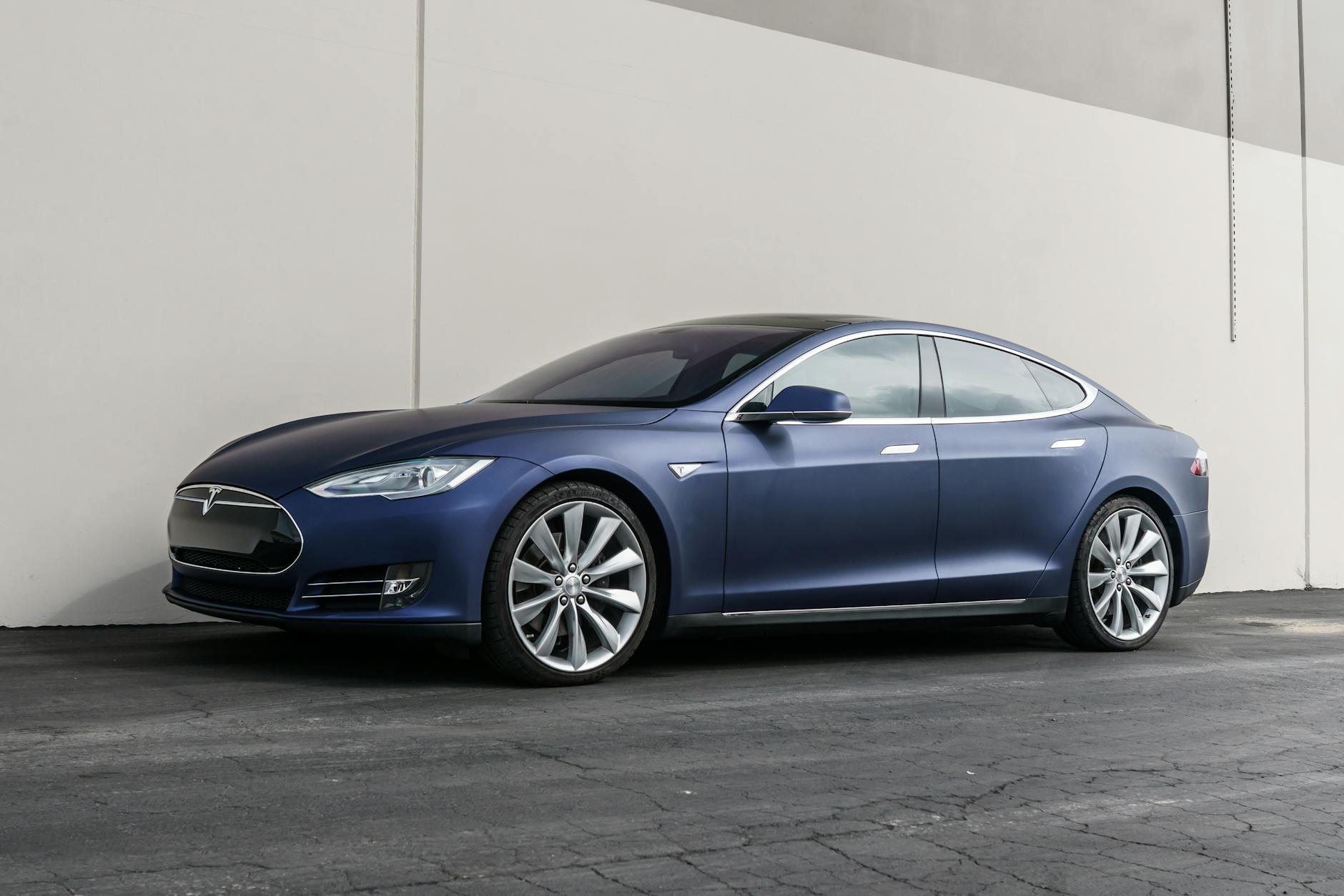
If X is the megaphone, Tesla remains the original engine of Musk’s myth. He co-led the company into the modern electric-vehicle era and made it synonymous with the idea that climate technology could be aspirational rather than dutiful. Tesla changed expectations about electric cars, battery systems and software-defined vehicles. It also helped make Musk one of the defining industrial figures of the 21st century, alongside the more familiar titans of oil, steel and finance.
But Tesla now occupies a more complicated place in the empire. Its early identity was rooted in scarcity: fewer emissions, fewer fossil fuels, fewer reasons to doubt that clean technology could scale. Its current identity is less stable. The company remains central to Musk’s reputation and wealth, yet the broader market for electric vehicles has matured, competition has intensified and Tesla’s narrative has had to stretch toward autonomous driving, humanoid robotics and artificial intelligence. In other words, Tesla is no longer only a car company. It has become a story about whether Musk can keep turning industrial promise into market valuation.
That shift matters because Tesla’s cultural aura has always been intertwined with Musk himself. The company’s successes are often read as proofs of his genius; its missteps are treated as evidence of his overreach. Few chief executives are so inseparable from their firms, and few firms are so dependent on a founder’s charisma. Tesla is therefore both an operating company and a stage on which Musk’s larger project is continually performed.
SpaceX and the hard reality of space
SpaceX is the most serious of Musk’s enterprises, because physics does not care about branding. The company has changed the economics and tempo of launch, made reusable rockets routine enough to unsettle legacy aerospace firms and turned satellite deployment into an industrial process. It has also become indispensable to government and commercial customers. In a sector long defined by slow procurement and national prestige, SpaceX has made speed a strategic weapon.
Its other great contribution is Starlink, the satellite internet system that now serves consumers, businesses and institutions across large parts of the world. Starlink extends SpaceX’s reach from launch into communications infrastructure, making the company not just a rocket maker but a connective tissue for the modern digital economy. That matters commercially, but it also matters geopolitically. A network that can provide internet access where terrestrial infrastructure is weak or absent becomes a kind of private utility with state-like significance.
The promise of SpaceX is therefore double-edged. It is the most credible component of Musk’s multiplanetary ambition, and it is also the clearest reminder that private power in space is now a practical reality. What was once a science-fiction dream about Mars has become a business system anchored in launches, contracts and global connectivity. The romantic rhetoric survives, but it now rests on balance sheets and launch manifests.
xAI, Grok and the quest to quantify reality
xAI is Musk’s newest attempt to unify the empire around a grand intellectual goal: to build an artificial intelligence capable of understanding the universe. Musk has described the challenge in near-philosophical terms, and xAI has presented itself as an answer to questions that are at once scientific and metaphysical. Grok, the company’s chatbot, is the consumer-facing expression of that ambition. It is meant to be witty, combative and less constrained than rival systems, in keeping with Musk’s view that mainstream AI has become too cautious, too sanitized or too ideologically narrow.
Yet xAI also illustrates a pattern that runs through Musk’s universe: the line between mission and integration is thin. The company draws on X’s data and attention, while Musk’s broader public platform provides constant distribution. In practice, xAI is not only pursuing artificial intelligence; it is embedded in an ecosystem where the founder controls the network, the narrative and a large share of the traffic. That creates strategic advantages, but also raises obvious questions about independence, governance and whether the pursuit of truth can be separated from the pursuit of influence.
The philosophical language around xAI is striking because it recasts the race in AI as an epistemic contest rather than only a commercial one. Musk is not simply asking whether an assistant can write better code or summarize documents. He is claiming that intelligence itself, if scaled far enough, might help explain the structure of reality. That is a grand claim. It is also the kind of claim that draws capital, talent and attention in an age when all three are scarce.
Neuralink and the body as the next frontier
Neuralink extends Musk’s empire inward, toward the brain. If SpaceX pushes civilization outward and xAI pushes intelligence outward into machines, Neuralink suggests a route back inside the human organism. Its premise is that the interface between mind and machine can be made intimate enough to restore or augment capabilities that biology has lost or never had. That makes it one of the most ambitious, and ethically fraught, projects in the Musk portfolio.
Neuralink also reveals the continuity across the empire. Musk’s companies are often described as separate ventures, but they are tied together by a single logic: energy, intelligence, communication and embodiment all become engineering problems. The human species is treated not as a fixed condition but as an evolving platform. That idea is inspiring to some and unnerving to others, because it places enormous faith in technical solutions while leaving less room for limits, institutions or consensus.
“My religion, for the lack of a better word, is one of curiosity,” Musk has said, describing a worldview centered on expanding consciousness on Earth and beyond it.
That line explains much of the appeal. It also explains much of the unease. Curiosity is a noble motive, but in Musk’s case it is fused with ownership. He is not merely exploring the universe; he is building the instruments with which to interpret it.
The controversy is part of the product
Musk’s empire would be easier to admire if it were less quarrelsome. But controversy is not incidental to the brand; it is one of its defining features. He has become a culture-war actor, a political antagonist and, at times, a management problem for his own companies. The same traits that make him effective in certain contexts—restlessness, contempt for bureaucracy, appetite for risk—also produce erratic public behavior and governance concerns. Investors, regulators, employees and users are left to separate the genuine breakthroughs from the self-inflicted turbulence.
There is also a structural concern. As Musk’s businesses have grown, the boundaries between them have become harder to read. A social network can feed an AI startup; a rocket company can support communications infrastructure; a brain-interface company can borrow the aura of a larger civilizational mission. This interconnectedness may be efficient. It is also a concentration of power. When one individual sits at the center of transport, space, communications, AI and neurotechnology, the old category of entrepreneur starts to look inadequate. He begins to resemble a private minister of infrastructure for a future that has not yet voted.
What the empire really is
The most revealing thing about Musk’s universe is that it is both practical and mythic. The practical side is obvious: rockets launch, cars sell, satellites beam data, software gets deployed, and markets assign valuations. The mythic side is harder to quantify but more important. Musk’s companies are sold not merely as businesses but as chapters in a story about the survival of civilization and the extension of human consciousness.
That story has extraordinary persuasive power in an era defined by institutional fatigue. Governments appear slow, public debates fragmented and collective futures increasingly discounted. Musk offers an alternate architecture: move fast, centralize talent, conquer bottlenecks, and let engineering substitute for deliberation. To admirers, this is what ambition looks like when it is finally unashamed. To critics, it is a seductive form of techno-authoritarianism dressed up as destiny.
Either way, the Musk universe now reaches across the physical and digital worlds in ways no other private empire does. X shapes attention. Tesla shapes transportation. SpaceX and Starlink shape connectivity and orbit. xAI and Grok shape the next interface between language and machine. Neuralink seeks to alter the relationship between cognition and hardware itself. Taken together, they amount to one of the most consequential accumulations of industrial power in modern capitalism—and one of the least predictable.
That unpredictability is the essential fact. Musk’s companies are not stable monuments; they are moving targets. They are built on the proposition that the future can be engineered faster than it can be governed. The wager may prove transformative. It may also prove too large for any one man to control. But for now, Musk’s universe remains exactly what he has always preferred: unfinished, audacious and impossible to ignore.