Oil's Fiery Surge
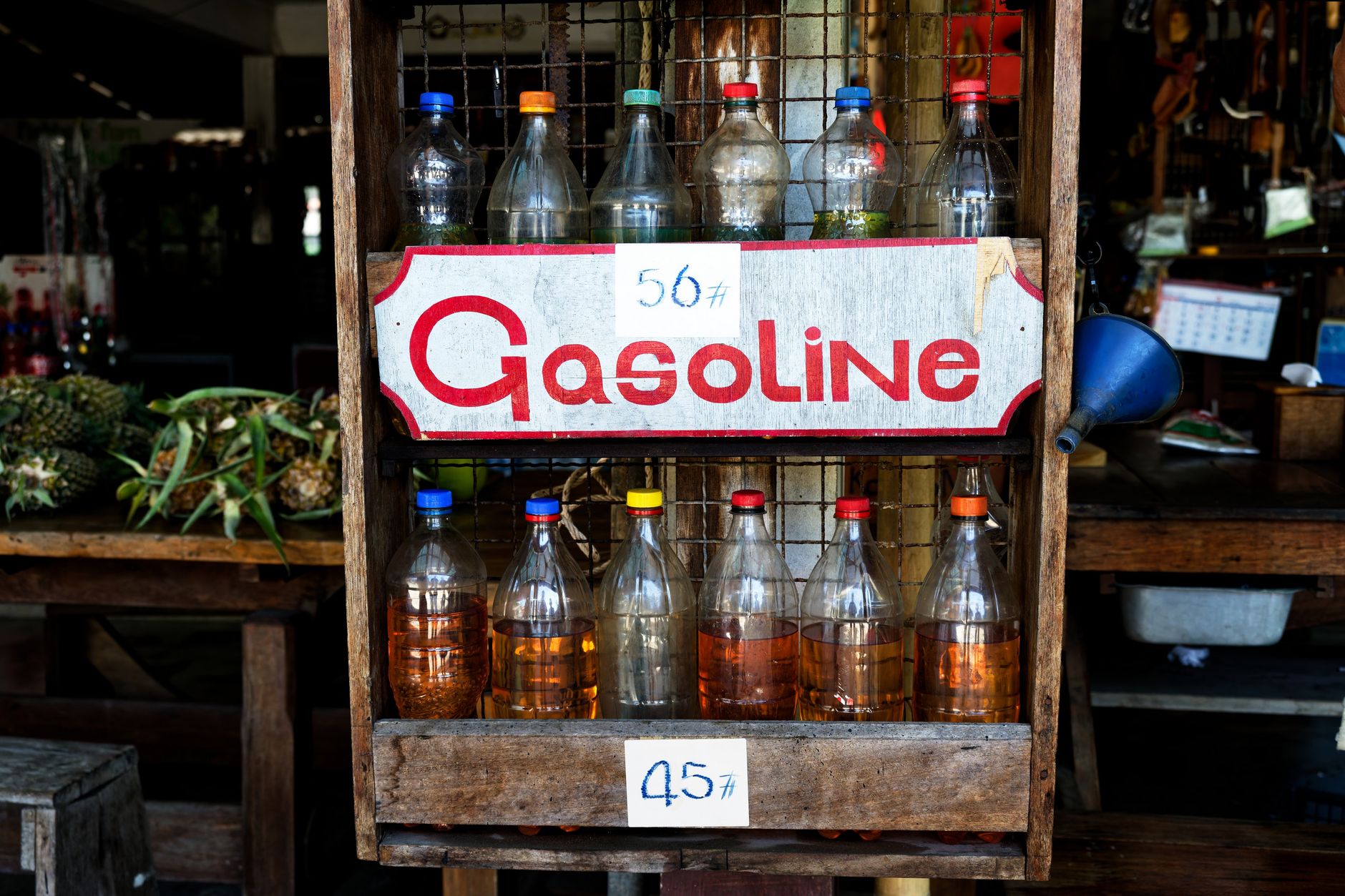
In the shadowed straits of Hormuz, where ancient trade routes meet modern missile threats, the global economy's lifeblood is under siege. Crude oil has surged past $102 per barrel for West Texas Intermediate and $110 for Brent, propelled by a conflict now entering its tenth week between Iran and Western forces. Missiles striking U.S. Navy frigates and tankers ablaze have not only disrupted shipping but ignited fears of a broader conflagration, pushing energy prices to levels unseen since the early days of the Ukraine crisis.
The Strait of Hormuz, through which 20% of the world's oil flows, has become a choke point of unprecedented tension. Iran's Revolutionary Guards Corps has mapped out zones under its military control, issuing stark warnings to commercial vessels: coordinate or face consequences. President Donald Trump's announcement of guided ship convoys through the waterway only heightened the stakes, with projectiles reportedly hitting tankers in retaliation. This escalation has amplified inflation risks worldwide, as higher energy costs ripple through supply chains, from European refineries to Asian factories.
Yet, for all the drama, the oil rally masks underlying fragilities. OPEC+ production cuts, intended to support prices, now contend with demand destruction from elevated rates and slowing Chinese growth. Natural gas, meanwhile, lingers at $2.80 per million British thermal units, a modest uptick insufficient to offset the crude spike. Investors are left pondering: is this a temporary geopolitical premium or the prelude to a sustained supercycle?
Gold's Unexpected Retreat
Gold, the perennial safe haven, has betrayed its reputation. Trading at $4,540 per ounce—its lowest since late March—the metal has shed 13% since the Middle East flare-up began. Escalating tensions should, in theory, propel prices skyward, as they did amid Russia's invasion of Ukraine. Instead, inflation concerns dominate: higher oil prices stoke fears of persistent price pressures, prompting markets to price in prolonged high interest rates from central banks reluctant to ease.
This counterintuitive slide underscores gold's dual nature. While geopolitical chaos boosts its appeal, the opportunity cost of holding a non-yielding asset rises with real yields. Central banks, however, remain bullish. Emerging market institutions, scarred by the 2022 freezing of Russian dollar reserves, have ramped up purchases. In value terms, 2025 marked a record high, with volumes holding strong into 2026 despite a slight dip. The World Gold Council reports continued reserve accumulation in the first quarter, driven by diversification imperatives.
Private demand tells a similar tailwind story. Investors, eyeing ETF inflows amid uncertainty, are hoarding rather than selling. Broad-based gains in industrial metals have spilled over, reinforcing gold's structural bull case. As one market observer noted during a recent Council on Foreign Relations panel, "emerging market central banks started buying gold as a result of the freezing of U.S. dollar reserves... and that remains the case." Yet, for now, the inflation hawk narrative prevails, capping upside.
"Gold is a really good hedge in this environment of elevated geopolitical uncertainty, will continue pushing prices higher." — Market analyst, CFR panel
Crypto's Shadow Dance
Bitcoin and its crypto kin hover in the periphery, their fates intertwined with risk appetite and macroeconomic tides. Absent direct search illumination, the sector's 2026 trajectory mirrors broader volatility: oil shocks erode liquidity, while high rates squeeze speculative fervor. Ethereum, post its latest upgrades, benefits from institutional adoption, yet retail enthusiasm wanes amid equity corrections.
Hedge funds, ever the crypto vanguard, have dialed back leverage following April's flash crash triggered by Hormuz headlines. Stablecoins provide a dollar proxy for EM traders evading currency controls, but regulatory scrutiny—from U.S. SEC probes to EU MiCA enforcement—dampens momentum. DeFi yields, once intoxicating, now compete poorly with Treasury bills. Still, blockchain's utility in commodities trading—tokenized oil futures, say—hints at resilience. In this milieu, crypto serves less as digital gold and more as a leveraged bet on fiat debasement, its path tethered to Federal Reserve pivots.
Commodities: Industrial Metals Lead the Charge
Beyond energy and bullion, commodities paint a bifurcated picture. Industrial metals—copper, aluminum, nickel—have staged a broad-based rally over the past month, defying energy's dominance. Geopolitical ripples from the Middle East have bolstered sentiment, as supply chain snarls revive memories of pandemic-era shortages. Copper, the economic bellwether, tests $5 per pound, fueled by green energy transitions and AI data center booms demanding vast wiring.
Agriculturals lag, battered by favorable weather in Brazil and bumper U.S. harvests, but softs like cocoa remain volatile amid West African unrest. The CFR panel highlighted this divergence: "the broad-based nature of the move higher in industrial metals... that’s clearly a result of the geopolitical events." Tailwinds persist—China's stimulus whispers, EV battery proliferation—but headwinds loom in the form of U.S. tariffs and a strengthening dollar.
Emerging Markets' Tech Metamorphosis
Once synonymous with oil rigs and copper mines, emerging markets (EM) are undergoing a profound reinvention. The MSCI EM Index, long a commodities proxy, now pulses to the rhythm of semiconductors and software. Charles Schwab charts reveal the shift: technology and AI sectors dominate in powerhouse nations like Taiwan, South Korea, India, and China, eclipsing energy and materials.
Taiwan Semiconductor Manufacturing Company (TSMC) anchors the narrative, its chips powering the AI buildout from Nvidia to OpenAI. India's IT services giants churn code for global hyperscalers, while South Korea's Samsung blends memory chips with consumer electronics. This "tech takeover" has decoupled EM from commodity cycles; when Brent soars, Taipei shrugs, focused on HBM (high-bandwidth memory) demand.
Valuations seduce: EM P/E ratios languish at discounts to the S&P 500, offering a compelling entry amid U.S. mega-cap froth. Currency dynamics add spice—a softening dollar bestows tailwinds on unhedged portfolios, though recent strength has pressured local equities. As Schwab notes, "EM has pivoted from a 'commodities' play to a 'chips and software' play." Investors ignoring this evolution risk missing the forest for the oil-soaked trees.
Hedge Funds: Masters of the Volatility Vortex
In this maelstrom, hedge funds deploy with surgical precision. Multi-strat vehicles thrive on dispersion—long AI-exposed EM tech, short legacy commodity producers. Macro funds, channeling Soros-era flair, front-run Fed cuts while hedging Hormuz risks via oil puts. Quant shops leverage machine learning to parse satellite imagery of tanker traffic and chip fab utilization.
Performance dispersion widens: energy-focused long-short equity strategies shine, posting double-digit May gains, while pure crypto pods reel from liquidations. J.P. Morgan's market guides underscore the trend—hedge fund AUM swells as pensions allocate amid 60/40 portfolio fatigue. Yet, crowded trades abound: everyone owns Taiwan semis, amplifying drawdown risks. Seasoned managers pivot to overlooked alpha—Vietnamese EV supply chains, Brazilian rare earths—betting on second-order globalization shifts.
The funds' secret sauce? Regime awareness. In a world of sticky inflation and fractured supply, they arbitrage policy divergences: ECB easing versus Fed hawkishness, PBOC stimulus versus Treasury yields. Crowded shorts in regional banks unravel as deposits flee to gold ETFs, delivering windfalls.
Interconnections and the Road Ahead
These markets do not move in silos. Oil's ascent fuels EM inflation, pressuring central banks to hike and kneecapping gold. AI's voracious energy appetite—data centers guzzling as much power as small countries—ties crypto mining to natgas futures. Hedge funds, arbitraging it all, amplify moves via derivatives.
Forward risks cluster around policy. A Fed pause could unleash EM rallies, but Trump-era tariffs loom large. Iran's Hormuz blockade, if realized, catapults oil to $150, tipping economies into stagflation. Conversely, de-escalation unleashes a risk-on torrent, lifting crypto and beaten equities.
For investors, the imperative is diversification beyond U.S. exceptionalism. EM tech offers growth at a discount; commodities, inflation armor. Gold's dip invites tactical buys, oil's spike demands caution. As 2026 unfolds, the market's new mantra: geopolitics sets the tempo, but innovation writes the score. In this high-stakes symphony, the adept will harmonize chaos into returns.