The Sky Is Opening
By late 2026, the night sky will look the same to the naked eye, but the universe will be radically different in the eyes of astronomers. The launch of NASA’s Nancy Grace Roman Space Telescope in September will inaugurate a new era of wide-field cosmology, capable of surveying billions of galaxies across cosmic time and cataloguing more than 100,000 distant exoplanets. Roman’s infrared vision and prodigious field of view transform the sky from a scattered collection of bright points into a vast, structured tapestry of dark matter, dark energy, and hidden worlds.
The telescope carries a pioneering coronagraph, a device that blocks the overwhelming glare of stars so that planets can be imaged directly. This is not a parlor trick; it is a rehearsal for the next generation of missions, such as the proposed Habitable Worlds Observatory, which may one day scrutinize Earth-like planets for biosignatures. In effect, the Roman mission is the scientific equivalent of installing a new operating system on the cosmos: the underlying data have been there all along, but the tools to interrogate them are only now arriving.
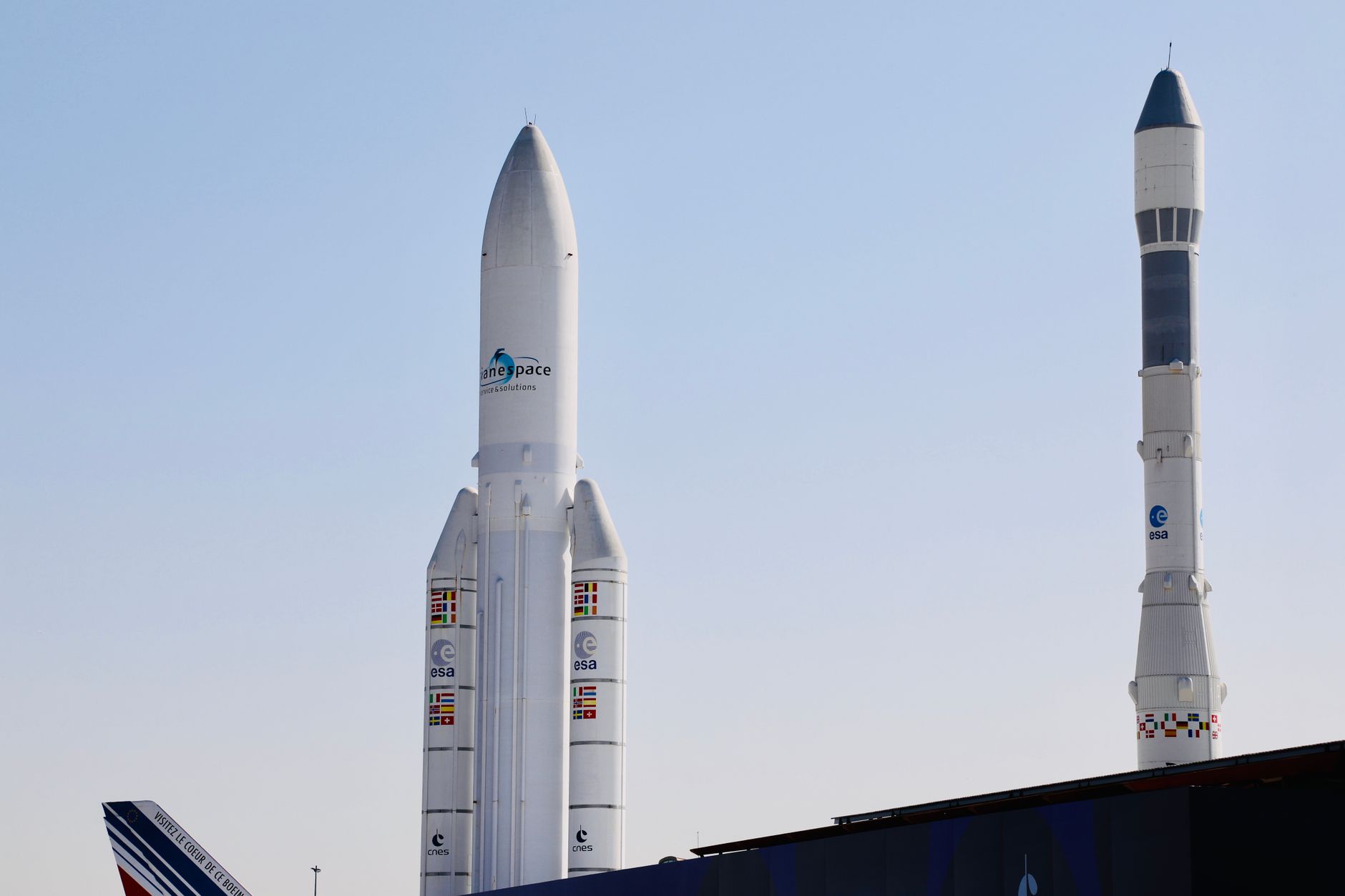
Across the Atlantic, the European Space Agency’s PLATO mission will launch in December aboard the Ariane 6 rocket. Where Roman looks outward to galaxies and dark energy, PLATO turns inward to planets, scanning about 200,000 stars for tiny dips in brightness caused by transiting worlds. Its target is the holy grail of exoplanet science: small, rocky planets in the habitable zones of their stars. By also measuring stellar oscillations—starquakes that reveal a star’s mass, age, and structure—PLATO will begin to place planets in a deeper temporal and evolutionary context. This is not just cataloguing; it is the start of population-level planetary science.
Meanwhile, China is deploying its own cosmological muscle in the form of the Xuntian space telescope, also known as the Chinese space station telescope. Co-orbiting with the Tiangong space station, Xuntian will survey enormous swaths of sky at a resolution comparable to Hubble’s, yet with a field of view more than 300 times larger. The result is a mosaic of the universe stitched together at unprecedented scale and detail, one that could challenge Western-led assumptions about galaxy formation, large-scale structure, and the nature of dark matter. The telescope will also survey the Milky Way and nearby galaxies, probing metallicity, star formation history, and cosmic chemistry in ways that complement, and sometimes compete with, Roman and PLATO.
The cumulative effect is the quiet emergence of a truly global observatory network in space, in which each region brings different strengths, priorities, and philosophies.
Moon, Mars, and the Moral Geography of Space
If the heavens are changing how astronomers see the universe, the solar system is changing how engineers and politicians think about empires. In late 2026, NASA and Firefly Aerospace plan to launch Blue Ghost Mission 2, a robotic lander destined for the lunar far side, one of the Moon’s least explored and most geologically intriguing regions. The mission will also deliver the European Space Agency’s Lunar Pathfinder communications satellite into lunar orbit, a critical piece of infrastructure for a future lunar internet.
At the same time, China’s Chang’e 7 mission will head to the lunar south pole, an area rich in permanently shadowed craters that may harbor vast reservoirs of water ice. The complex, multi-element mission includes an orbiter, a relay satellite, a lander, a rover, and a mini-flying probe designed to hop into shadowed craters and use onboard sensors to detect and analyze water-rich material. This probe represents a new class of lunar architecture: not just rovers and landers, but short-range aircraft operating in the Moon’s thin exosphere. The stakes are not merely scientific; water ice can be split into hydrogen and oxygen, making it the basis of a future lunar fuel economy and a stepping stone to deeper space.
Much quieter in the headlines, but no less consequential, is the planned arrival of the European Space Agency’s Hera spacecraft at the double-asteroid system Didymos in November. Hera will survey the aftermath of NASA’s earlier DART impact on the smaller body, Dimorphos, and will deploy two CubeSats to map the asteroid’s internal structure and composition. This mission is a proof of concept for planetary defense: by understanding how kinetic impactors change an asteroid’s trajectory and surface, humanity is slowly building the toolkit it may one day need to deflect a real threat.
Elsewhere in the solar system, the joint ESA-JAXA mission BepiColombo is expected to enter orbit around Mercury in late 2026, after a long and complex journey involving multiple gravity assists. The spacecraft will begin to dissect the innermost planet’s magnetic field, surface chemistry, and tenuous exosphere, offering clues about how rocky planets form close to their stars. The data may also shed light on the broader question of how habitable a planet can be in a system where the star dominates the environment.
These missions reveal a solar system that is no longer a museum of static objects, but a dynamic laboratory for planetary defense, resource prospecting, and geopolitical competition.
SpaceX, NASA, and the New Business of Space
Amid these scientific ambitions, SpaceX continues to redefine the economic logic of access to space. The company’s Falcon family remains the workhorse of global launch capacity, but 2026 will see increased pressure and scrutiny as rivals—Blue Origin, Relativity Space, Rocket Lab, and China’s emerging private sector—chip away at its dominance. More than that, SpaceX is no longer just a launch provider; it is a critical infrastructure operator. Starlink’s expanding mega-constellation now underpins everything from battlefield communications in ongoing conflicts to rural broadband and emergency connectivity during natural disasters.
This shift has profound policy implications. As governments increasingly rely on a single private company for secure, resilient communications, questions of dependency, resilience, and control intensify. National security agencies quietly hedge their bets, negotiating contracts with multiple providers and experimenting with alternative architectures, including small-sat constellations and hosted payloads. The line between civilian, commercial, and military infrastructure is blurring, and the regulatory frameworks have not kept pace.
For NASA, the relationship with SpaceX and other private firms is a strategic necessity and a source of friction. Commercial cargo and crew missions to the International Space Station have become routine, but cost overruns, schedule slips, and quality-control disputes simmer beneath the surface. The Artemis program, which aims to return humans to the lunar surface, leans heavily on SpaceX’s Starship for descent and ascent stages. That dependence creates leverage for both sides: SpaceX can demand more favorable terms, while NASA wields its ability to divert funds and contracts to competitors.
The long-term consequence is the gradual reorganization of the space sector into a layered ecosystem. At the top are large national agencies and militaries, setting broad goals and funding frontal research. In the middle sit a few large private players like SpaceX, providing launch, logistics, and platforms. Closest to Earth’s surface are a swarm of smaller companies building specialized sensors, communication terminals, data analytics tools, and other “space apps.” This fragmentation mirrors the evolution of the internet: a hard infrastructure of cables and satellites, overlaid with a soft layer of services and applications.
Space is no longer a state monopoly, nor a playground of billionaires; it is becoming a global industrial corridor.
Medical Breakthroughs from the Edge of Space
Space exploration is also quietly reshaping biomedical research. The study of human physiology in microgravity—long dismissed as a niche curiosity—has begun to generate transferable insights into terrestrial medicine. Astronauts experience rapid bone loss, vascular remodeling, muscle atrophy, and immune dysregulation, conditions that resemble accelerated aging. By understanding how the human body adapts—or fails to adapt—over months in orbit, researchers are uncovering new pathways for treating osteoporosis, cardiovascular disease, and immune-related disorders.
In 2026, several experiments aboard the International Space Station and aboard commercial platforms will test new drug delivery systems, 3D bioprinted tissues, and gene-editing tools in microgravity. One notable project involves lab-grown vascular tissues printed from stem cells, which are being used to model blood vessel aging and atherosclerosis. The absence of gravity alters how cells organize into tissues, often revealing vulnerabilities that are masked on Earth. Such experiments could lead to therapies that mitigate vascular stiffness, a major contributor to heart disease and stroke.
Another thread of research focuses on the microbiome and immunity. Long-duration missions reveal that the gut microbiome and immune system are tightly coupled and highly sensitive to environmental stress. This work has already inspired new probiotic formulations and dietary strategies for astronauts, and these are now being adapted for patients receiving chemotherapy, organ transplants, or intensive care. The space environment, in effect, acts as a stress amplifier, exposing biological fault lines that can be targeted with precision therapies.
Beyond human health, space-based research is also informing regenerative medicine. Experiments in microgravity have shown that certain stem cells differentiate more efficiently into cartilage and bone, suggesting that zero-g environments could be used as a kind of biomanufacturing platform. This raises the prospect of specialized “bioprinting stations” in orbit, where difficult tissues are grown and then returned to Earth for implantation. For now, this remains speculative, but the trajectory of the science is unmistakable.
The body in space is no longer just a subject of aerospace medicine; it is a model system for human disease.
Physics at the Edge of Knowledge
In parallel with these applied advances, fundamental physics is undergoing its own quiet revolution. The year 2026 will see continued analysis of data from gravitational-wave observatories, neutrino detectors, and high-energy colliders, all of which are probing the boundaries of the Standard Model. The discrepancies between theory and observation—such as the Hubble tension, the nature of dark matter, and the possibility of sterile neutrinos—are no longer anomalies to be shelved; they are the leading edges of a potential new physics.
Some of the most intriguing work is occurring at the intersection of cosmology and particle physics. Theories of modified gravity, extra dimensions, and quantum field theories in curved spacetime are being tested against the new generation of wide-field surveys made possible by Roman and Xuntian. These missions can map the distribution of matter to unprecedented precision, and by comparing the observed distribution with predictions from simulations, physicists can discriminate between competing models. What looks from the ground like a problem of astrophysics is, underneath, a question about the fundamental laws of nature.
Quantum technologies, too, are advancing in ways that could reshape the relationship between space and physics. Quantum communication experiments in low Earth orbit are demonstrating that quantum keys can be encoded in photons and transmitted over thousands of kilometers, a foundation for future secure global networks. At the same time, cold-atom experiments in microgravity are allowing physicists to create ultracold quantum gases that behave like nearly ideal quantum fluids, ideal testbeds for analogies to cosmological inflation and black-hole physics.
These experiments do not yet provide a single, unified theory of everything. But they are chipping away at the edges of the knowable, revealing where our current models fail and where new principles must emerge. The result is a field that is less confident in its completeness and more excited by uncertainty.
The frontier of physics is no longer a single equation on a blackboard; it is a network of satellites, labs, and telescopes probing the universe from multiple angles.
Climate Research from Above
Perhaps the most politically charged development in 2026 is the growing role of space-based observation in climate science. A new generation of Earth observation satellites—many of them small, agile, and relatively inexpensive—will be deployed over the coming months, tasked with monitoring everything from atmospheric carbon dioxide and methane to ocean heat content, ice-sheet dynamics, and urban air pollution. These missions are not merely scientific; they are instruments of policy, diplomacy, and accountability.
One of the most significant projects is the expansion of global greenhouse-gas monitoring networks, which combine data from multiple satellites, ground stations, and airborne platforms. By tracking emissions at the level of individual countries, cities, and even industrial facilities, these systems make it harder for governments to hide their true carbon footprint. The result is a kind of planetary surveillance state, not for policing citizens, but for policing nations.
At the same time, advances in data analytics and artificial intelligence are turning raw satellite imagery into actionable insights. Machine learning models can now detect deforestation, ice loss, and changes in agricultural land use weeks or months before traditional methods. This predictive capability is transforming climate research from a retrospective discipline into a near-real-time monitoring system, one that can anticipate tipping points and feed early warnings into disaster-management systems.
The expansion of satellite-based climate monitoring is also reshaping international relations. Countries that are most vulnerable to climate change—low-lying island states, arid regions, and megacities exposed to sea-level rise—lean on this data to argue for ambitious mitigation and adaptation policies. Wealthier nations, meanwhile, must reconcile their economic interests with the transparency that satellite data imposes. The result is a new form of climate diplomacy, grounded not in rhetoric but in pixels and spectra.
The planet is being measured with a precision that would have been unimaginable a generation ago, forcing a reckoning with the scale of human impact.
The Quiet Revolution in Everyday Life
Beyond the dramatic headlines, space technology is quietly infiltrating everyday life. The 50th anniversary edition of NASA’s Spinoff compendium catalogues more than 2,000 products and processes that trace their origins to the space program, from scratch-resistant lenses and wireless headsets to advanced medical imaging and search-and-rescue beacons. In 2026, the list is expanding again, as satellite communication technology finds new uses in personal locator beacons, emergency networks, and disaster response.
Search-and-rescue networks, for example, now integrate satellite-based distress signals with terrestrial cell networks and social media, enabling rapid triangulation of survivors in remote mountains, oceans, and disaster zones. This infrastructure is no longer a niche safety system; it is embedded in consumer devices, outdoor gear, and maritime equipment. Similar technologies are improving navigation, precision agriculture, and logistics, quietly boosting productivity and reducing waste.
Yet these benefits come with trade-offs. The proliferation of satellites and CubeSats raises concerns about orbital debris, spectrum congestion, and the militarization of space. As more nations and companies launch assets into orbit, the risk of collisions and electronic warfare in space grows. The governance structures that exist today—treaties, national regulations, and informal norms—are strained under the pace and complexity of the new reality.
The quiet revolution in space is not just about rockets and rovers; it is about the invisible infrastructures that shape how humans move, communicate, and survive.
A New Copernican Moment
If there is a unifying theme to 2026, it is the gradual realization that space is no longer a remote frontier, but a central domain of human civilization. The sky is no longer a distant backdrop against which events on Earth unfold; it is an active layer of infrastructure, commerce, and conflict. The universe that Roman, PLATO, and Xuntian will reveal is not disconnected from terrestrial politics and economics; it is deeply entangled with them.
This shift is Copernican in a different sense. It is not the Earth that is being displaced from the center of the cosmos, but humanity’s illusion of separation from the larger system. The same physics that governs distant galaxies also shapes the climate crisis, the stability of ecosystems, and the resilience of societies. The same rockets and satellites that carry telescopes also carry climate sensors, communication links, and weapons systems.
What emerges is a paradox: the more humanity expands into the solar system, the more the Earth becomes the focal point of attention. The powerful images from new telescopes, the data from lunar missions, and the climate observations from orbit do not distract from the challenges facing the planet; they heighten them. They enlarge the stage on which human decisions are played out, and they clarify the consequences of getting those decisions wrong.
2026 may not deliver a single, headline-grabbing revolution like the Moon landing or the first gravitational-wave detection. Instead, it promises a slower, heavier shift: the normalization of space as a domain that is as political, economic, and medical as it is scientific. The frontier is not out there anymore; it is here, woven into the fabric of everyday life, and its management will be one of the defining tasks of the coming decades.