The American Economy's Fragile Equilibrium: Why the Jobs Market Holds All the Keys
The American economy in 2026 presents a paradox that defies easy categorization. Consumer confidence ticks up slightly one month, then retreats the next. Employment figures surprise analysts with modest gains, yet the underlying labor force participation remains stubbornly weak. Inflation loosens its grip in some sectors while tightening it in others. Meanwhile, the national debt ceiling looms as an ever-present political sword of Damocles, and the dollar's strength abroad masks deepening anxieties at home about who benefits from economic growth and who bears its costs.
To understand where America's economy actually stands requires looking past the headlines and official statistics to the lived experience of workers, consumers, and businesses navigating an economy that increasingly feels rigged in ways both structural and subtle. The data tells a story far more complicated than the monthly spin suggests.
The Labor Market's Frozen Landscape
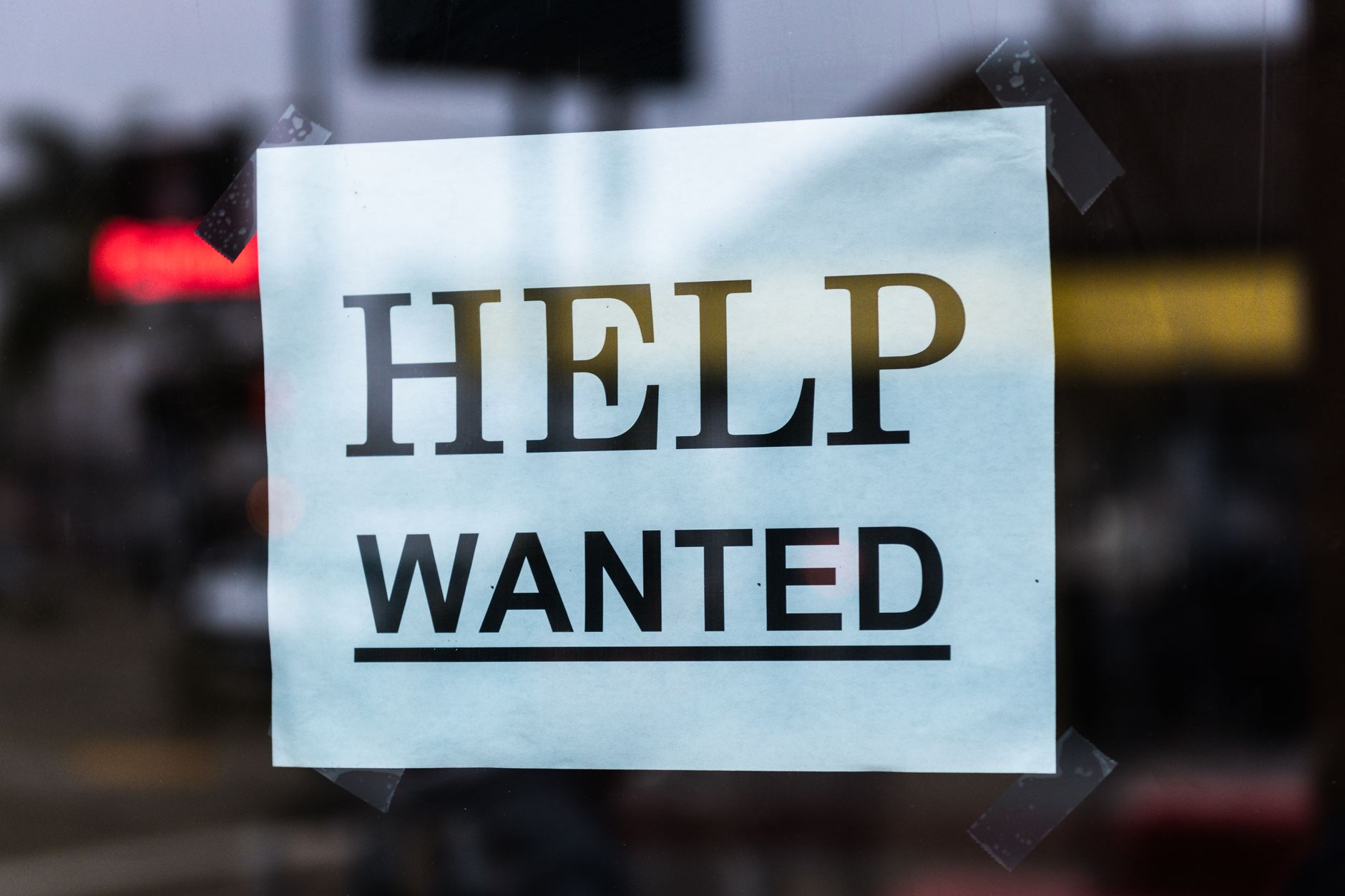
For nearly a year, the job market has essentially stalled. Hiring in recent months has barely kept pace with population growth, leaving millions of Americans convinced that good jobs have become genuinely scarce. The share of consumers saying jobs are plentiful has fluctuated between the mid-26 percent and low-28 percent range—levels that would have alarmed policymakers just a few years ago but now pass for moderate recovery.
What makes this stagnation particularly troubling is that it reflects both supply-side and demand-side weakness. Employers have grown cautious about expansion, uncertain about future policy directions and international trade conditions. The tariff regime that took hold has created genuine uncertainty about profit margins and growth prospects. Meanwhile, the labor force itself has failed to expand robustly, with many workers remaining outside the employment market entirely, discouraged by years of weak wage growth in real terms and convinced that their skills don't match available opportunities.
The headline unemployment rate sits at 4.3 percent, a figure that sounds respectable until you examine what lurks beneath it. Labor force participation—the share of working-age Americans actually working or actively seeking work—tells a different story. That number has failed to recover to pre-pandemic levels despite six years of recovery. This matters enormously because it means official unemployment statistics undercount the true employment shortfall in America. Millions have simply exited the labor market, classified neither as employed nor officially unemployed. They're invisible in the statistics that policymakers cite but very visible in communities across the country.
One chief economist recently observed that Americans feel stuck in an economy without genuine job opportunities or any realistic prospect of affording a home. This perception, perhaps more than any objective metric, explains the persistent anxiety in consumer sentiment surveys. When millions of people believe they're stuck, economic psychology begins to override economic fundamentals.
Consumer Spending: The Illusion of Resilience
Consumer spending rose 0.4 percent in recent months, maintaining the same pace as preceding periods. This sounds like stability, even modest growth. But stability built on what foundations? For months, economic observers puzzled over why consumer spending remained steady even as consumer confidence sagged and job market concerns intensified. The answer lay in an uncomfortable truth: Americans were spending despite pessimism, not because of confidence.
Discretionary spending on vacations and non-essential purchases has become genuinely cautious. Households are making deliberate choices about where their money goes. Some upper-income consumers have indeed shifted spending away from services toward goods, a shift that manufacturing sectors welcomed. But this reallocation reflects calculation, not confidence. The gap between what consumers say about the economy and what they do with their wallets reveals the complex psychology animating the current moment.
Underneath the aggregate spending figures lies a troubling bifurcation. Some households are buying big-ticket items again—cars, furniture, electronics—suggesting that recession fears have receded among those with sufficient resources. Simultaneously, other households remain locked in defensive postures, unwilling to commit to major purchases while employment anxiety persists. This divergence isn't simply variation around a mean; it reflects a widening canyon of economic experience between those confident in their employment prospects and those uncertain about their economic future.
The inflation gauge most closely watched by the Federal Reserve—core personal consumption expenditures—has resisted the downward pressure many predicted. It remains elevated at 2.9 to 3 percent annually, below its worst extremes but well above the Fed's 2 percent target. This stubborn inflation matters enormously for consumers because it means that even modest wage gains get partially erased by rising prices. Real income growth remains elusive for most Americans, even those fortunate enough to have secure employment.
The Debt Ceiling Sword
Looming over all economic discussions is the perennial debt ceiling crisis, now entering what feels like an annual political ritual. Treasury officials warn of potential default or severe fiscal constraints. Congress engages in brinkmanship. Markets grow temporarily jittery. Then, invariably, a compromise emerges at the last possible moment, often with provisions that no one examined carefully or understood fully.
This recurring cycle has created a peculiar kind of economic uncertainty. Businesses making long-term investment decisions must account for the possibility of fiscal disruption. Investors worry, albeit in a muted way given markets' resilience, about the viability of Treasury instruments. The uncertainty itself becomes a drag on economic activity, though quantifying this effect proves difficult.
What makes the debt ceiling particularly insidious in 2026 is that it persists amid genuine questions about whether the government's current fiscal trajectory is sustainable. Interest payments on the national debt have grown substantially as rates remained elevated and the absolute debt stock expanded. These payments now crowd out other federal priorities, creating a fiscal squeeze that guarantees future conflicts regardless of which party controls Congress.
Dollar Strength and Hollow Victory
The American dollar remains strong by most international comparisons, a development that American policymakers typically celebrate. A strong dollar reflects confidence in American institutions and assets. Yet this strength comes with hidden costs that rarely make their way into policy discussions.
A strong dollar makes American exports less competitive globally and makes imports cheaper for American consumers. For a country already running substantial trade deficits, this dynamic exacerbates structural imbalances. American manufacturers find it harder to compete abroad precisely when they most need foreign markets to sustain employment at home. Meanwhile, foreign competitors gain pricing advantages in American markets, pressuring domestic producers and potentially constraining job growth in tradeable goods sectors.
The strength of the dollar also reflects international capital flowing into American assets, often driven by perceptions of political stability and deep, liquid financial markets. But it can also reflect capital flight from other regions experiencing greater instability. When dollar strength derives primarily from weakness elsewhere rather than American strength, it represents a temporary advantage likely to fade when global conditions normalize.
Income Inequality: The Economic Reality Nobody Wants to Discuss
Beneath almost every economic indicator lies a more fundamental reality that policy discussions persistently avoid: the extraordinary concentration of economic gains among the wealthiest Americans and the stagnation of income for most others.
Median household income, adjusted for inflation, remains below levels achieved a decade ago. Wage growth for workers without college degrees has essentially flatlined for forty years in real terms. Meanwhile, compensation at the top of the income distribution has soared, particularly in financial services, technology, and executive suites. This divergence isn't simply the result of market forces but reflects policy choices—tax structures, labor law frameworks, monetary policy that prioritizes asset price inflation alongside goods price stability.
When consumer spending holds steady while most households face stagnant real incomes, the math becomes uncomfortable. Either upper-income households are spending more of their wealth, or middle-income households are going deeper into debt, or some combination of both. The data suggests primarily the latter. Household debt has grown, particularly credit card debt, with interest rates making this borrowing expensive. American families are spending more than they earn, financing the gap through credit markets that serve as a mechanism for temporary consumption smoothing but not sustainable economic growth.
This dynamic has profound implications for economic resilience. An economy where most people are accumulating debt while the wealthy accumulate assets is an economy where a negative shock—a recession, a pandemic, a financial crisis—falls disproportionately on those least able to absorb it. The 2008 financial crisis demonstrated this dynamic with tragic clarity. A decade and a half later, despite supposed recovery, the underlying vulnerabilities have arguably grown worse as inequality has continued expanding.
The Path Forward: Questions Without Easy Answers
Looking at America's economy in May 2026 requires acknowledging uncomfortable truths. The jobs market hasn't recovered in any genuine sense despite official unemployment statistics suggesting relative health. Consumer confidence remains conditional, contingent on circumstances that could shift quickly. Inflation hasn't returned to pre-2020 levels despite hundreds of billions in spending and substantial interest rate increases. The government continues borrowing at unsustainable rates while accumulating debt that will require difficult choices eventually. The dollar's strength masks structural economic vulnerabilities that favor financial asset owners over wage earners.
Most troubling, perhaps, is that these realities don't seem to generate the policy urgency they deserve. Politicians debate tax rates and spending levels without confronting the more fundamental question of whether current economic structures are working for most Americans. They celebrate modest job growth without asking whether those jobs pay enough to sustain dignified lives. They point to resilient consumer spending without examining whether that resilience is built on sustainable foundations or temporary borrowing against uncertain futures.
The American economy in 2026 is less like a healthy organism than a patient stabilized but not truly well, requiring careful management to prevent deterioration but lacking a credible plan for genuine recovery. The jobs market holds the keys to whether this equilibrium persists or whether it finally yields to pressures that have been building for years. Until that market demonstrates genuine strength—not just adequate statistics but actual opportunity for Americans across income and education levels—caution remains the only rational response for both consumers and policymakers alike.