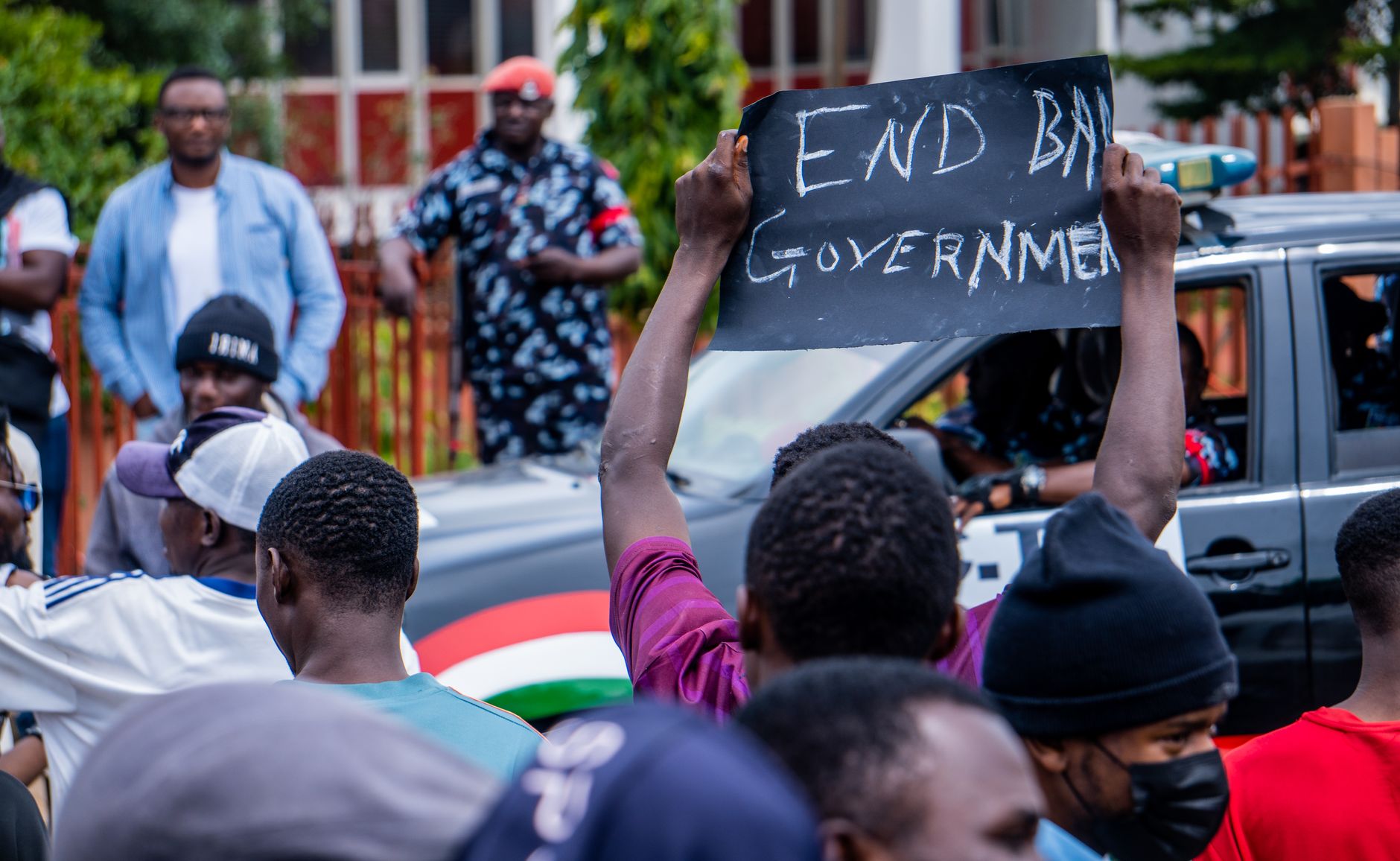
The Constitution Under Siege
Africa in May 2026 presents a paradox of institutional fragility dressed in democratic clothing. Across the continent, constitutional frameworks designed to constrain power are being bent, tested, and reinterpreted by leaders who claim to respect democratic principles even as they circumvent them. The result is not a dramatic collapse into authoritarian rule, but something more insidious: the slow erosion of institutional guardrails that have only recently been constructed.
In South Africa, President Cyril Ramaphosa has thrown down a direct constitutional challenge to the very mechanisms designed to check presidential misconduct. Following the Constitutional Court's May 8 ruling that the 2022 National Assembly vote blocking his impeachment was unlawful, Ramaphosa announced he would not resign over the Phala Phala matter—the alleged theft of nearly $580,000 in foreign currency from his game farm in 2020. Instead, he filed for urgent judicial review, effectively forcing the courts to adjudicate what should have been a political decision. The move exposes a fundamental tension in South Africa's democracy: when the legislature fails to function as an accountability mechanism, can the judiciary substitute for it? And what happens when a sitting president refuses to accept the implications of his own party's institutional collapse?
The political calculus in Pretoria remains extraordinarily volatile. The rand weakened to 16.47 against the dollar as markets priced in political-risk premiums, yet traders have not yet begun pricing in executive collapse. The African National Congress convened its National Executive Committee with Ramaphosa's fate atop the agenda, while ANC chairperson Gwede Mantashe insisted the president "is not going anywhere." This is the language of political survival, not democratic virtue. The Democratic Alliance, Ramaphosa's coalition partner in the Government of National Unity, finds itself caught between holding government accountable and preserving the fragile power-sharing arrangement that prevents the ANC from governing alone. For organized labor and opposition figures, the answer is clear: resignation. For Ramaphosa and his supporters, resignation means submission to forces they believe are attempting a political coup through constitutional means.
The Succession Crisis Nobody Discusses
While South Africa's constitutional drama has dominated international headlines, an equally consequential crisis is unfolding in the Democratic Republic of Congo, where the rules of power themselves are being rewritten. President Félix Tshisekedi has signaled openness to a third presidential term, a move that immediately alarmed opposition figures who recognize it as laying groundwork to weaken constitutional term limits. The timing is revealing: Tshisekedi simultaneously warned that continued fighting in eastern Congo could make it impossible to hold the next presidential election on schedule in 2028.
This is constitutional engineering disguised as operational necessity. By simultaneously opening the door to term-limit abandonment while raising the specter of postponed elections, Tshisekedi is preparing the political terrain for the possibility that democratic procedures might need to be suspended or reinterpreted. The eastern Democratic Republic has become a battleground not merely for territorial control but for the question of whether elections can even be held. The Allied Democratic Forces, now formally recognized as an Islamic State affiliate, expanded operations northward in late April, clashing with Congolese military forces and displacing thousands of civilians. The violence was rebranded by the Islamic State's Amaq news outlet as a "strategic operational expansion," converting local insurgency into a matter of international jihadist concern.
For Tshisekedi, the eastern crisis provides both genuine security challenges and political cover. The worse the security situation becomes, the more plausible the argument that elections must be postponed. The more postponements accumulate, the more ordinary constitutional limits begin to feel like luxuries the nation cannot afford. This is the pathway through which democracies transform into something else entirely—not through dramatic coups but through the gradual replacement of democratic procedures with emergency measures that become permanent.
The Sahel's Slow-Motion Collapse
In Mali, the constitutional order has effectively ceased to exist. The military junta that seized power in 2021 has consolidated control through successive postponements of promised elections, and the country now faces what appears to be a coordinated assault on regime survival. Following JNIM's announcement of a blockade on Bamako, the Malian regime faces the prospect of territorial concession. Military planners have begun a strategic retreat, concentrating forces around the capital and Gao while relinquishing control of peripheral zones to Islamist insurgencies.
What distinguishes Mali from earlier African coups is the role of external state actors. Russia's Africa Corps has become essential to regime survival, providing military capabilities that the isolated junta cannot generate internally. The presence of Russian forces does not constitute democratic governance—it constitutes dependence masquerading as partnership. As Bamako loses territory and legitimacy, its survival increasingly depends not on building democratic institutions or securing public consent but on maintaining the military relationship with Moscow. This is the new geography of African politics: not alignment with the West, but alignment with whoever possesses the military means to prevent immediate collapse.
The Sahel as a whole has become an instability belt stretching across the Sahel through Central Africa to the Horn. Nine African countries now carry the United States' Level 4 "Do Not Travel" advisory as of May 2026, with Niger and Chad added to the list in recent months due to escalating insecurity and militant activity. The expansion of these zones coincides not with the emergence of new conflicts but with the metastasis of existing ones—the spread of Islamic State franchises, the proliferation of ungoverned spaces, and the fracture of state capacity across multiple countries simultaneously.
Somalia's Terminal Transition
Somalia faces May 2026 in a condition of acute political fragmentation. The government's term approaches its end without a clear succession plan in place. As the deadline looms, opponents are expected to mobilize supporters to pressure Mogadishu. The risk is not theoretical: violent clashes between government and opposition forces could ensue precisely when international attention is focused elsewhere and when counter-terrorism operations against Al-Shabaab are already strained.
Somalia's crisis is instructive because it reveals what happens when democratic transitions lack external guarantees and internal consensus. Elections require security, legitimacy, and a modicum of state capacity. Somalia possesses none of these in sufficient quantity. The combination of diminishing international counter-terrorism support, internal political fragmentation, and the prospect of violent succession struggle creates conditions in which the state itself becomes a prize to be seized rather than an institution to be managed.
The Great Power Recalibration
Amid these institutional collapses, external powers are rapidly recalibrating their African engagement. France's Macron toured East Africa this week, announcing a €23 billion package and presiding over what became the first Anglophone Africa-France summit. The message was deliberate: France seeks to redefine its role on the continent, moving away from the neocolonial associations of Françafrique toward something resembling partnership.
More significant is Washington's tentative reengagement with the Sahel. Nick Checker, the highest-ranking official in the U.S. State Department's Africa Bureau, attended Mamadi Doumbouya's inauguration in Guinea and subsequently traveled to Bamako. The optics were unmistakable: the Trump administration intends to reconnect Sahelians with the West and potentially reshape local counterterrorism efforts. This represents a dramatic reversal of the strategic neglect that characterized recent American Africa policy and suggests recognition that Russia's regional influence cannot be displaced through inattention.
The Broader Pattern
Zooming outward, several patterns emerge from Africa's current moment. First, constitutional crises are becoming the primary modality through which power is contested. Rather than dramatic military coups—though those still occur—leaders are exploiting constitutional ambiguities, reinterpreting provisions, and using security emergencies to suspend democratic procedures. This is more durable than outright authoritarianism because it maintains the appearance of legality.
Second, regional instability is creating cascading political crises. The eastern Congo conflict threatens to destabilize electoral processes in the DRC. The Sahel's jihadist networks spread across multiple countries simultaneously, creating synchronous security emergencies that enable synchronized constitutional erosion. Somalia's political crisis occurs in the context of persistent Al-Shabaab pressure and diminishing international resources.
Third, great power competition is reshaping the constraints on African leaders. The reengagement of the United States, the deepening French-African relationship, and Russia's expansion of military presence in places like Mali create a multipolar environment in which African leaders have options. They can threaten to tilt toward Russia if Western partners press too hard on democracy and human rights. Conversely, they can solicit Western support by invoking terrorism threats. This maneuverability is politically profitable for individual leaders but strategically disastrous for continental stability.
The African Union summit in May addressed water and sanitation but could not ignore the continent's security crises. AU Commission chairman Mahmoud Ali Youssouf warned that "from Sudan to the Sahel, to eastern Democratic Republic of Congo, in Somalia and elsewhere, our people continue to pay the heavy price of instability." The catalogue of catastrophe has become so extensive that institutional responses seem to lag behind the velocity of state failure. By the time an AU mechanism is constituted to address one crisis, three others have emerged.
The Democratic Recession
What unites these disparate crises is a democratic recession. South Africa's constitutional impasse, the DRC's term-limit exploration, Mali's military junta, Somalia's succession struggle—these are not discrete events but manifestations of a broader erosion of democratic norms across the continent. Democratic procedures require not merely formal institutions but widespread acceptance that power should be transferred through elections and that losing elections requires graceful acceptance of opposition governance.
None of these conditions are reliably present in contemporary Africa. Elections in Kenya have become venues for "goonism," with state-backed violence disrupting rallies and intimidating rivals. South African elections, once celebrated as models of democratic probity, have been followed by constitutional crises over accountability. The DRC faces the prospect that elections might be indefinitely postponed to manage security emergencies. Mali has abandoned elections entirely.
The irony is that these constitutional crises emerge not despite institutional development but because of it. Institutions that can meaningfully constrain power invite leaders to seek workarounds. Constitutional courts that rule against executives force presidents to choose between accepting defeat or challenging the rule of law itself. Term limits that prevent indefinite tenure provoke leaders to reinterpret constitutional language or manufacture emergencies that justify suspension. In a sense, Africa's democratic institutions are being tested to destruction precisely because they have become strong enough to matter.
The trajectory is not predetermined. South Africa's coalition government, fractious as it is, represents an attempt at accountability mechanisms that function despite political rivalry. Kenya's religious leaders are speaking against political violence. The Democratic Republic's opposition, though suppressed, continues to voice constitutional concerns. These are not negligible counters to democratic erosion. But they are fragile and face headwinds from leaders who have every incentive to subordinate democratic procedures to survival imperatives.
Africa in May 2026 stands at an inflection point. The institutions of democracy remain formally in place. The rhetoric of constitutional governance persists. But the underlying willingness to accept democratic outcomes, to subordinate personal political interests to institutional procedures, and to tolerate opposition is visibly eroding. Whether this erosion can be arrested depends on factors that no single African nation controls and that external powers seem increasingly unwilling to prioritize. The result may not be authoritarian collapse but something more durable and more damaging: democracies that persist in form while becoming hollow in substance.


