For much of the past half-century, the world’s financial markets told a single story with several accents. Oil rose, inflation followed, bond yields jumped, emerging markets perked up, commodity currencies strengthened, and hedge funds rushed to position themselves along the chain reaction. When gold moved, it usually meant fear. When copper moved, it usually meant growth. When crude moved, it could mean both. That order is breaking down.
What we are living through now is not a tidy replacement but a fragmentation. Oil is behaving like a mature industry caught between excess supply and political risk. Gold has become less a relic than a reserve asset for an anxious age. Crypto, meanwhile, remains a speculative asset class with a remarkable talent for surviving every obituary. Emerging markets are no longer merely a wager on raw materials and cheap labor; they are increasingly a bet on semiconductors, digital services, and the ability of local institutions to withstand a powerful dollar or exploit a weaker one. And hedge funds, ever adaptive, are trying to arbitrate among these contradictions at a time when the old macro map has blurred.
Oil: abundant, exposed, and strangely vulnerable
The crude market is beginning 2026 with a familiar paradox: prices are not collapsing, yet the logic underpinning higher prices looks thin. Production remains ample. Supply discipline among producers has not been enough to erase the deeper reality that the world has added barrels faster than it has lost them. Demand, for its part, is decent rather than dazzling. The post-pandemic sugar rush is gone. China is no longer the ceaseless demand engine it once was, and energy intensity per unit of global GDP keeps drifting lower as technology improves and electrification advances.
That leaves oil in a strange position. It is still indispensable to transportation, petrochemicals, and much of the industrial economy. But it no longer commands the kind of unchallenged pricing power it once did. The market is more likely to grind lower than to explode higher—unless a geopolitical shock intervenes. And that caveat matters, because oil remains the commodity most likely to turn from dull to dramatic overnight.
The market’s current bias is bearish, though not complacent. Traders know that the long-range fundamentals favor lower prices, but they also know how quickly an attack on infrastructure, a regional confrontation, or a shipping disruption can scramble the equilibrium. The Middle East still matters. So does the Strait of Hormuz, and so do the fragile nerves of traders who remember how quickly a single strike can move the market. The result is a peculiar kind of pricing: day-to-day weakness laced with a premium for catastrophe.
That premium is real, but it is also an admission. Oil is no longer the master variable of the global economy. It is one variable among many, and sometimes it is the less important one. That change has huge implications for inflation, fiscal policy, and emerging markets. It also explains why many commodity investors now spend as much time thinking about geopolitics and inventory curves as they do about consumption.
Gold: from barbarous relic to strategic reserve
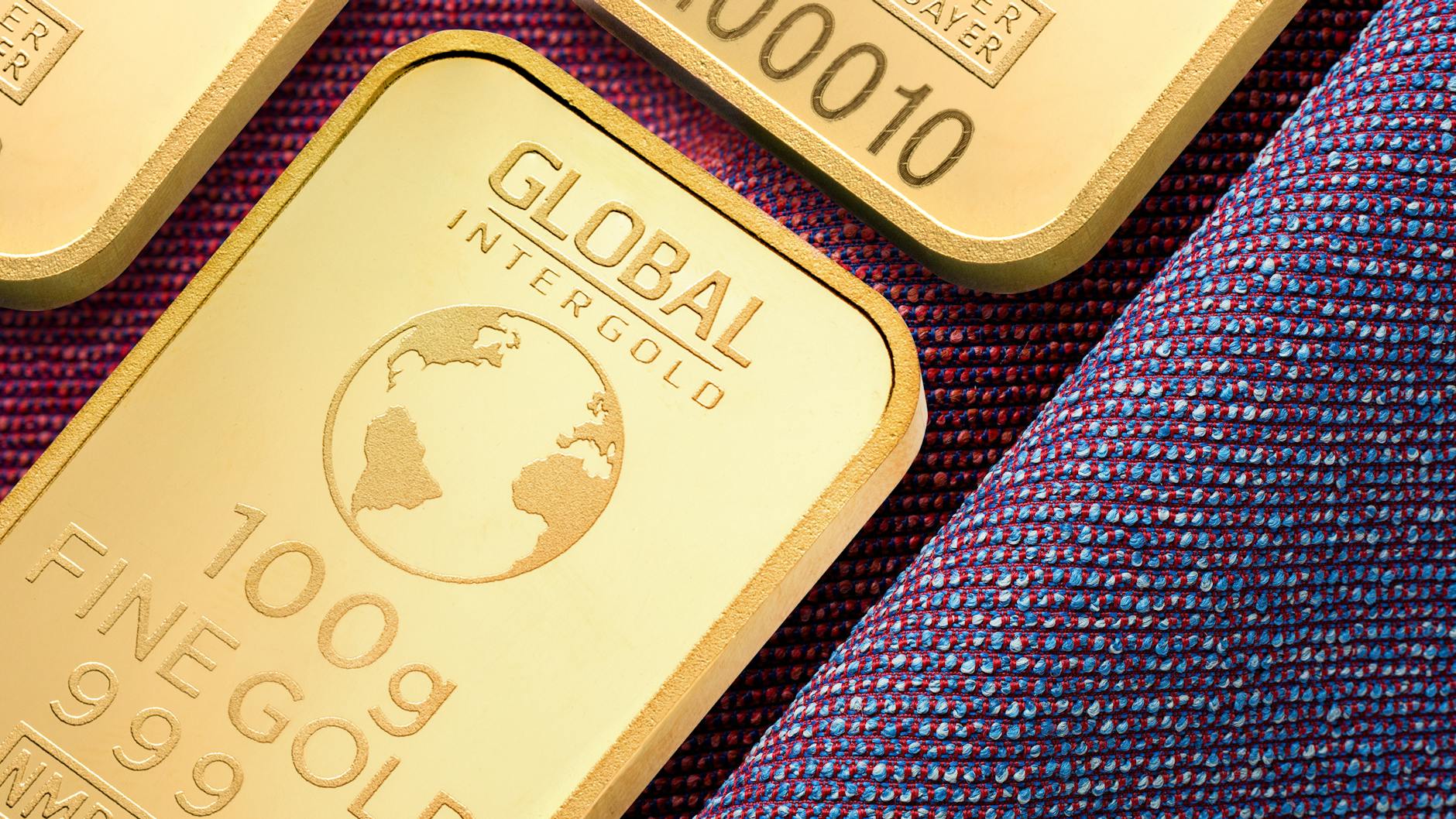
If oil is a market defined by fatigue, gold is a market defined by distrust. Central banks, especially in emerging markets, have been buying it aggressively in the wake of sanctions and reserve freezes that made one lesson impossible to ignore: dollar assets are liquid, but they are not neutral. The freezing of Russian reserves after the invasion of Ukraine changed the psychology of reserve management. Gold suddenly looked less like a legacy asset and more like sovereign insurance against financial coercion.
That shift is not merely symbolic. It has altered the structure of demand. Central-bank buying has stayed strong, and in value terms it has been strikingly robust. Investors, too, are holding more gold than they used to. Some of that is defensive positioning in a world of elevated geopolitical uncertainty. Some of it is a conviction that inflation may not be fully vanquished, even if it has cooled. Some of it is simple momentum: when a market is rising, people become reluctant sellers, which reduces recycling and tightens available supply.
The result is that gold has escaped the old cliché of being useful only when everything else is going wrong. It is increasingly treated as a core strategic asset. In a world where great-power competition is now a financial variable, gold has found a new constituency. Its appeal is not just that it hedges inflation or currencies. It hedges regime change.
Gold has become less a bet against markets than a bet against concentration: concentration of reserves, of power, and of trust.
That is why some forecasts have become extraordinarily ambitious. Whether gold ultimately reaches the levels now being discussed in bullish strategy notes is less important than the fact that those forecasts no longer sound eccentric. The market’s center of gravity has moved. A few years ago, a gold bull case had to begin with rates and inflation. Today it begins with geopolitics, reserve diversification, and the possibility that investors want assets no government can freeze.
Crypto: the market that never stops being a referendum on belief
Crypto sits at the edge of this new order, partly because it is not a commodity in the traditional sense and partly because it behaves as if it wants to be everything at once. Sometimes it trades like a risk asset, rising with equities and liquidity. Sometimes it trades like digital gold, promising scarcity and independence. Sometimes it trades like a technology stock with a manic temperament. The fact that it can occupy all three roles, depending on the month, is both its strength and its weakness.
In a market dominated by questions about trust, crypto has become an especially revealing instrument. Its most serious advocates see it as a hedge against monetary debasement and institutional overreach. Its critics see a levered, speculative ecosystem propped up by sentiment, leverage, and the ever-renewed hope that this time the institutional adoption narrative will finally convert into stable value. Both sides are partly right.
What matters now is that crypto has become less of an outsider than it was a few years ago. It is embedded in the broader financial conversation: as collateral, as a speculative sleeve in portfolios, and as a political signal about the future of money. That does not make it stable. It makes it legible. In a year when central banks are buying gold for the same broad reason that some investors buy bitcoin—fear of concentration—crypto’s claim to be an alternative asset is more plausible than ever. But plausibility is not the same as resilience.
For hedge funds, crypto remains a tempting arena because it is still structurally inefficient relative to traditional markets. The opportunity lies not only in directional bets but in volatility, basis trades, relative-value dislocations, and the constant mismatch between narrative and plumbing. That is where professionals still hope to extract alpha from an asset class powered as much by story as by balance sheets.
Emerging markets: no longer just a commodity trade
The old emerging-markets trade was simple: buy oil exporters when crude rose, buy metals producers when China accelerated, sell when the dollar tightened. That model is no longer enough. Emerging markets are still exposed to commodities, but the biggest and most interesting parts of the universe increasingly look digital rather than extractive. In parts of Asia, the dominant growth stories involve semiconductors, software, electronics supply chains, and artificial intelligence infrastructure rather than mines and wells.
This shift has profound consequences for investors. It means emerging markets are not all marching in lockstep with industrial commodities. It means index performance can be driven by companies that have more in common with the developed-world technology cycle than with the price of iron ore. And it means the old shorthand—that emerging markets are just levered plays on raw materials—is becoming dangerously outdated.
Still, the macro forces have not disappeared. Currency remains central. A weaker dollar is usually a bonus for unhedged foreign investors and often a relief valve for emerging-market borrowers. A stronger dollar, by contrast, tightens financial conditions, raises the local-currency burden of dollar debt, and can expose weak balance sheets with ruthless speed. That is why the dollar remains one of the most important invisible drivers of global asset prices, even in an era of AI, digital payments, and algorithmic trading.
The most compelling emerging-market story in 2026 may be the coexistence of old and new regimes. Some countries remain deeply tied to commodities and external financing. Others are increasingly driven by technology exports, domestic capital formation, and large pools of local savings. Investors who fail to distinguish between them are likely to make the same mistake as those who still treat every commodity market as a proxy for China.
Hedge funds: the hunters of dispersion
Few groups are better positioned to profit from a fractured market than hedge funds. Their business, at its best, is to exploit dispersion: between oil and gold, between commodities and crypto, between index narratives and underlying cash flows, between what the market says and what the balance sheet implies. In a world of synchronized macro trading, that was hard. In a world of divergent asset behavior, it becomes easier—at least in theory.
But the new environment has made hedge-fund work more demanding, not less. Commodity prices can adjust in hours. Geopolitical shocks can overwhelm fundamentals. Central-bank buying can create a floor where models expected weakness. AI enthusiasm can carry emerging-market equities higher even when the broader macro backdrop remains mixed. And when every consensus view is crowded, the trade may work until it suddenly does not.
That is why some of the most interesting hedge-fund strategies now focus on niches rather than giants, and on timing rather than grand narratives. The market rewards speed, but it also rewards skepticism. The best managers are not necessarily those with the boldest macro call. They are the ones who understand that oil can be bearish until a missile changes the story; that gold can rise not because inflation is roaring but because trust is eroding; and that emerging markets may look cheap for reasons that are either temporary or structurally true.
In today’s markets, alpha often comes from seeing that two assets can be right for opposite reasons at the same time.
That is a hard thing to build a portfolio around, but it is the defining challenge of the moment. The market regime has become less linear, more political, and more fragmented. A commodity trader, a macro hedge fund, and a sovereign reserve manager may all look at the same chart and see different worlds.
The end of the simple macro story
The deeper truth is that global markets have moved beyond a single organizing principle. The world is no longer in a straightforward inflation regime, nor a straightforward deflation regime. It is in a hybrid state: abundant supply in some corners, persistent scarcity in others; technological acceleration in some economies, geopolitical retrenchment in others. That is why oil can be soft while gold stays strong. That is why crypto can survive despite repeated doubts. That is why emerging markets can rally without behaving like old commodity proxies. And that is why hedge funds, for all their sophistication, remain engaged in a perpetual contest with uncertainty.
The task for investors is not to find a single story and force every asset into it. The task is to accept that the market has become plural. It has multiple clocks, multiple risk regimes, and multiple definitions of safety. Gold says trust is fragile. Oil says supply still matters. Crypto says money can be reinvented by belief alone, at least for a while. Emerging markets say growth is being rewritten by technology. Hedge funds say the gaps between all these views are where the money is.
If that sounds like a world with no center, that may be because there isn’t one. The old commodity supercycle was a story of convergence. The new one is a story of divergence. And in markets, as in politics, divergence is where both opportunity and instability begin.