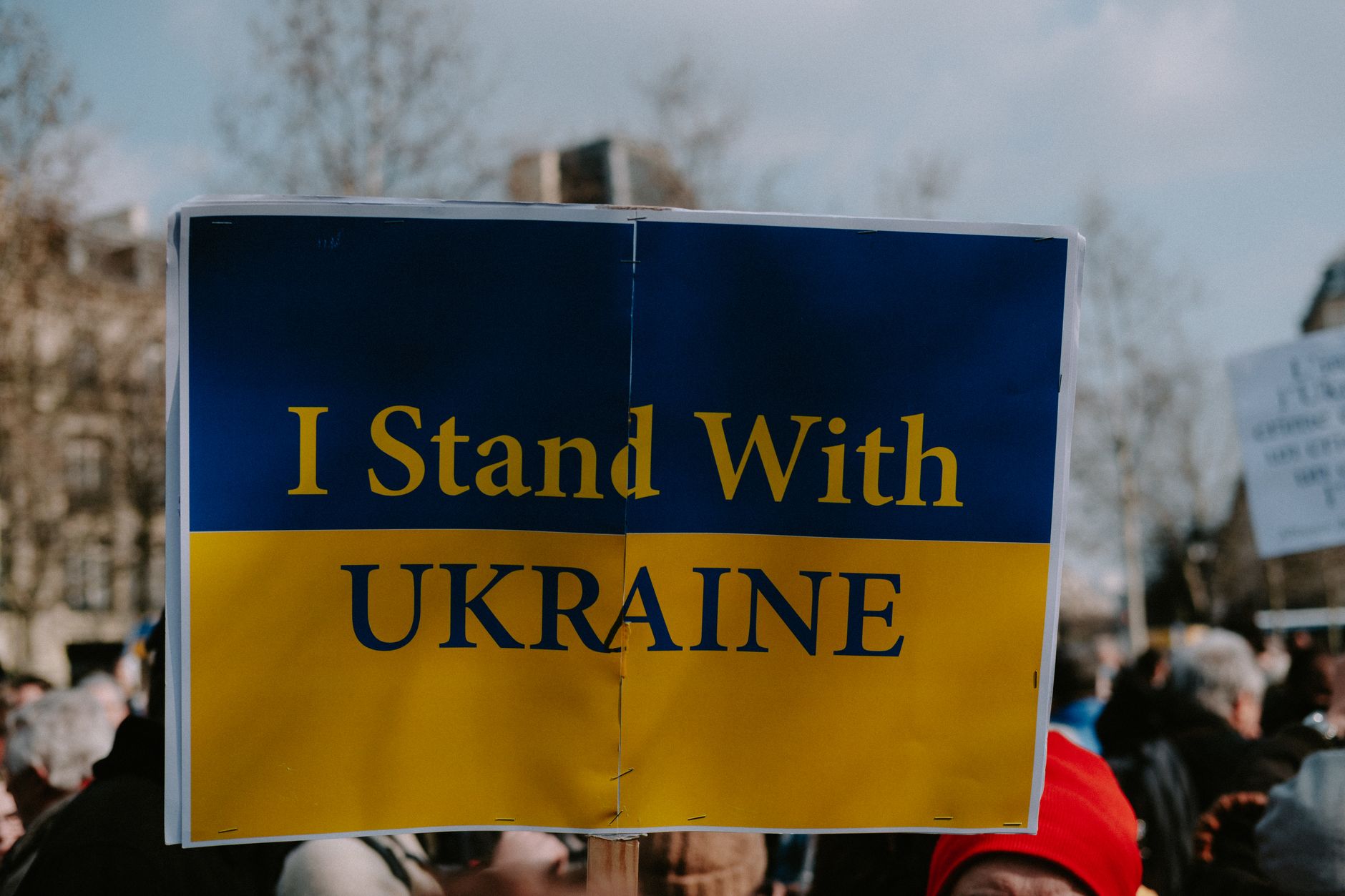
A continent in campaign mode
Europe has a habit of discovering, a little too late, that its domestic politics are in fact foreign policy by other means. In 2026 that truth is impossible to ignore. Elections across the European Union are altering the balance of power inside the bloc just as the war in Ukraine grinds into its fourth year, NATO searches for strategic confidence, and the relationship between Europe and the United States becomes less a marriage of convenience than a negotiation over terms.
The result is not a single dramatic rupture. Europe rarely offers those. Instead there is a slow accumulation of pressure: a Hungarian election with implications for sanctions and Ukraine aid; a German chancellery that is trying to revive credibility after years of drift; a French presidency that is nearing the end of its constitutional run but not the end of its influence; and a British government still searching for a post-Brexit role that looks less like nostalgia and more like utility. Together they form the outline of a new European political season, one defined by scarcity, instability and a grim education in realism.
The old European script assumed that politics could be separated into neat compartments. Elections were about taxes, pensions and public services. Security was something Americans handled. Russia was a diplomatic problem, not an existential one. The EU was a regulatory superpower but a strategic amateur. That script has broken down. Now every national vote carries implications for sanctions, defence spending, enlargement, energy policy and the future shape of the European project itself.
Hungary’s election and the politics of veto power
Nowhere is this more visible than in Hungary, where Viktor Orbán’s long hold on power has made Budapest not just a national capital but a node in Europe’s argument with itself. Orbán has spent years converting Hungary’s membership in the EU into leverage against the EU’s direction. He has used his position to resist sanctions packages, slow aid to Ukraine, and challenge the bloc’s consensus on the rule of law. His appeal rests partly on domestic grievance and partly on a wider European audience: a belief among national conservatives that Brussels overreaches, liberal institutions are self-protective, and sovereignty has become a euphemism for submission.
Yet Hungary’s 2026 election is not merely a referendum on one leader’s longevity. It is a test of whether the European Council can continue functioning when one of its members treats unanimity as a weapon. A change in Budapest would not magically resolve Europe’s institutional weaknesses, but it would remove one of the loudest and most durable sources of internal obstruction. It would also alter the tone of debate on Ukraine, where support has become increasingly entangled with questions of democratic standards at home.
What makes the Hungarian case so consequential is that it sits at the intersection of two anxieties. The first is tactical: can Europe keep financing Ukraine and maintaining sanctions if one government repeatedly threatens to slow the machinery? The second is philosophical: is the EU still a community of rules, or has it become a battlefield on which rule-breaking is disciplined only when politically convenient? Hungary’s election will not answer those questions alone. But it will expose how much of Europe’s unity depends on the consent of governments that no longer share the same interpretation of what the Union is for.
Ukraine’s war enters the European mainstream
For much of the war, European leaders have spoken about Ukraine in the language of emergency management. There was the immediate task of arming Kyiv, the longer task of financing its state, and the even longer task of deciding what victory, deterrence or peace might mean. In 2026, that language sounds increasingly inadequate. The war has become structural. It is no longer a crisis outside Europe’s system but part of the system’s operating conditions.
That matters because war has a way of sorting political pretensions from realities. Europe has promised strategic autonomy for years, but Ukraine has revealed the distance between rhetoric and capacity. The bloc has money, sanctions tools and industrial strength, yet it still depends heavily on American intelligence, air power, logistics and political reassurance. At the same time, Washington’s appetite for underwriting Europe’s security cannot be assumed to be unlimited. The transatlantic alliance remains intact, but it is less self-executing than before.
For Ukraine, that means Europe’s electoral calendar matters almost as much as the front line. Governments in Berlin, Paris, Warsaw, Rome and Budapest will shape whether military aid arrives on time, whether reconstruction funds stay credible, and whether enlargement remains a promise or becomes another exercise in indefinite deferral. The question is no longer whether Europe supports Ukraine in principle. It is whether Europe can sustain support when voters are preoccupied by inflation, migration, energy bills and the sense that the continent is paying a high price for a war it did not choose.
Europe’s leaders still speak as if Ukraine is the exception. Their voters increasingly know it is the new rule.
That psychological shift is dangerous. Once a war becomes background noise, governments begin to improvise around it rather than think through its consequences. Aid becomes episodic, sanctions become negotiable, and diplomacy becomes a euphemism for fatigue. Russia understands this perfectly. It has no need to defeat Europe militarily if it can persuade enough Europeans that endurance itself is the problem.
NATO’s uneasy reinvention
NATO is stronger on paper than it has been for years. Finland and Sweden have transformed the alliance’s geographic logic. Defence spending has risen across much of Europe. The rhetoric of deterrence has regained seriousness. And yet NATO’s strength masks a deeper unease: an alliance designed to anchor American leadership in Europe now has to prove it can still function when that leadership is more conditional.
For years, Europeans relied on a comforting division of labour. The United States would provide the hard power; Europe would provide the legitimacy, the money and the moral vocabulary. But Russia’s war and the shifting politics of Washington have exposed the limits of that arrangement. NATO is not dead. Far from it. But it is being asked to evolve from a structure of dependence into one of shared burden and, perhaps eventually, shared risk.
That transition is awkward. Germany, despite years of talk about a Zeitenwende, still struggles to turn pledges into procurement. France speaks most eloquently about European sovereignty but often prefers to set the terms of debate rather than provide the full material answer. Britain retains military credibility but no longer belongs to the EU’s political core. Central and Eastern European states bring urgency, yet their threat perceptions do not always align with those of the western states that still dominate the Union’s institutions.
The alliance therefore finds itself in a familiar but uncomfortable posture: strategically essential, politically vulnerable, and more dependent than it admits on the habits of trust built during an older era. The challenge for NATO is not merely to deter Russia today. It is to prove that Europe can remain a credible theatre of collective defence even if American attention wavers and domestic politics becomes more fractious.
Macron’s long shadow and the French dilemma
Emmanuel Macron remains one of the most consequential figures in Europe precisely because his power is no longer as simple as it once was. France’s president has spent much of his tenure trying to force Europe into strategic adulthood. He has spoken of sovereignty, defence industry integration, industrial policy and a Europe capable of thinking geopolitically rather than administratively. Those instincts now look less like ambition than foresight. But Macron’s influence is also constrained by the limits of French politics and the approach of his constitutional sunset.
By 2026, Macron is the architect of a European argument more than the master of a European system. His ideas have shaped debates about rearmament, support for Ukraine and the need to reduce dependency on both Russia and the United States. Yet the domestic cost of that vision has been high. French politics remains polarised, fiscal space is narrow, and public patience with elite language about Europe is limited. Macron can still frame the debate, but he cannot fully control its outcome.
This is the paradox of late-stage Macronism: he has made Europe think harder about power just as France has become harder to govern. The consequence is a continent where the rhetoric of strategic autonomy has become mainstream even as the political coalition required to pursue it remains fragile. Macron may not be able to deliver the Europe he imagines, but he has ensured that no serious leader can now pretend the old one was enough.
Scholz, Germany and the burden of hesitation
If Macron is Europe’s theorist of power, Germany is its test case. Olaf Scholz’s chancellorship has come to symbolise a broader German hesitation: the gap between recognition of danger and the political will to act on it. Germany has moved more than many critics expected, especially on defence spending and support for Ukraine. But the pace has been slow, the messaging muddled, and the state’s institutional reflexes remain those of a country long accustomed to stability, cheap energy and a strategic environment designed by others.
Germany’s problem is not simply military. It is psychological and industrial. The country must reconcile its export-led economic model with a more protectionist world, its dependence on external security with a new demand for burden-sharing, and its post-Cold War assumptions about Russia with the reality of an adversary that sees weakness as invitation. Scholz’s caution has had a certain procedural logic. But in a Europe shaped by war, procedure is no longer enough.
The German debate matters because Europe still looks to Berlin when the moment requires scale. Whether on ammunition production, fiscal rules, energy resilience or the financing of Ukraine, Germany’s choices set the tempo. A hesitant Germany slows the continent; a decisive Germany can reorient it. That is why the political fate of the chancellery remains one of Europe’s most important stories even when the headlines are elsewhere.
Britain after Brexit, and the search for relevance
Across the Channel, Britain’s politics are a reminder that departure from the EU does not mean escape from European gravity. The post-Brexit promise was that the United Kingdom could become nimbler, freer and perhaps more globally engaged. What it has mostly discovered is that geography remains stubborn, trade-offs remain real, and continental affairs continue to shape British prosperity and security whether or not Westminster prefers to look outward.
The current British political mood is one of disenchantment with old certainties. Labour entered office promising competence, stability and a more measured relationship with Europe. But it governs under the pressure of weak growth, public frustration and a political system still haunted by the polarising legacy of Brexit. The Conservatives, meanwhile, remain trapped between nostalgia and reinvention. Reform-style insurgency on the right has made the political landscape more volatile without offering a governing alternative.
Britain’s relevance to Europe in 2026 lies less in formal influence than in practical capacity. The country remains a military power, a nuclear power and a central intelligence partner. It can still matter enormously on Ukraine, sanctions enforcement and the broader NATO response to Russia. But it will do so as a state outside the EU’s institutions, dependent on partnerships it cannot command. That is a humbling position for a country that once imagined itself as the continent’s balancing force.
Europe’s real election is about state capacity
The deeper story of 2026 is not simply that Europe is holding elections while war rages nearby. It is that the continent is being asked to measure its own state capacity under pressure. Can it sustain military aid without political exhaustion? Can it support enlargement without institutional paralysis? Can it manage populist backlash without abandoning liberal standards? Can it preserve NATO as a credible deterrent while preparing for a world in which American support is less predictable?
These questions do not have neat answers because Europe no longer has the luxury of neatness. The age of post-historical complacency is over. What replaces it is not heroic unity but a messy, contested form of resilience: more defence spending, more industrial policy, more argument over sovereignty, more anxiety about Ukraine, and more recognition that the continent’s fate will be determined less by declarations than by administrative endurance.
If this sounds unglamorous, that is because it is. European politics in 2026 is not about grand breaks but about whether the machinery can hold. Hungary may alter the balance in the Council. Germany may rediscover purpose. France may continue to supply ideas. Britain may still contribute capabilities. NATO may adjust to a harsher era. Ukraine may endure because it has no choice. Together they form a Europe that is less confident than it was, but perhaps more honest about what it takes to survive.
The continent’s great challenge is that survival is no longer enough to count as success. But in an age of war, uncertainty and democratic strain, it may be the only place from which a more durable European politics can begin.


