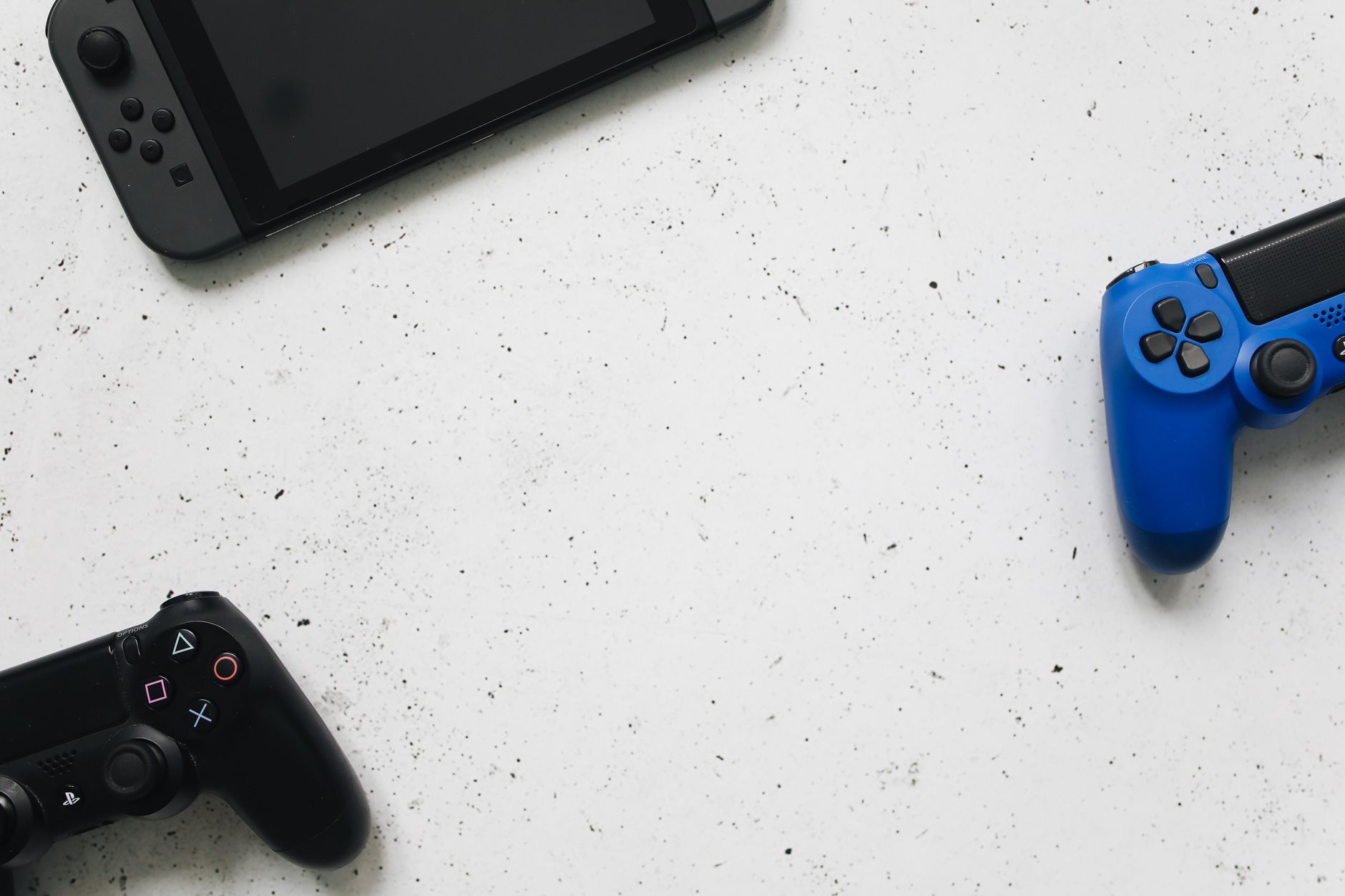
The videogame business has spent the last decade trying to convince itself that it had escaped the old rules of entertainment. Growth seemed inexhaustible, recurring revenue was the holy grail, and subscriptions looked like the mechanism that would make games behave more like streaming television. Yet in 2026, the industry looks less like a neat digital revolution than a tense negotiation between three competing truths: players still buy individual games, blockbusters still matter, and subscriptions are useful only when they are attached to genuinely irresistible content.
No company embodies that tension more starkly than Microsoft. Xbox was once supposed to be the standard-bearer of gaming’s subscription future. Game Pass was sold as a category-defining bargain, a library that would turn the console business from cyclical commerce into something closer to Netflix with controllers. But the economics have become harder to ignore. Microsoft has begun retreating from the grandiosity of the original pitch, trimming and reshaping Game Pass Ultimate, rethinking exclusivity, and refocusing its gaming division under the simpler banner of Xbox. The message is not that subscriptions are over. It is that subscriptions are no longer allowed to be an end in themselves.
That shift matters because it is a confession as much as a strategy. The industry’s biggest companies are relearning that a games business cannot be governed only by abstract engagement metrics or by the logic of bundle economics. It must still produce desire. That means recognizable franchises, visible value, and enough cadence to persuade players that money paid today yields pleasure tomorrow. Microsoft, Sony and Nintendo are each approaching that problem differently. Their choices tell us where the market is actually headed.
Microsoft’s reckoning
For years, Xbox’s strategic pitch was unusually clear for a company often accused of muddling its gaming identity. Hardware was one pillar, Game Pass another, cloud gaming a third, and first-party content the glue. The idea was that Microsoft did not merely sell consoles; it sold a gaming ecosystem. That ecosystem would be made more durable by recurring subscriptions, which in turn would smooth the lurching economics of hit-driven entertainment. The promise was not just growth. It was predictability.
But predictability is hard to manufacture in a business built on hits, and hits are expensive. As development budgets ballooned, the subsidy required to populate a subscription library grew more difficult to justify. Game Pass, when it includes the latest tentpole releases on day one, can be a superb consumer proposition and a brutal internal one. The moment subscribers perceive that the best games are being withheld from the service, the story changes. The moment publishers decide the opportunity cost is too high, the economics break. Microsoft has tried to walk that line for years. In 2026, it is admitting the line itself is unstable.
Rebranding the gaming division back to Xbox is symbolically minor and strategically revealing. It suggests a return to brand clarity after a period in which Microsoft’s gaming messaging became corporate in the least helpful sense: expansive, elastic, and slightly abstract. More important is the reported turn toward daily active players as the central measure of success. That is not a small accounting choice. It is an attempt to anchor the business in actual use, not merely in gross revenue or the headline subscriber count that made Game Pass seem like an inevitability. Daily active players is the language of social platforms and mobile ecosystems, where the product is not a boxed game but an ongoing habit.
That makes sense as a management philosophy. But it also carries danger. Gaming is not social media. A player may disappear for months and then return for a sequel, an expansion, or a single obsessive weekend. The medium has always been more punctuated than the platforms that inspired Microsoft’s metric. Measuring Xbox like a network may encourage it to behave like one, privileging stickiness over surprise, retention over risk. That can be useful in live-service products and creator-centric franchises. It is less obviously suited to the kind of prestige, standalone game that builds a platform’s reputation over time.
Microsoft’s recent moves suggest a company trying to find balance after overcorrecting into subscription evangelism. Lowering the price of Game Pass Ultimate while removing some day-one benefits is not simply a pricing adjustment; it is a redefinition of value. The service is being asked to become more sustainable, not more seductive. That may be the right decision. The question is whether the company can preserve the aura that made Game Pass culturally powerful while removing the subsidies that made it economically awkward.
“Fortify Game Pass with clear differentiation and sustainable economics,” Microsoft has effectively signaled. That sentence is the whole struggle in miniature: the desire to keep the dream alive without paying fantasy prices for it.
Sony’s quiet advantage
If Microsoft is undergoing a public reconsideration, Sony is enjoying the rare luxury of looking boring in the best possible way. PlayStation still sits at the center of the premium console market, and Sony continues to benefit from a model that is, in business terms, more conservative than fashionable. It sells expensive hardware, attaches high-margin software to that hardware, and uses subscriptions as an enhancement rather than a replacement for ownership. That model lacks the futurist glamour of all-you-can-play libraries. It also keeps working.
Sony’s strategic discipline is that it understands what Microsoft sometimes appears to forget: the console business is not just a distribution network. It is an aspiration machine. Players buy PlayStation because it remains associated with the most polished marquee experiences, the most reliable third-party support, and a sense that its first-party studios still make games that matter culturally. The company has been willing to extend some of its biggest titles onto PC, and it continues to experiment with live services and mobile-linked opportunities. But unlike Microsoft, Sony has not treated subscription expansion as a substitute for premium prestige. PlayStation Plus is important, yet it has not been allowed to define the brand.
That restraint is increasingly valuable. As the market matures, the most profitable position may belong not to the company with the biggest library but to the one with the strongest pricing power. Players will still pay full price for blockbuster releases they believe they must experience at launch. They will still upgrade hardware when a platform promises access to that feeling. Sony’s advantage lies in preserving that emotional contract. In a world of infinite content, scarcity remains profitable when it is attached to excellence.
Sony is also benefiting from the fact that the economics of platform diversification are more complicated than they once appeared. PC can extend the tail of a successful console title, but it does not automatically create a new dominant gaming identity. Mobile can generate extraordinary reach, but it is notoriously difficult to turn that reach into durable prestige. Cloud can expand access, but it is not yet the center of consumer willingness to pay. Sony understands these channels as complements. It has resisted, for the most part, the fantasy that one model can replace all others.
Nintendo’s old magic
Nintendo continues to occupy the most enviable and the most idiosyncratic position in the industry. It is the company least likely to explain itself in the language of platform economics, and yet it may have the clearest business model of the three. Nintendo sells experiences that are difficult to commodify. Its franchises are both evergreen and irregularly timed, which is to say they create anticipation rather than mere availability. When a new Zelda, Mario, or Pokémon arrives, the commercial case does not depend on engagement statistics or the architecture of a subscription bundle. It depends on the almost absurd assumption that people will buy a device for the right to play one game, then another, then another.
That strategy looks old-fashioned until one notices how much more resilient it is than the alternatives. Nintendo’s success is not driven by chasing the same definition of growth as its rivals. It monetizes family friendliness, software identity, and hardware design in ways the others can admire but rarely imitate. Even where Nintendo has become more open to online services and mobile adjacency, it has done so cautiously, preserving the core premise that the company’s most valuable asset is not a platform community but a stable of characters and worlds that can still feel magical in a market saturated by churn.
Mobile gaming is central to that story, though not in the simplistic way many executives once imagined. The mobile market is enormous, but it is also brutally segmented. It rewards recurring spend, design for short sessions, and relentless user acquisition. Nintendo has flirted with mobile as a distribution and brand-extension tool, not as a replacement for its own hardware cycle. That is smart. Mobile is where gaming becomes infrastructure; Nintendo remains a reminder that gaming can still be eventful.
The deeper lesson is that Nintendo has avoided the trap of confusing reach with relevance. A title on every phone in the world is not automatically more valuable than a title that motivates millions of players to buy a dedicated console. The best Nintendo properties are proof that scarcity can be a strength when it creates a sense of occasion. In an era when everyone else is trying to expand the funnel, Nintendo keeps manufacturing longing.
The subscription illusion, and why it still matters
That leaves the subscription question itself, which is less dead than disillusioned. The idea that games would replicate the economics of streaming video was always seductive because it promised safety in a notoriously unstable industry. If enough users paid a monthly fee, then hit risk would be softened, catalog value would rise, and growth would become a matter of arithmetic. But games are not passive libraries. They are labor-intensive, interactive, and often built around experiences that sell because they feel singular. A subscription can support that ecosystem. It cannot replace it.
Game Pass remains important because it changes behavior. It lowers barriers to experimentation, helps smaller titles find audiences, and keeps players inside the Xbox ecosystem even when they are not buying individual games. But the service is only strategically powerful if it expands the market without hollowing out the incentive to make premium games. That is the knife-edge Microsoft is now trying to walk. Sony, by contrast, uses subscriptions to deepen loyalty while preserving the primacy of ownership. Nintendo largely sidesteps the issue, because it knows its software is valuable enough to command direct purchase. Three companies, three answers, one underlying truth: subscriptions work best when they are tethered to scarcity, not when they pretend scarcity has disappeared.
Mobile gaming complicates the picture further. It remains the largest segment in many revenue discussions, but it has not become the universal bridge between platforms that executives once imagined. Instead, it has developed its own internal economy, one governed by free-to-play design, ad monetization, and performance marketing. Microsoft has explored ways to bring Xbox into that world through cloud access and broader ecosystem play. Sony has been more selective. Nintendo has been cautious to a fault, which may be why it has avoided the worst of the category’s margin pressures.
The result is a games market that is less convergent than it first appeared. Instead of one future, there are three parallel ones. Microsoft is trying to make ecosystems behave like platforms while keeping enough premium content to justify its prestige. Sony is defending a luxury model with selective diversification. Nintendo is proving that a curatorial business, built on enduring intellectual property, can still outshine scale.
The industry’s next test
The next phase of competition will not be won by whoever boasts the largest service or the most users in the abstract. It will be won by the company that can answer a more basic question: why should a player spend money here, now? Microsoft is learning that the answer cannot be “because the bundle is cheap.” Sony knows the answer must be “because the games are worth it.” Nintendo insists, with almost antique confidence, that the answer is “because you can only get this feeling from us.”
That may sound quaint in an industry intoxicated by scale. It is not. It is the most modern truth in the market. Consumers have more entertainment than they can possibly consume. The companies that survive are the ones that can still create preference, not just access. In that sense, the great strategic battle of 2026 is not between consoles and subscriptions or even between platforms. It is between two theories of value. One says value is a library. The other says value is desire.
For now, the games business remains stubbornly attached to the second theory. Microsoft is learning to respect that. Sony has built its empire on it. Nintendo has never believed anything else.