The Cancer Inflection Point: How 2026 Became the Year Medicine Finally Caught Up to the Disease
In the spring of 2026, something quiet but consequential happened in American medicine. The five-year survival rate for cancer patients reached 70 percent. For a disease that has defied easy solutions for half a century, this represents more than a statistical milestone—it signals a fundamental reordering of how we understand and treat malignancy itself.
The gains are not evenly distributed. Some patients benefit from a pharmacological windfall; others remain trapped in the old paradigm of chemotherapy and chance. But for the first time, the breakthroughs emerging from research institutions and biotech laboratories feel less like incremental victories and more like the opening moves of a genuinely new era. The tools have changed. The thinking has changed. And for many patients, the outcomes are changing too.
The Precision Revolution
Walk through any oncology department in 2026 and you encounter a discipline transformed by molecular granularity. Cancer is no longer treated as a single enemy but as a collection of genetic aberrations, each with its own vulnerability. This seemingly obvious insight—that different cancers require different drugs—has taken decades to operationalize at scale.
Consider the case of pancreatic cancer, historically one of medicine's most intractable problems. A novel RAS inhibitor currently in Phase III trials at Dana-Farber Cancer Institute has demonstrated promising early results in patients whose tumors carry RAS mutations. RAS proteins represent a particularly frustrating target because for years researchers considered them "undruggable." The breakthrough came through relentless structural chemistry and a willingness to invest in mechanisms that seemed theoretically sound but practically impossible.
What makes this moment different is velocity. The pipeline of precision therapies is no longer a trickle but a stream. At the American Association for Cancer Research meeting in San Diego this spring, researchers presented 11 emerging oncology therapeutics representing both small and large molecule innovations. The FDA simultaneously granted fast-track designations to candidates targeting everything from BRCA-mutated ovarian cancer to HPV16-positive head and neck squamous cell carcinoma.
These designations matter because they compress timelines. A bispecific antibody called opamtistomig, designed to treat extrapulmonary neuroendocrine carcinoma by targeting both PD-L1 and 4-1BB, moved from clinical trials to fast-track status within months based on encouraging efficacy and favorable safety profiles. Similarly, a PARG inhibitor called ETX-19477 is being expedited for platinum-resistant ovarian cancer, while an investigational mRNA cancer immunotherapy known as BNT113 is accelerating through review for HPV16-positive head and neck cancers.
The common thread is specificity. These are not sledgehammers but scalpels, designed to exploit the particular vulnerabilities of particular cancers while minimizing collateral damage to healthy tissue.
The Cell Engineering Frontier
But perhaps the more revolutionary development lies not in small molecules but in entirely reimagined cells. Researchers at Dana-Farber and other institutions are engineering what amounts to biological precision weapons—immune cells modified to recognize and destroy cancer with unprecedented sophistication.
CAR-T cell therapy, which has already demonstrated dramatic efficacy in blood cancers, is now being upgraded with capabilities that sound like science fiction. Next-generation designs incorporate multiple targets and precisely tuned functions. Some incorporate synthetic receptors and switchable signaling domains that allow a single engineered cell to adapt its behavior based on the tumor microenvironment. Others integrate cytokine expression with logic-gated circuits and nanotechnology-based engineering that allows real-time in vivo modification.
The problem being solved is deceptively complex: tumors are not passive targets but active adversaries that create immunosuppressive microenvironments, erect trafficking barriers, and exhaust even the most determined immune cells. The new generation of CAR-T approaches treats these challenges not as limitations but as design problems. If engineered T cells can be made to dynamically adapt, to deliver payloads only when needed, and to resist the mechanisms by which tumors evade immunity, then the calculus of what is possible shifts dramatically.
Natural killer cell therapies and tumor infiltrating lymphocyte therapies represent parallel paths up the same mountain—different approaches to the same fundamental insight: the body's own immune system, properly configured, may be capable of recognizing and eliminating cancer more reliably than any pharmaceutical intervention.
The Intelligence Multiplication
Undergirding this explosion of therapeutic options is a quieter revolution in artificial intelligence. AI models are now predicting immunotherapy response with 70 to 80 percent accuracy—a level of prescience that transforms clinical decision-making from educated guessing into something approaching science.
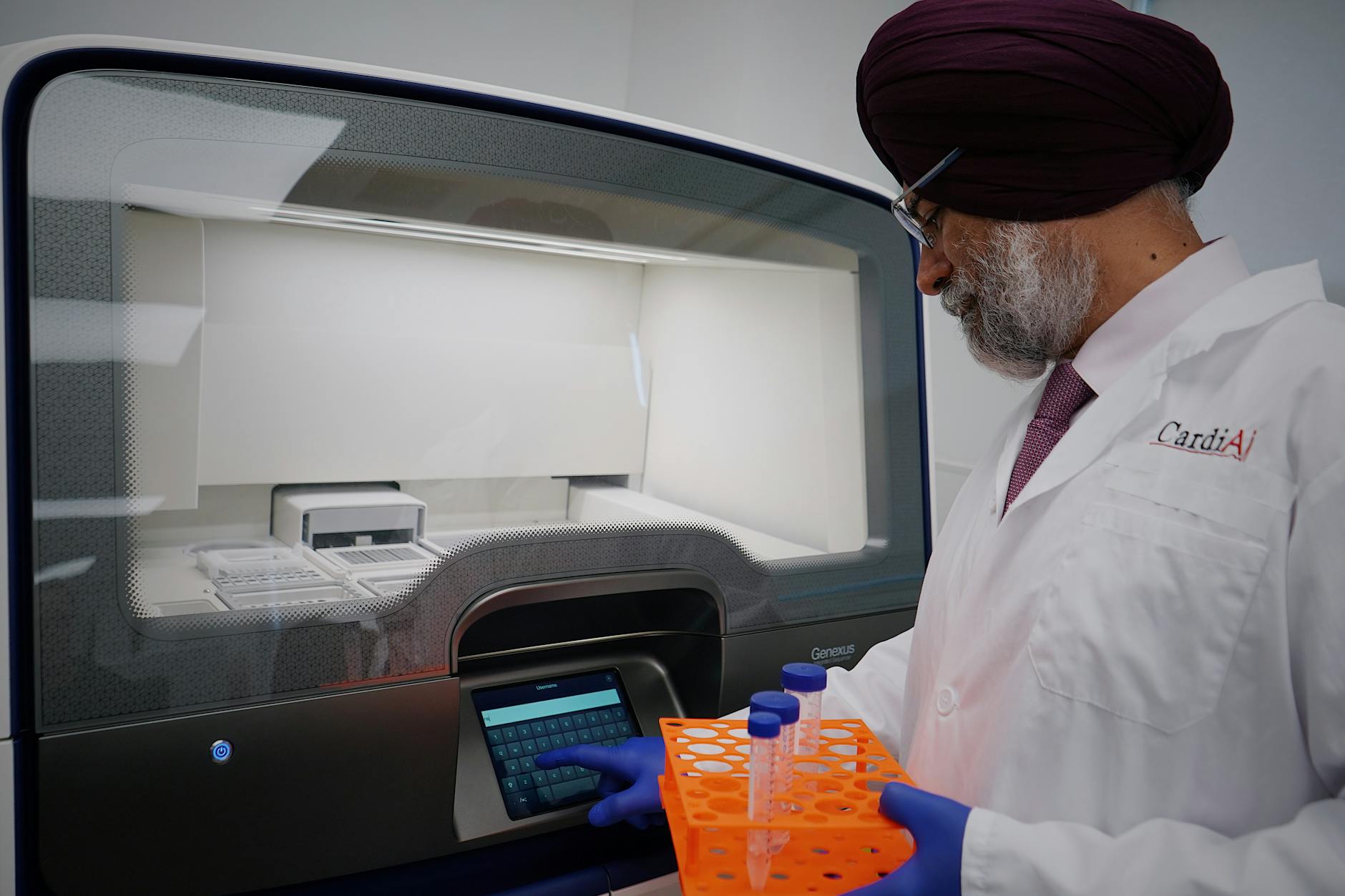
Next-generation sequencing, once exotic and prohibitively expensive, now routinely identifies tumor mutations at a granularity that allows matching specific patients to specific treatments. The data pipeline that enables this matching runs through AI systems trained on millions of clinical outcomes, genomic sequences, and treatment responses. A patient's tumor profile no longer leads to a generic protocol but to a personalized treatment plan derived from the collective experience of global oncology.
This democratizes expertise in a profound way. A community oncologist in rural America can now access the diagnostic sophistication of major academic medical centers. A tumor's molecular signature, sequenced and analyzed through cloud-based AI systems, becomes as precise and actionable as its physical pathology.
The Vaccine Moment
Perhaps nowhere is the shift more dramatic than in cancer vaccines, particularly those leveraging messenger RNA technology. After the COVID-19 pandemic demonstrated mRNA's capacity to train immune systems against viral targets, researchers have pivoted rapidly to cancer applications.
Personalized cancer vaccines represent a conceptual leap: rather than treating cancer as an inevitable consequence of aging and chance, they treat it as a disease that can be prevented or intercepted. A patient's tumor is sequenced, mutations are identified, and a custom vaccine is manufactured to teach that patient's immune system to recognize and destroy residual disease. The goal is dramatic—to reduce recurrence rates and minimize the systemic toxicity that makes current cancer treatment so brutally difficult.
The data remains early, but the logic is compelling. If immunotherapy works by activating the body's recognition of cancer as foreign, then why not accelerate that recognition through vaccination? Why wait for the immune system to spontaneously discover the enemy when you can introduce it deliberately under controlled circumstances?
The Menin Inhibitor Watershed
Sometimes a single drug approval captures an entire philosophical shift. Two menin inhibitors were recently approved for acute myeloid leukemia, a disease that kills roughly 10,000 Americans annually. These drugs target approximately 40 percent of AML cases—patients whose cancers carry specific genetic alterations that make them vulnerable to menin inhibition.
The approval itself is significant. But the real story lies in what comes next. Researchers at Dana-Farber and elsewhere are already testing these menin inhibitors in combination with other therapies, betting that the synergies will prove even more powerful than the drugs used individually. This represents standard oncology practice—but the speed at which combinations are being tested and the precision with which they target specific genetic subtypes reflects how thoroughly the field has embraced genomic medicine.
Moreover, menin inhibitors exemplify the growing maturity of drug discovery. These compounds emerged from decades of basic research into proteins like MEN1 and their role in leukemogenesis. The translation from bench to bedside took time. But once the target was validated and the chemistry solved, the approval process accelerated. A drug that would have seemed impossibly complex twenty years ago is now routine clinical practice.
The Equity Problem
Yet beneath this narrative of progress lies an anxiety that cancer experts rarely voice publicly but frequently discuss in private: these breakthroughs are not evenly distributed, and may be reinforcing existing inequalities in American medicine.
The patients most likely to benefit from precision oncology are those with access to genomic sequencing, to academic medical centers, to clinicians versed in interpreting molecular data. A patient in a well-resourced urban hospital with insurance covering comprehensive genomic profiling occupies a different universe from a patient in a rural facility where tumor sequencing remains a luxury.
The FDA fast-track designations granted to 11 new drugs in early 2026 represent genuine therapeutic innovation. But these drugs will cost tens of thousands of dollars annually. The manufacturing capacity for CAR-T cell therapies remains limited. Personalized mRNA vaccines, while theoretically powerful, are not yet accessible at scale. The inflection point in survival rates masks a persistent inflection point in access and equity.
The Nanoparticle Frontier
Still, innovation continues to emerge from unexpected quarters. Researchers at UC Davis have developed a novel approach to bladder cancer using nanoparticles coated with a molecule called PLZ4 that binds to receptors on cancer cell surfaces. Once the nanoparticles are absorbed by the cancer cells, they release paclitaxel to halt cancer growth. In early trials, three of four patients achieved complete remission at the first dose level.
This represents a genuinely novel approach—not a variation on existing chemotherapy but a delivery mechanism that radically improves the precision with which cancer-killing drugs reach their targets. The nanoparticle acts as a GPS system for paclitaxel, ensuring it accumulates where it matters and spares healthy tissue.
The Inflection Point Question
Whether 2026 truly represents an inflection point or merely another promising moment in cancer medicine's long history of false dawns remains an open question. The survival rate has reached 70 percent—but survival for whom, and at what cost? The pipeline is full of precision therapies—but are they accessible to most patients, or only to the privileged few?
What seems undeniable is that the tools have fundamentally changed. The era of one-size-fits-all chemotherapy is ending. The era of genomically guided, AI-assisted, cell-engineered, immunologically sophisticated cancer medicine is beginning. Whether that new era will be defined by breakthrough or by inequality may ultimately depend less on science than on policy—on whether the remarkable innovations emerging from research laboratories can be translated into accessible, equitable care.
For now, the optimism in cancer medicine feels different than it has in previous springs. It feels grounded in mechanism, validated by data, and multiplied by the intersection of multiple technological revolutions. Whether that optimism proves justified will become clear only in the years ahead, when we can measure not just survival rates but whether those rates have truly risen for everyone, or only for those already privileged by circumstance and geography.