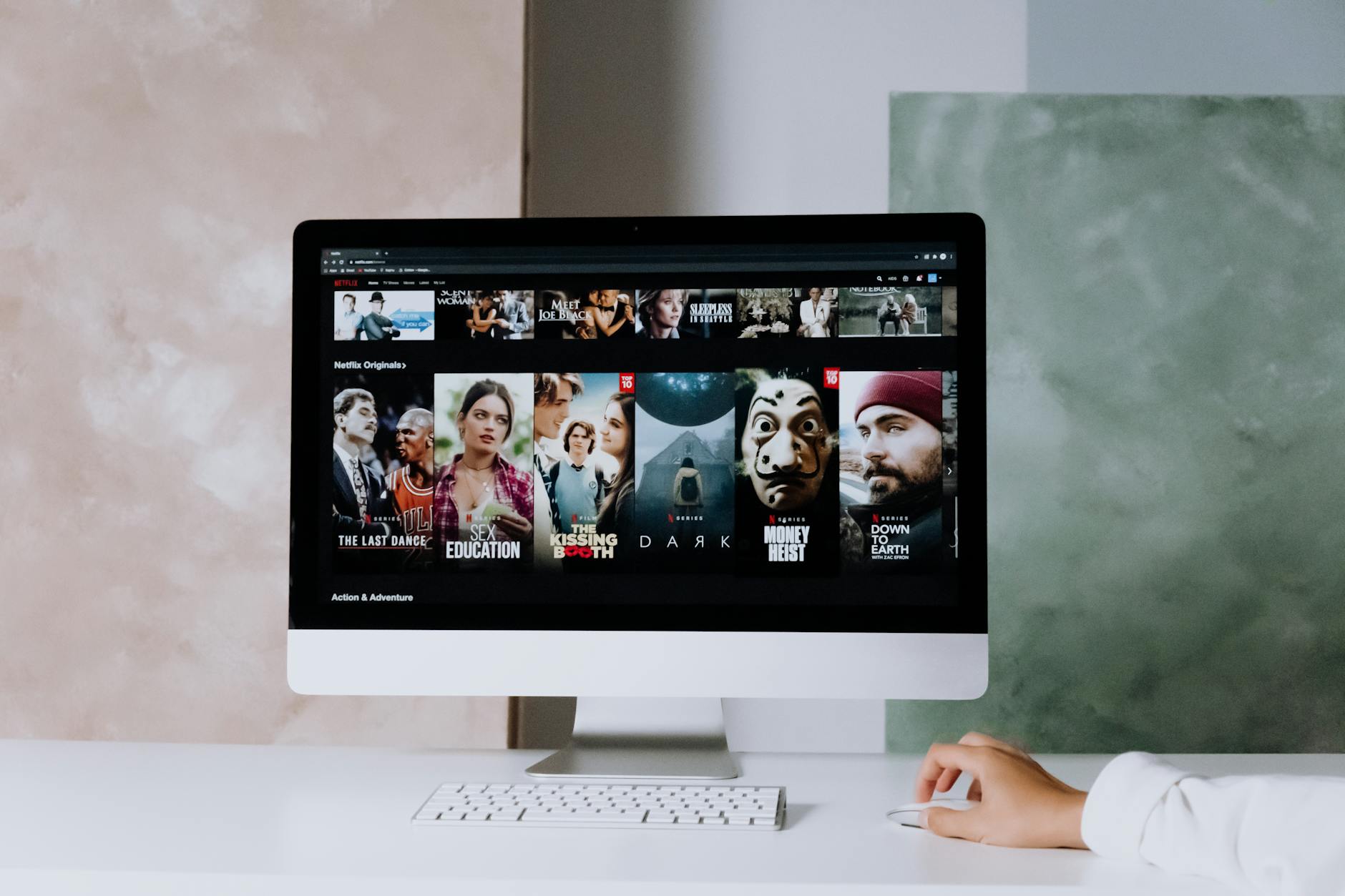
The month television stopped pretending to be infinite
Streaming once promised abundance: a library without walls, a remote control that could unlock every mood, every genre, every country. In 2026, the promise still exists, but it is now matched by an anxiety that feels more modern and more revealing. The leading platforms are no longer merely competing on volume. They are competing on eventfulness. May’s slate of new series from Netflix, HBO Max, Disney+, Prime Video and Apple TV+ shows an industry trying to manufacture urgency in a medium built for delay.
The calendar is crowded enough to resemble a panic attack. Netflix is launching new seasons and new mysteries; HBO Max is leaning on prestige drama and inherited fandoms; Prime Video is gambling on spectacle; Apple TV+ continues its curiously disciplined attempt to turn selective output into brand identity; Disney+ is still making the most reliable bet in the business, which is that audiences will tolerate almost anything if they recognize the logo and the universe. Yet the deeper pattern is not simply proliferation. It is segmentation. Streaming now behaves less like a golden age and more like a tariff schedule: every service has a price, an audience, a mood, a grievance.
The Marvelization of the schedule
If one theme dominates the month, it is the power of existing intellectual property to overpower almost everything else. The most anticipated launch may be Prime Video’s Spider-Noir, a live-action series built from one of the more beloved side-streets of the Spider-Verse. On paper, it is a curious proposition: Nicolas Cage as Ben Reilly, a Depression-era private eye who is also Spider-Man, in a production that appears to embrace pulp hard-boiled style as a corrective to superhero excess. In practice, it is exactly what the streaming era rewards: a title recognizable enough to travel, weird enough to generate discussion, and expensive enough to signal seriousness.
That formula is now so familiar it barely registers as a formula. Studios have concluded that viewers do not want originality in the abstract; they want novelty attached to memory. Spider-Noir is not merely a new show. It is a recombination of prior pleasures: comics, animation, star persona, genre pastiche. The same can be said of Disney+’s continuing strategy, which remains to make the franchise feel like a perpetual motion machine. The service understands that its best asset is not a show but a universe, and that universes can be monetized through serial fragmenting indefinitely, provided the audience believes each new branch matters.
There is a danger in that approach, but also a logic. In a fragmented market, familiarity reduces decision fatigue. If the average household is now choosing among dozens of subscription and ad-supported options, the easiest sell is a name that arrives already annotated by fandom. That is why the industry’s creative discourse has shifted from “What is new?” to “What is canon?” And that is why almost every conversation about a new series now contains an undercurrent of asset management. The creative question is no longer whether a show is good; it is whether it can be folded into a larger economic architecture.
Netflix still rules, but it rules differently
Netflix remains the clearest example of a platform whose power comes from range rather than identity. Its May releases encompass several distinct appetites. Nemesis, a new thriller, arrives amid the service’s continuing effort to own the smart-populist crime lane. The Burroughs, meanwhile, gestures toward supernatural and ensemble storytelling, the kind of project that invites comparisons with the streamer’s earlier youth-skewing hits without quite promising to duplicate them. A Good Girl’s Guide to Murder returns for a second season, proof that Netflix still seeks a reliable foothold in the detective-adjacent young adult market, where cliffhangers can still motivate a generation trained to abandon everything after eight minutes.
Netflix’s real advantage is not just size but velocity. It can absorb failure more easily than rivals because its audience already expects a constant churn of experiments. That creates a peculiar kind of prestige: not excellence, exactly, but inevitability. No other streamer can so casually release a series and trust that it will be seen, discussed, and perhaps abandoned in the same weekend. Yet this advantage comes with a cost. Netflix’s catalog often feels less curated than managed, a sequence of offerings that resemble an algorithmic opinion about what viewers might tolerate next.
There is also the question of reviews, which now function as a kind of secondary marketing language. The new Netflix titles rarely arrive with unanimous praise; instead, they are evaluated as propositions. Is this the kind of thriller people will finish? Is this the kind of fantasy that can become a fandom? Is this the kind of limited series that disappears in two days and then, by virtue of the platform’s scale, becomes culturally unavoidable? Netflix has learned that quality alone is not enough. A show must also be discussable, divisible into clips, and capable of generating a mild argument. In the streaming economy, controversy is often the cheapest form of retention.
HBO Max and the prestige problem
HBO Max, by contrast, still trades on the belief that television should look expensive and think slowly. But even prestige has become serially burdened. May brings new and returning fare that suggests the service is trying to preserve its old reputation while adapting to a marketplace that no longer rewards patience automatically. The platform’s value proposition has always been tone: adult, literate, faintly dangerous. Yet in 2026, that tone can appear less like an aesthetic and more like a defensive posture.
The challenge for HBO Max is not that audiences have stopped wanting high-quality drama. They have not. The challenge is that prestige is now expected to arrive in two contradictory forms: either as an event people can binge and explain, or as a critical object that confers distinction. Everything in between becomes difficult to monetize. When a service like HBO Max launches a new drama or documentary, it is implicitly asking viewers to trust judgment over quantity. That is a harder sell when viewers are accustomed to sampling everything and finishing nothing.
Still, HBO Max retains a peculiar cultural authority. A series there is still more likely to be covered as a statement about television than as content. That matters. In an environment where every platform resembles every other platform, brands that preserve a visible difference become more valuable, even if their subscriber numbers are less spectacular. Prestige is no longer a guarantee of mass appeal. But as a form of reputational capital, it remains extraordinarily potent.
“Streaming has not destroyed television’s hierarchy; it has multiplied its middle class.”
Apple TV+ and the art of disciplined scarcity
Apple TV+ continues to inhabit the most elegant niche in the sector: not the biggest library, but one of the clearest identities. Its May lineup includes Maximum Pleasure Guaranteed, a title that sounds like satire until one remembers that Apple has turned understatement into a business strategy. The service’s best shows tend to arrive with a confidence that borders on restraint. They are less likely to shout for attention than to insinuate themselves into it. That discipline is a luxury in a market where everyone else is screaming.
Apple’s method has been to cultivate a sense that it stands apart from the streaming race altogether. While others chase the logic of endless choice, Apple treats each release as an editorial decision. That does not automatically produce better television, but it creates a stronger brand memory. Viewers may not watch everything Apple makes, but they remember the platform as the place where television still seems to have an adult supervisor.
There is, however, a fragility in scarcity. A selective catalog only works if the selections land. Every Apple miss is magnified by the platform’s self-image. Every weak premise invites the suspicion that the company is mistaking polish for taste. Yet when the service succeeds, it does so with uncommon force, because its shows are less diluted by noise. In a month of relentless premieres, that quietness may be Apple TV+’s most persuasive argument.
Disney+ and the problem of inherited loyalty
Disney+ occupies an even more paradoxical position. It is the one streamer whose franchise machine still feels both secure and slightly exhausted. The company has perhaps the most efficient loyalty engine in media history, but loyalty can become a trap when the audience feels it is being asked to rent familiarity forever. Disney’s shows remain successful because the brand is unmatched in household recognition, yet every continuation invites the same question: what, exactly, is being added?
At its best, Disney+ turns continuity into emotional payoff. At its worst, it turns continuity into contractual obligation. The service’s release strategy increasingly depends on the idea that fans want not just more of a universe but more specific access to its seams. Behind-the-scenes lore, side characters, origin stories, temporal offshoots: the menu of expansion is endless. But there is a reason viewers sometimes describe franchise television as homework. The burden of keeping up can start to feel like an unpaid second shift.
And yet Disney’s most potent strength remains unchanged. It knows how to convert anticipation into family habit. Even in a skeptical market, that is formidable. Parents do not need to be persuaded that the brand is safe; they need to be persuaded that the latest addition will not make them feel old. That is a narrower task, but one the company has historically performed better than its rivals.
The controversy economy
Every new television season now arrives with its own pre-release controversy, and May is no exception. Some disputes are ideological, some are aesthetic, and some are simply the result of fandom’s refusal to accept that adaptation means change. The industry has become expert at using such friction. Outrage is traffic. Skepticism becomes engagement. A cast announcement can support a week of debate, and a plot rumor can do the work of a trailer.
That does not mean the controversies are fake. They often reveal genuine tensions: about representation, about adaptation, about whether studios are recycling brands too aggressively, about whether viewers are being manipulated into caring about properties that would have been invisible a decade ago. The complaint is not that there is too much television. It is that there is too much television with a business case already visible in the title.
At the same time, the critical ecosystem has adapted to this logic with remarkable speed. Reviews now do more than rank quality; they signal legitimacy. A favorable review can help a show cross from fandom to general conversation. A dismissive one can become part of the show’s myth. In this way, criticism has become less a verdict than a stage in the release strategy. The smartest platforms understand this and design their campaigns accordingly.
What the May slate really tells us
The month’s releases suggest an industry that is no longer pretending to discover the future. It is refining the present. The great streaming promise was that viewers would be liberated from schedules and gatekeepers. The great streaming reality is that viewers now live inside a denser, more competitive order in which every platform tries to convert attention into habit, habit into loyalty, and loyalty into billing.
The result is a new kind of television ecology. Netflix provides scale and churn. HBO Max offers distinction under pressure. Disney+ sells inherited affection. Prime Video flirts with spectacle and risk. Apple TV+ wagers on restraint. Each has found a lane, but none has escaped the basic contradiction of the era: the more choice audiences have, the more aggressively platforms must simplify their offers. That is why titles matter so much. They are the compressed form of strategy.
The best shows of May 2026 may well be the ones nobody predicted, the small surprises that slip past the franchise machinery. But the larger story is already visible. Streaming has not ended television’s competition; it has merely changed its vocabulary. The battle is no longer over what to watch. It is over what kind of certainty a platform can sell in a world addicted to uncertainty. For now, that means more reboots, more continuations, more prestige gestures, more algorithmic guesses at taste. It also means, occasionally, a series that cuts through the noise and reminds viewers why television became the dominant art form of the century: because, at its best, it still knows how to make a room full of strangers care about the same fictional thing at the same time.